• Recipes
    • Beef and Red Meat
    • Chicken and Poultry
    • Pork
    • Fish and Seafood
    • Eggs
    • Soups
    • Salads
    • Sides, Veggies and Appetizers
    • Sauces, Dips & Vinaigrettes
    • Drinks
    • Sweets and Snacks
    • Cooking Tips
  • Learn
  • Your Starting Point
    • Topic Index
    • Paleo 101
    • Paleo Meal Plan
    • Paleo Food List
    • Transitioning to Paleo
    • Am I Doing it Right? - Checklist
    • Mini-Course for Beginners
  • Popular Topics
    • Recipes for Beginners
    • Breakfast Ideas
    • Homemade Condiments
    • Legumes
    • Wheat & Gluten
    • Dairy
    • Nightshades
  • More
    • Compilations
    • Foods
menu icon
go to homepage
  • Recipes
  • Chicken
  • Pork
  • Snacks
  • Salads
  • Learn Paleo
  • Paleo Cooking Tips
  • Paleo Diet Foods
  • Paleo Recipe Compilations
  • Keto Diet Recipes
  • Paleo Beef and Red Meat Recipes
  • Paleo Drink Recipes
  • Paleo Egg Recipes
  • Paleo Fish and Seafood Recipes
  • Paleo Sauces and Dips
  • Paleo Sides, Veggies and Appetizers
  • Paleo Soup Recipes
  • Paleo Tips & Tricks
  • Paleo Topic Index
    • Facebook
    • Instagram
    • Pinterest
    • Twitter
    • YouTube
  • search icon
    Homepage link
    • Recipes
    • Chicken
    • Pork
    • Snacks
    • Salads
    • Learn Paleo
    • Paleo Cooking Tips
    • Paleo Diet Foods
    • Paleo Recipe Compilations
    • Keto Diet Recipes
    • Paleo Beef and Red Meat Recipes
    • Paleo Drink Recipes
    • Paleo Egg Recipes
    • Paleo Fish and Seafood Recipes
    • Paleo Sauces and Dips
    • Paleo Sides, Veggies and Appetizers
    • Paleo Soup Recipes
    • Paleo Tips & Tricks
    • Paleo Topic Index
    • Facebook
    • Instagram
    • Pinterest
    • Twitter
    • YouTube
  • ×
    Home » You searched for chinese

    Search Results for: chinese

    Duck Breast And Balsamic Asparagus Recipe

    November 8, 2022 by Paleo Leaper Leave a Comment

    There are times when you have to move beyond the chicken to truly experience the nuanced flavors of poultry, and a meal with the perfectly cooked duck is a moment to treasure. It is true, that duck is more expensive than chicken, but the cost isn't everything.
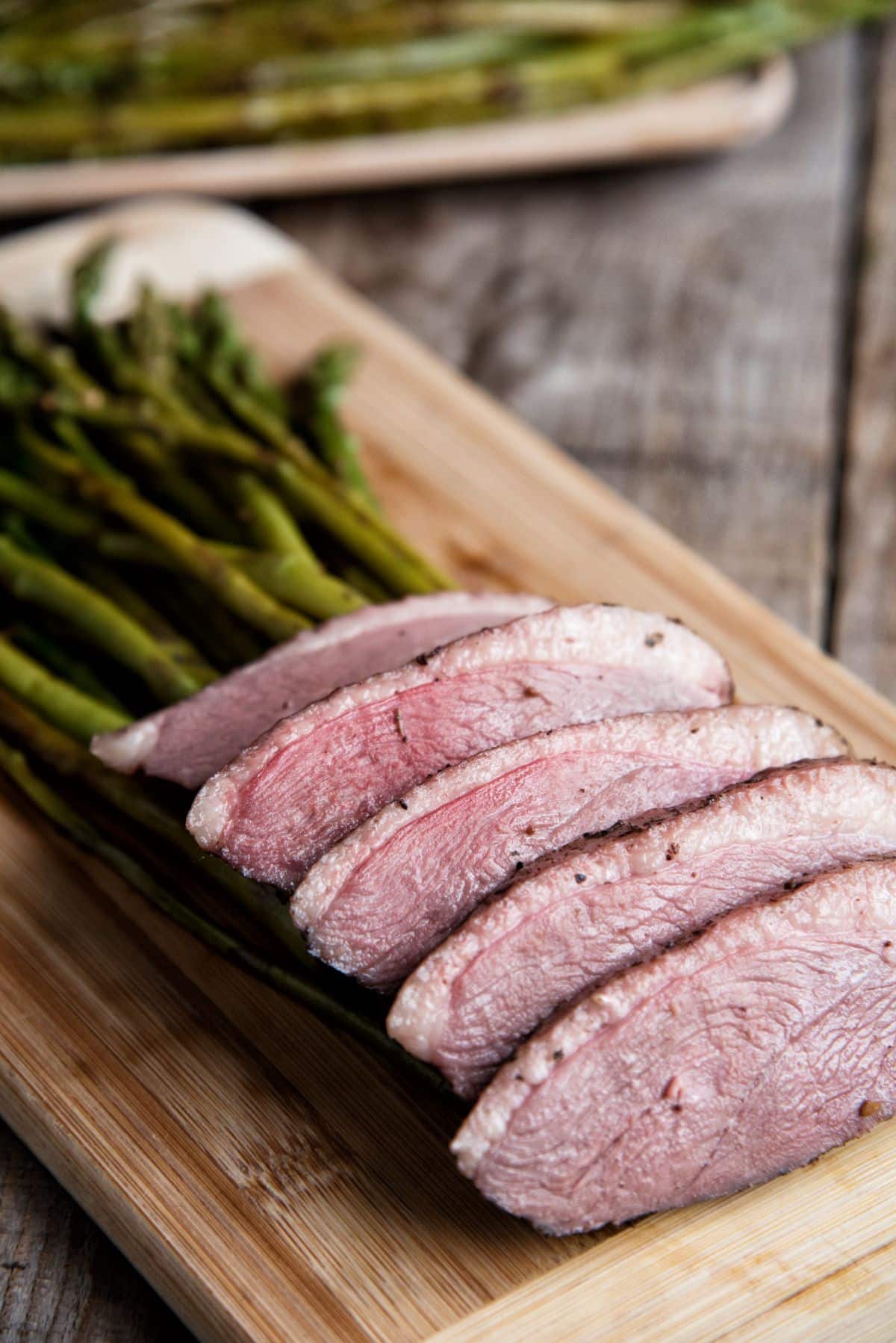
    Duck Breast And Balsamic Asparagus on a wooden cutting board.

    Think about what duck meat offers that the others do not: it contains higher amounts of iron than other poultry, it is an excellent source of zinc and selenium too, and the rendered duck fat is simply divine. Taste-wise, it is as good as it gets!

    Combine this marvelous protein and fat with fresh asparagus, and you have a meal fit for royalty, so treat yourself to the very best! When asparagus is in season, opt for the best bunch. How to choose it?

    Use your sense of touch to avoid stalks that are overly woody, and use your eyes to pick out a firm, bright-green stalks, or spears with a tinge of violet. Once you get it home, keep it fresh by trimming the bottoms and wrapping the cut ends with a damp cloth or paper towel.

    If it turns out that you adore the flavor of duck, and you will, then we don't want you to miss out on trying pan-fried duck breasts with grape sauce. It is a hidden gem that adults will love and Paleo children will greedily tuck into. Who doesn't love a hint of sweetness with a healthy serving of delicious fat?

    Duck Breast And Balsamic Asparagus Recipe

    Serves: 4 Prep: 15 min Cook: 25 min

    Ingredients

    • 2 large duck breasts, skin on
    • 1 bunch of fresh asparagus, trimmed
    • 2 garlic cloves, minced
    • 1 tbsp. fresh ginger, minced
    • 2 tsp. Chinese five-spice powder
    • ¼ cup chicken stock
    • 2 tbsp. balsamic vinegar
    • Cooking fat
    • Sea salt and freshly ground black pepper

    Preparation

    1. Preheat oven to 400 F.
    2. In a small bowl, combine the garlic, ginger, and five-spice powder; season to taste.
    3. Rub the mixture onto the duck breasts.
    4. In a cast iron skillet, melt the cooking fat over medium-high heat and sear the duck breast, skin side down, for 4 to 5 minutes on each side.
    5. Transfer the skillet to the oven and roast for 7 to 8 minutes, or until you reach the desired doneness, then let rest.
    6. Add the asparagus to a skillet with melted cooking fat over medium heat, stirring for 4 to 5 minutes.
    7. Pour balsamic vinegar and season to taste; stir until well combined, and cook for another minute.
    8. Remove from the heat and cover for a few minutes, allowing the flavors to develop.
    9. Cut the duck breasts into thick slices and serve with the asparagus.

    📖 Recipe
    Duck Breast And Balsamic Asparagus on a wooden cutting board.

    Duck Breast And Balsamic Asparagus Recipe

    When you are ready to move beyond the basics of chicken, enter into the world of enticing duck dishes that will set the cooking bar even higher.
    5 from 1 vote
    Print Recipe Pin Recipe
    Prep Time 15 minutes mins
    Cook Time 25 minutes mins
    Total Time 40 minutes mins
    Course Main Course
    Cuisine American
    Servings 4 people
    Calories 165 kcal

    Ingredients
      

    • 2 large duck breasts skin on
    • 1 bunch of fresh asparagus trimmed
    • 2 garlic cloves minced
    • 1 tbsp. fresh ginger minced
    • 2 tsp. Chinese five-spice powder
    • ¼ cup chicken stock
    • 2 tbsp. balsamic vinegar
    • Cooking fat
    • Sea salt and freshly ground black pepper

    Instructions
     

    • Preheat oven to 400 F.
    • In a small bowl, combine the garlic, ginger, and five-spice powder; season to taste.
      2 garlic cloves, 1 tbsp. fresh ginger, 2 tsp. Chinese five-spice powder, Sea salt and freshly ground black pepper
    • Rub the mixture onto the duck breasts.
      2 large duck breasts
    • In a cast iron skillet, melt the cooking fat over medium-high heat and sear the duck breast, skin side down, for 4 to 5 minutes on each side.
      Cooking fat
    • Transfer the skillet to the oven and roast for 7 to 8 minutes, or until you reach the desired doneness, then let rest.
    • Add the asparagus to a skillet with melted cooking fat over medium heat, stirring for 4 to 5 minutes.
      1 bunch of fresh asparagus
    • Pour balsamic vinegar and season to taste; stir until well combined, and cook for another minute.
      2 tbsp. balsamic vinegar, ¼ cup chicken stock
    • Remove from the heat and cover for a few minutes, allowing the flavors to develop.
    • Cut the duck breasts into thick slices and serve with the asparagus.
    Nutrition

    Calories: 165kcalCarbohydrates: 4gProtein: 23gFat: 5gSaturated Fat: 2gPolyunsaturated Fat: 1gMonounsaturated Fat: 2gCholesterol: 87mgSodium: 89mgPotassium: 392mgFiber: 1gSugar: 1gVitamin A: 98IUVitamin C: 8mgCalcium: 26mgIron: 6mg
    Keyword asparagus, balsamic, duck breast, recipe
    Tried this recipe?Let us know how it was!

    Filed Under: Paleo Chicken and Poultry Recipes, Paleo Recipes Tagged With: cooking: fast prep, cooking: oven, cooking: stovetop, diet: dairy-free, diet: egg-free, diet: no sweeteners, diet: nut-free, diet: shellfish-free, Paleo Dinner Recipes, Paleo Low-Carb Recipes, Paleo Nightshade-Free Recipes

    Ground Beef And Zucchini Stir-Fry Recipe

    November 7, 2022 by Paleo Leaper 1 Comment

    If you've recently gone Paleo, you will have noticed that wheat is everywhere. Not only is it in plain sight, but it is also hiding in common condiments, but we've changed all that and made our own set of homemade Paleo condiments, including ketchup, to keep up with modern cooking.

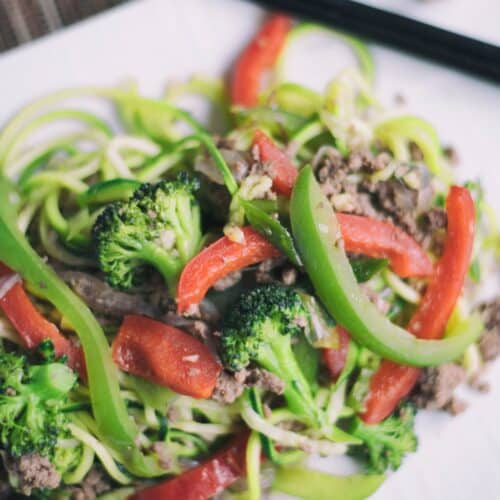
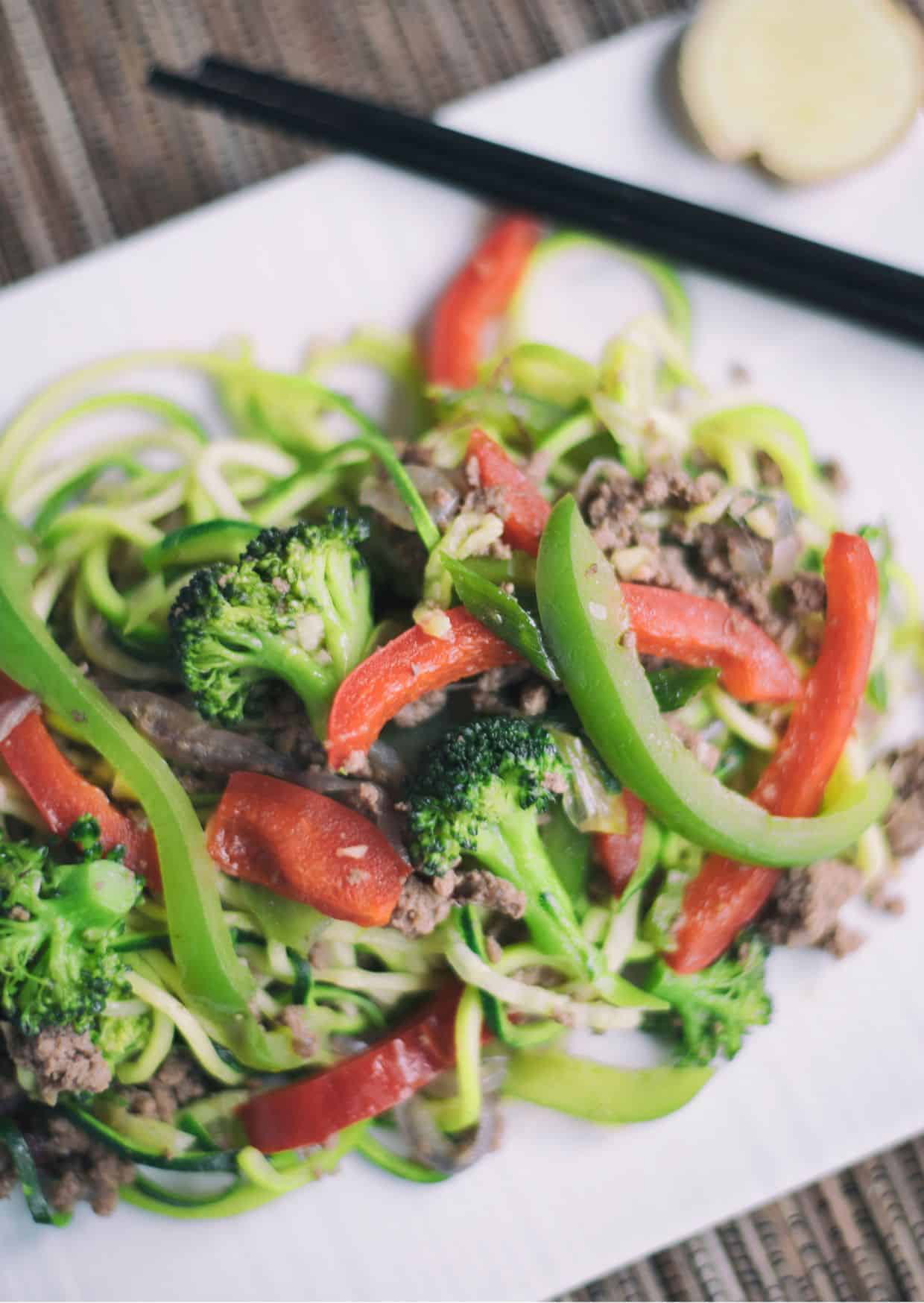
    Ground Beef And Zucchini Stir-Fry on a white tray.

    If you are a fan of take-out meals and have tried to recreate them at home, you will find out at some point that the best Chinese stir fry sauce, sadly, contains soy sauce and, quite often, sugar. Both ingredients come with a big no for a contemporary Paleo lifestyle. The solution? Coconut aminos with a splash of rice wine vinegar stirred with a lot of love.

    When life unexpectedly hands you sweet red peppers and a copious amount of broccoli, that can only mean one thing: fate is ordering a ground beef and zucchini stir-fry for dinner. Gather the rest of the ingredients, there aren't many, and spend 20 meaningful minutes cooking.

    Get ready to dig in with your chopsticks, or fork, whatever your utensil of choice, and savor the harmonious flavors of fresh ginger, garlic, honey, coconut aminos, and rice wine vinegar that are smothering the zucchini and beef.

    Let the desire for new ways of cooking flow into your life. As you go shopping, open your eyes to new ingredients, swapping the past with the present, boldly going where no Paleo person has ever gone before.

    Ground Beef And Zucchini Stir-Fry Recipe

    Serves: 4 Prep: 20 min Cook: 20 min

    Ingredients

    • 1 lb. ground beef
    • 1 large zucchini, cut into zoodles
    • 1 onion, diced
    • 2 bell peppers, thinly sliced
    • 1 head broccoli florets
    • 1 green onion, thinly sliced

    Stir-Fry Sauce Ingredients

    • ¼ cup coconut aminos
    • 2 tbsp. rice wine vinegar
    • 2 tbsp. raw honey
    • 2 garlic cloves, minced
    • 1 tbsp. fresh ginger, minced

    Preparation

    1. In a bowl, combine all the ingredients for the stir-fry sauce.
    2. Brown the beef and the onion in a skillet over medium-high heat.
    3. Stir in the bell peppers and broccoli florets, and cook for another 6 to 8 minutes until vegetables soften.
    4. Pour in the sauce, add the zoodles, and toss everything until well-coated.
    5. Cook for another 2 to 3 minutes, adjust seasoning and serve topped with green onions.

    📖 Recipe

    Ground Beef And Zucchini Stir-Fry on a white tray.

    Ground Beef And Zucchini Stir-Fry Recipe

    Simple meals are often the best, especially when made without ingredients that are hard to digest. Take it easy and enjoy beef and zucchini stir fry.
    5 from 2 votes
    Print Recipe Pin Recipe
    Prep Time 20 minutes mins
    Cook Time 20 minutes mins
    Total Time 40 minutes mins
    Course Side Dish
    Cuisine American
    Servings 4 people
    Calories 359 kcal

    Ingredients
      

    • 1 lb. ground beef
    • 1 large zucchini cut into zoodles
    • 1 onion diced
    • 2 bell peppers thinly sliced
    • 1 head broccoli florets
    • 1 green onion thinly sliced

    Stir-Fry Sauce Ingredients

    • ¼ cup coconut aminos
    • 2 tbsp. rice wine vinegar
    • 2 tbsp. raw honey
    • 2 garlic cloves minced
    • 1 tbsp. fresh ginger minced

    Instructions
     

    • In a bowl, combine all the ingredients for the stir-fry sauce.
      ¼ cup coconut aminos, 2 tbsp. rice wine vinegar, 2 tbsp. raw honey, 2 garlic cloves, 1 tbsp. fresh ginger
    • Brown the beef and the onion in a skillet over medium-high heat.
      1 lb. ground beef, 1 onion
    • Stir in the bell peppers and broccoli florets, and cook for another 6 to 8 minutes until vegetables soften.
      2 bell peppers, 1 head broccoli florets
    • Pour in the sauce, add the zoodles, and toss everything until well-coated.
      1 large zucchini
    • Cook for another 2 to 3 minutes, adjust seasoning and serve topped with green onions.
      1 green onion

    Nutrition

    Calories: 359kcalCarbohydrates: 17gProtein: 21gFat: 23gSaturated Fat: 9gPolyunsaturated Fat: 1gMonounsaturated Fat: 10gTrans Fat: 1gCholesterol: 81mgSodium: 420mgPotassium: 505mgFiber: 2gSugar: 10gVitamin A: 1894IUVitamin C: 79mgCalcium: 37mgIron: 3mg
    Keyword ground beef, paleo, recipe, stir-fry, zucchini
    Tried this recipe?Let us know how it was!

    Filed Under: Paleo Beef and Red Meat Recipes, Paleo Recipes Tagged With: Complete Meals, cooking: stovetop, diet: dairy-free, diet: egg-free, diet: nut-free, diet: shellfish-free, good for leftovers, Paleo Budget-Friendly Recipes, Paleo Dinner Recipes, Paleo Kid-Friendly Recipes, Paleo Low-Carb Recipes

    Chicken And Vegetable Stir-Fry Recipe

    November 7, 2022 by Paleo Leaper Leave a Comment

    Busy days call for relaxed evenings - where everyone is smiling, content, happy to be at home, and well-fed. To accomplish this after-work "bliss" would be an amazing feat, almost impossible.

    And yet we have found a way to create a sense of peace around the dinner table. A nutritious Paleo stir-fry is the simple answer to homemade fast food, always. Eating healthy means we don't eat out, much.

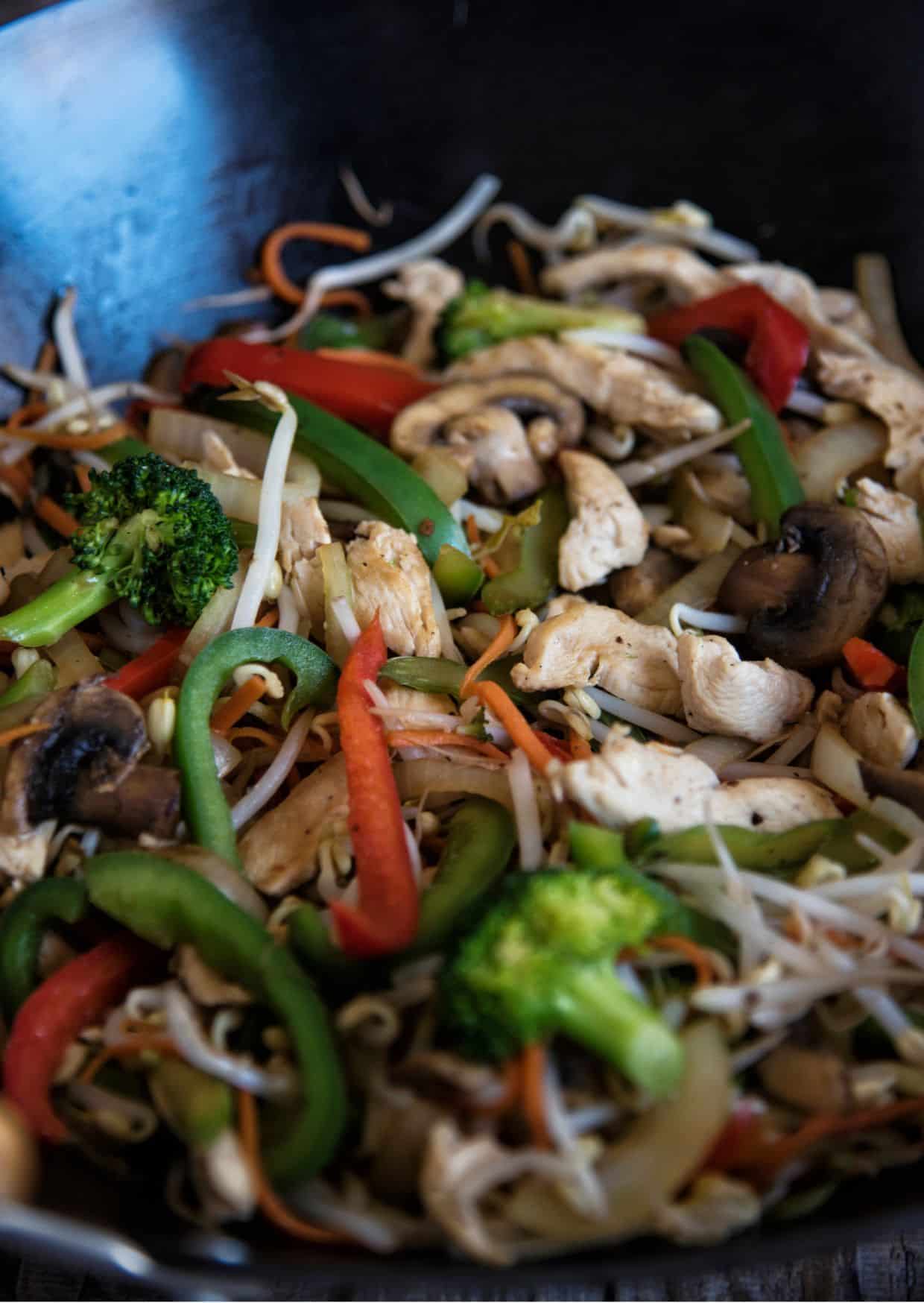
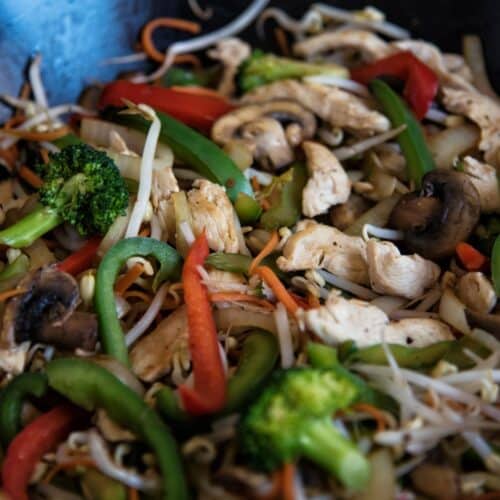
    Chicken And Vegetable Stir-Fry in a black pan.

    Of course, there are always exceptions to the rule. Dining out can be fun and dish-washing-free, but if one has the power to cook and eat healthy home-cooked food, why choose otherwise?

    When we are in a hurry, we always set our thoughts on making dinner as uncomplicated as possible. That doesn't always mean a few ingredients; we do appreciate diversity, after all.

    What it does mean, is that we can heat up a skillet, add some oil and sliced chicken breasts, then cook until tender. Remove meat from the pan, toss in the veggies which you sliced while the meat was cooking and let them cook for ten minutes or so, while you sit and sip a thyme lemonade.

    It sounds more complicated than it is! When cooking comes naturally, your motions will flow, and dinner will be on the table in no time at all.

    If you don't have any sesame oil on hand, you'll likely already have a substitution nearby -fish sauce, honey, or omit it. Use whatever flavors speak to you.

    Chicken And Vegetable Stir-Fry Recipe

    Serves: 4 Prep: 25 min Cook: 15 min

    Ingredients

    • 2 chicken breasts, sliced
    • 1 cup broccoli florets
    • 1 bell pepper, sliced
    • 2 carrots, julienned
    • 2 celery stalks, thinly sliced
    • 1 onion, sliced
    • 1 cup mushrooms, chopped
    • 1 cup bean sprouts
    • 2 tbsp. coconut oil
    • ¼ cup coconut aminos
    • 1 tsp. sesame oil
    • Sea salt and freshly ground black pepper

    Preparation

    1. Heat coconut oil in a skillet, or wok, over medium-high heat.
    2. Season the chicken to taste and cook until no longer pink, remove from skillet and set aside.
    3. Add all of the remaining vegetables and cook until they just start to soften 6 to 8 minutes.
    4. Drizzle the coconut aminos and sesame oil over the vegetables, add the chicken back to the skillet, give everything a good stir, cover and cook another 2 to 3 minutes.
    5. Add the bean sprouts and cook for 2 minutes, then serve.

    📖 Recipe

    Chicken And Vegetable Stir-Fry in a black pan.

    Chicken And Vegetable Stir-Fry Recipe

    Chicken and vegetable stir-fry has been cooked time and again, but this dish is different! Bean sprouts, coconut aminos, celery - it tastes fantastic!
    5 from 1 vote
    Print Recipe Pin Recipe
    Prep Time 25 minutes mins
    Cook Time 15 minutes mins
    Total Time 40 minutes mins
    Course Main Course
    Cuisine Chinese
    Servings 4 people
    Calories 271 kcal

    Ingredients
      

    • 2 chicken breasts sliced
    • 1 cup broccoli florets
    • 1 bell pepper sliced
    • 2 carrots julienned
    • 2 celery stalks thinly sliced
    • 1 onion sliced
    • 1 cup mushrooms chopped
    • 1 cup bean sprouts
    • 2 tbsp. coconut oil
    • ¼ cup coconut aminos
    • 1 tsp. sesame oil
    • Sea salt and freshly ground black pepper

    Instructions
     

    • Heat coconut oil in a skillet, or wok, over medium-high heat.
      2 tbsp. coconut oil
    • Season the chicken to taste and cook until no longer pink, remove from skillet and set aside.
      2 chicken breasts, Sea salt and freshly ground black pepper
    • Add all of the remaining vegetables and cook until they just start to soften 6 to 8 minutes.
      1 cup broccoli florets, 1 bell pepper, 2 carrots, 2 celery stalks, 1 onion, 1 cup mushrooms
    • Drizzle the coconut aminos and sesame oil over the vegetables, add the chicken back to the skillet, give everything a good stir, cover and cook another 2 to 3 minutes.
      1 tsp. sesame oil, ¼ cup coconut aminos
    • Add the bean sprouts and cook for 2 minutes, then serve.
      1 cup bean sprouts

    Nutrition

    Calories: 271kcalCarbohydrates: 12gProtein: 29gFat: 12gSaturated Fat: 7gPolyunsaturated Fat: 1gMonounsaturated Fat: 2gCholesterol: 73mgSodium: 423mgPotassium: 519mgFiber: 3gSugar: 4gVitamin A: 1796IUVitamin C: 64mgCalcium: 45mgIron: 4mg
    Keyword chicken, paleo, stir-fry, vegetables
    Tried this recipe?Let us know how it was!

    Filed Under: Paleo Chicken and Poultry Recipes, Paleo Recipes Tagged With: Complete Meals, cooking: fast cook, cooking: stovetop, diet: dairy-free, diet: egg-free, diet: no sweeteners, diet: nut-free, diet: shellfish-free, good for leftovers, Paleo Dinner Recipes, Paleo Low-Carb Recipes, Paleo Lunch Recipes

    Egg Roll Skillet Recipe

    November 7, 2022 by Paleo Leaper Leave a Comment

    Veggies, protein, and a generous amount of coconut aminos are what make this one-skillet "egg roll in a bowl" extra special - it is guaranteed to be loved at the first bite!

    So, when the craving for Paleo Chinese food rumbles in, know that this recipe goes from start to finish in just about half an hour.

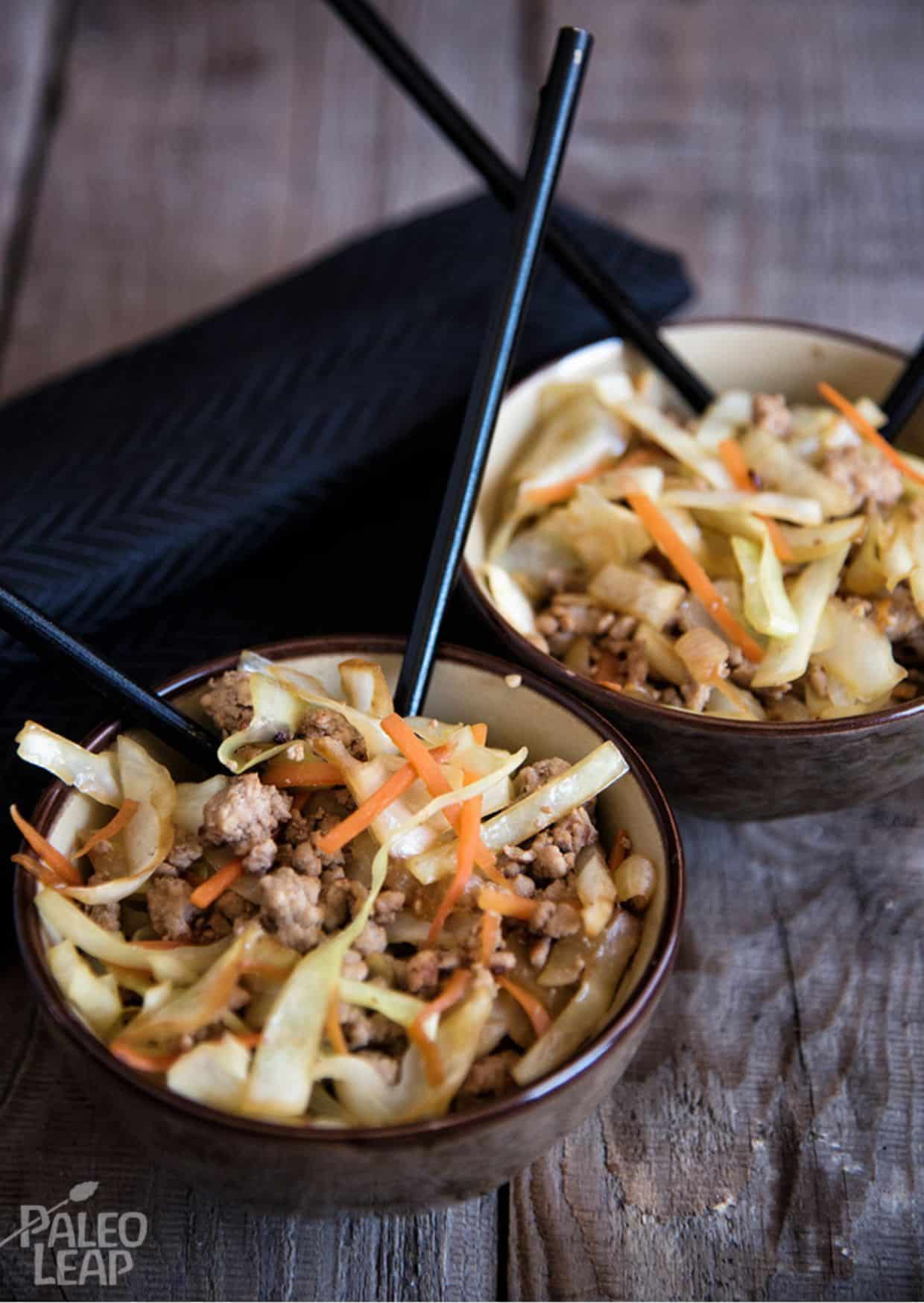
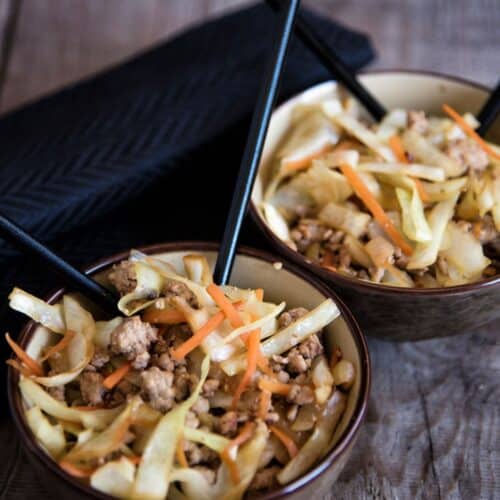
    Egg Roll Skillet in two pans.

    The ingredients are pure, basic, and fresh; you'll know exactly what goes in it and what you are missing out on soy sauce, hoisin sauce, egg roll wrappers made with flour, and seed oils. Roll out with the old and in with the new!

    Now is your chance to skip the tedious wrapping and frying of a traditional egg roll, and simply toss things into the skillet as they come.

    First, the coconut oil, followed quickly by garlic, ginger, and onion. Fry them well and toss with a wooden spoon until deliciously fragrant. Add a pound of ground pork, brown it thoroughly, then bring on the cabbage and coconut aminos.

    Coconut aminos are a wonderful substitute for soy sauce as it is made from the fermented sap of coconut trees, adding a slightly sweet, yet savory essence to the meal. Don't have a bottle on hand? Go out and stock up before you create this dish!

    If you are missing the egg (from the egg roll wrapper), simply boil or scramble a few, and add them to the dish. And if you enjoy the dangers of eating on the spicy side, take a spoonful of peppery sriracha sauce and apply it just before serving.

    Egg Roll Skillet Recipe

    Serves: 4 Prep: 20 min Cook: 15 min

    Ingredients

    • 1 lb. ground pork
    • 5 cups cabbage, finely shredded
    • 1 cup carrots, shredded
    • 1 onion, diced
    • 2 garlic cloves, minced
    • 1 tbsp. fresh ginger, minced
    • ¼ cup coconut aminos
    • 1 tbsp. coconut oil
    • Sea salt and freshly ground black pepper

    Preparation

    1. Heat coconut oil in a skillet over medium-high heat.
    2. Add the garlic, ginger, and onion; cook until soft and fragrant.
    3. Brown the pork in the same skillet with the ginger mixture, for about 5 minutes.
    4. Add the cabbage to the skillet and drizzle the coconut aminos. Season to taste with salt and pepper.
    5. Stir everything and cook until the cabbage is soft.
    6. Add the shredded carrots and cook while stirring, for 2 to 3 minutes.

    📖 Recipe

    Egg Roll Skillet in two pans.

    Egg Roll Skillet Recipe

    Dreaming of Paleo Chinese food? Our egg roll skillet is ready in less than 30 minutes to satisfy all of your egg roll cravings, without the wrapper.
    5 from 1 vote
    Print Recipe Pin Recipe
    Prep Time 20 minutes mins
    Cook Time 15 minutes mins
    Total Time 35 minutes mins
    Course Side Dish
    Cuisine American
    Servings 4 people
    Calories 393 kcal

    Ingredients
      

    • 1 lb. ground pork
    • 5 cups cabbage finely shredded
    • 1 cup carrots shredded
    • 1 onion diced
    • 2 garlic cloves minced
    • 1 tbsp. fresh ginger minced
    • ¼ cup coconut aminos
    • 1 tbsp. coconut oil
    • Sea salt and freshly ground black pepper

    Instructions
     

    • Heat coconut oil in a skillet over medium-high heat.
      1 tbsp. coconut oil
    • Add the garlic, ginger, and onion; cook until soft and fragrant.
      2 garlic cloves, 1 tbsp. fresh ginger, 1 onion
    • Brown the pork in the same skillet with the ginger mixture, for about 5 minutes.
      1 lb. ground pork
    • Add the cabbage to the skillet and drizzle the coconut aminos. Season to taste with salt and pepper.
      5 cups cabbage, ¼ cup coconut aminos, Sea salt and freshly ground black pepper
    • Stir everything and cook until the cabbage is soft.
    • Add the shredded carrots and cook while stirring, for 2 to 3 minutes.
      1 cup carrots

    Nutrition

    Calories: 393kcalCarbohydrates: 14gProtein: 21gFat: 28gSaturated Fat: 12gPolyunsaturated Fat: 2gMonounsaturated Fat: 11gCholesterol: 82mgSodium: 445mgPotassium: 612mgFiber: 4gSugar: 6gVitamin A: 4507IUVitamin C: 36mgCalcium: 71mgIron: 2mg
    Keyword egg, paleo, roll, skillet
    Tried this recipe?Let us know how it was!

    Filed Under: Paleo Pork Recipes, Paleo Recipes Tagged With: Complete Meals, cooking: fast cook, cooking: fast prep, cooking: stovetop, diet: egg-free, diet: no sweeteners, diet: nut-free, diet: shellfish-free, good for leftovers, Paleo Autoimmune-Friendly Recipes, Paleo Budget-Friendly Recipes, Paleo Dinner Recipes, Paleo Kid-Friendly Recipes, Paleo Low-Carb Recipes, Paleo Lunch Recipes, Paleo Nightshade-Free Recipes

    Simple Paleo Chicken Salad Recipe

    November 5, 2022 by Paleo Leaper Leave a Comment

    Chicken salads run the free range from Chinese chicken salad all the way to spicy Mexican-style chicken salad and back to classic barbecue, all without the desire for more, or better.

    Who can resist a summery chicken salad with creamy Paleo ranch dressing? We can't, and we don't expect you will want to pass this recipe up either. Nothing could be more simple, or more classic, than what you are about to create.

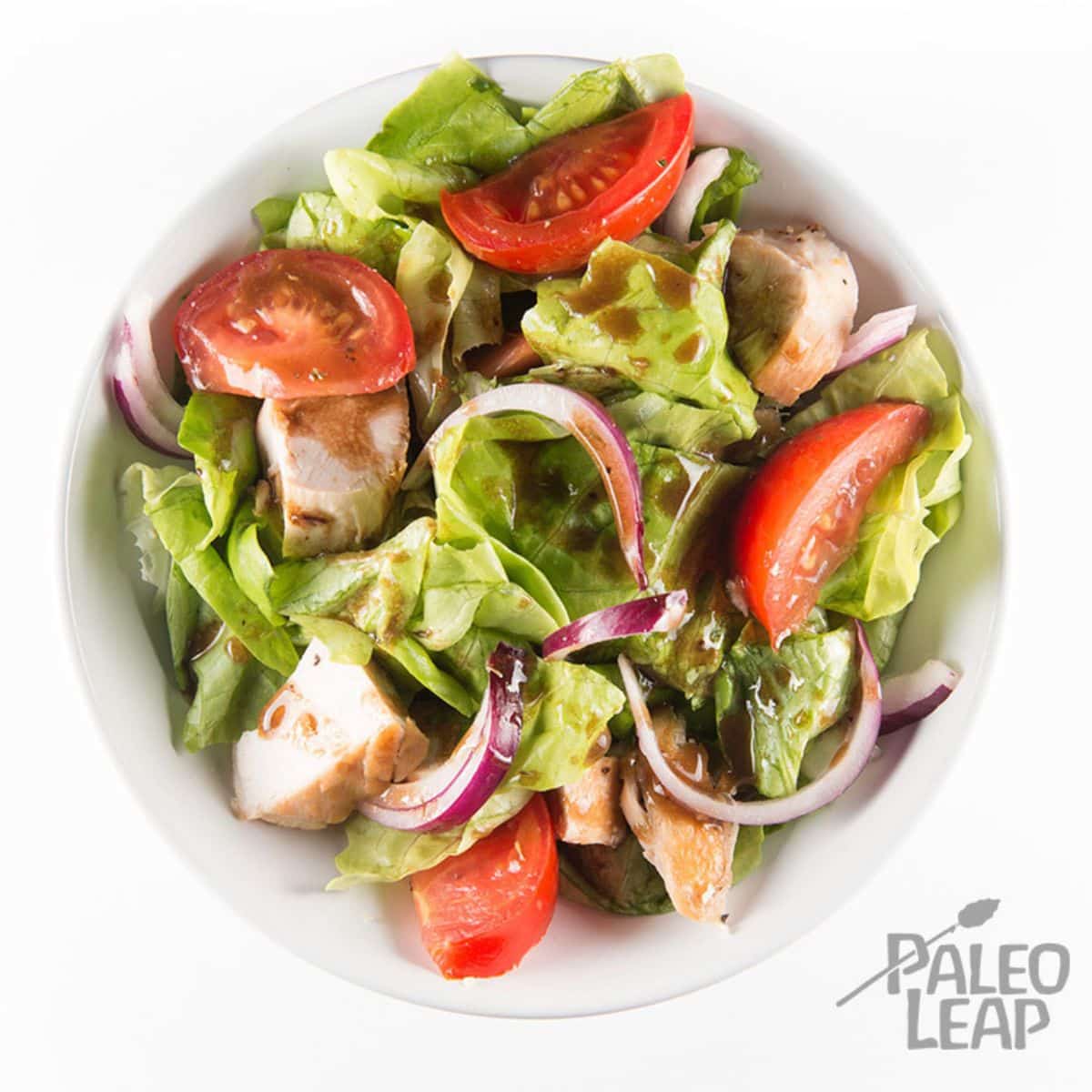
    Simple Paleo Chicken Salad in a white bowl.

    To start, cook your chicken breasts however you like them best: grilled, fried, baked, or boiled. If you have been preparing some staple dishes ahead of time, you may even have some slow cooker shredded chicken on hand, ready to thaw at a moment's notice - perfect for when unexpected guests show up at your door around dinnertime.

    It may not happen often, but when it does, it feels great to be prepared. All you have to do now is wash, cut, chop and toss the chicken salad together. A head of lettuce, a handful of tomato wedges, half a sliced onion, and a homemade vinaigrette will pull it together in a matter of minutes.

    If you have a little extra time on your hands, and you are searching for a low-carb accompaniment, let us be the first to suggest a side of oven-roasted garlic cabbage to go along with your chicken salad. It may just be the unexpected thing you have been expecting all along.

    Simple Paleo Chicken Salad Recipe

    Serves: 4 Prep: 15 min

    Ingredients

    • 1 large head of butter lettuce
    • 2 chicken breasts, cooked
    • 3 small tomatoes, cut into wedges
    • ½ red onion, sliced
    • ¼ cup extra-virgin olive oil
    • 2 tbsp. balsamic vinegar
    • 2 tsp. Dijon mustard
    • 2 pinches of dried thyme
    • 2 pinches of dried oregano
    • Sea salt and freshly ground black pepper

    Preparation

    1. Combine the lettuce, chicken, tomatoes, and onion in a bowl.
    2. To prepare the vinaigrette, simply whisk together the olive oil, vinegar, and mustard. Add the thyme and oregano, then season to taste.
    3. Serve the salad with the vinaigrette right before eating.

    📖 Recipe

    Simple Paleo Chicken Salad in a white bowl.

    Simple Paleo Chicken Salad Recipe

    A chicken salad is many things to many people - Chinese, Mexican, BBQ - and sometimes it is plain and simple, appetizing all the way!
    5 from 1 vote
    Print Recipe Pin Recipe
    Prep Time 15 minutes mins
    Total Time 15 minutes mins
    Course Salad
    Cuisine American
    Servings 4 people
    Calories 275 kcal

    Ingredients
      

    • 1 large head of butter lettuce
    • 2 chicken breasts cooked
    • 3 small tomatoes cut into wedges
    • ½ red onion sliced
    • ¼ cup extra-virgin olive oil
    • 2 tbsp. balsamic vinegar
    • 2 tsp. Dijon mustard
    • 2 pinches of dried thyme
    • 2 pinches of dried oregano
    • Sea salt and freshly ground black pepper

    Instructions
     

    • Combine the lettuce, chicken, tomatoes, and onion in a bowl.
      1 large head of butter lettuce, 2 chicken breasts, 3 small tomatoes, ½ red onion
    • To prepare the vinaigrette, simply whisk together the olive oil, vinegar, and mustard. Add the thyme and oregano, then season to taste.
      ¼ cup extra-virgin olive oil, 2 tbsp. balsamic vinegar, 2 tsp. Dijon mustard, 2 pinches of dried thyme, 2 pinches of dried oregano, Sea salt and freshly ground black pepper
    • Serve the salad with the vinaigrette right before eating.

    Nutrition

    Calories: 275kcalCarbohydrates: 3gProtein: 27gFat: 17gSaturated Fat: 3gPolyunsaturated Fat: 2gMonounsaturated Fat: 11gCholesterol: 73mgSodium: 93mgPotassium: 252mgFiber: 0.3gSugar: 2gVitamin A: 20IUVitamin C: 1mgCalcium: 20mgIron: 1mg
    Keyword chicken, paleo, salad
    Tried this recipe?Let us know how it was!

    Filed Under: Paleo Chicken and Poultry Recipes, Paleo Recipes, Paleo Salad Recipes Tagged With: cooking: fast prep, diet: dairy-free, diet: egg-free, diet: no sweeteners, diet: nut-free, diet: shellfish-free, Paleo Budget-Friendly Recipes, Paleo Dinner Recipes, Paleo Kid-Friendly Recipes, Paleo Low-Carb Recipes, Paleo Lunch Recipes

    Paleo (And Keto!) Foods: Pili Nuts

    November 19, 2019 by Paleo Leaper Leave a Comment

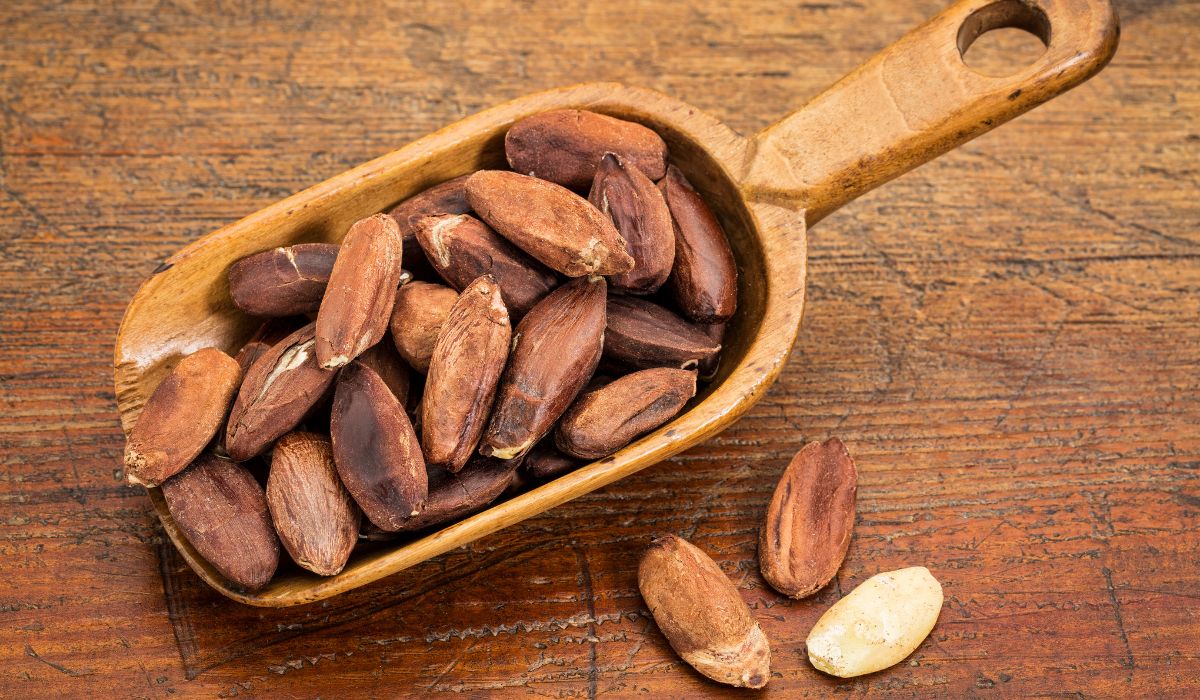
    Pili Nuts

    Maybe you’ve seen them around, or maybe you’ve been advised to eat them yourself. You might have already tried them if you've ever had moon cake for Chinese New year. Pili nuts are also sometimes made into candy and sweets, especially in southeast Asia, which is where they naturally grow. When they’re not in candy form, the nuts are super popular with the low-carb crowd. But why are they better than any other kind of nuts?

    What's the big deal with pili nuts?

    Good question!

    For one thing, they're low in carbs - probably the lowest-carb nut that typically gets sold as a snack. Pili nuts only have about 1 gram of carbs per ounce (about a handful) so they're very easy to fit into keto or low-carb plans.

    Nut typeNet carbs per 1 ounce (about a handful)Fiber per 1 ounce (about a handful)
    Almonds2.53.5
    Cashews7.62.94
    Macadamias1.482.44
    Pistachios4.73
    Walnuts21.88
    Pili nuts1<1 gram

    (Nutrition information taken from the US Department of Agriculture’s nutrient database. There’s some more detailed information about pili nuts available in this study for the truly curious).

    Pili nuts are clearly the lowest-carb option of the bunch.

    To add to their low-carb charms, pili nuts are also pretty tasty - they have a nice, mild, nutty flavor. Because they’re so high in fat and relatively low in fiber, they have a really great texture that might remind you of macadamias (another high-fat, low-carb nut). They go really well in desserts and sweets, but also in savory recipes.

    Nutritional Info

    So, they’re low in carbs, which is nice for the folks on keto diets, but most nuts are already low-carb by everything but keto standards. So if you’re not counting every single gram of carbs, is there any reason to shell out for pili nuts?

    Fat quality

    Most of the fat is saturated and monounsaturated, with only a little bit of polyunsaturated fat (PUFA). That’s good news - saturated and monounsaturated fats are the ones you want! Here’s a quick comparison

    Nut typeSaturated fat (grams)Monounsaturated fat (grams)PUFA (grams)
    Almonds1.068.833.45
    Cashews2.2 6.75 2.22 
    Macadamias3.42 16.70.43
    Pistachios1.686.594.08
    Walnuts1.722.513.2
    Pili nuts8.7 10.42.1

    Pili nuts have a lower PUFA content per ounce than anything except macadamias, and they have los of good saturated and monounsaturated fats. In fact, pili nuts are particularly rich in oleic acid, the same type of monounsaturated fat that’s in olive oil and avocados. Another study also found that pili nut oil was resistant to oxidation, which is good news.

    Micronutrients (vitamins and minerals)

    paleo and magnesium

    For micronutrients, pili nuts have some B vitamins and some notable mineral content. They’re particularly high in magnesium, which helps with everything from sleep quality to digestion to the weird muscle cramps that can sometimes happen when people just start keto for the first time. According to this study, most of the micronutrients in pili nuts are pretty bioavailable, and if you eat them several times a week, they probably make a not-insignificant contribution to the overall nutrient content of your diet. It’s not like Brazil nuts where the selenium is off the charts from just one nut, but they’re pretty good for you.

    Other good stuff

    One study found that the pomace of pili nuts (that’s not the nut part; it’s another part of the plant) is full of antioxidants. In a very small study (only 10 people), drinking a special antioxidant-rich drink made of pili nut pomace increased people’s total blood antioxidant capacity. But again, that doesn’t have much to do with the nuts - the drink was made using a waste product of pili nut processing.

    Buying and eating pili nuts

    Where do I get them?

    For most people, online is probably your best bet. Pili nuts are a pretty niche product, so they’re hard to find in a lot of major grocery stores. Some Whole Foods carry the nuts - and/or a new yogurt brand made from them - but not everyone has access to Whole Foods regularly. Most online health-food markets have them; so does Amazon.

    Remember that if you’re buying anything but the plain nuts, it’s a good idea to take a close look at the ingredients label to make sure there isn’t anything you don’t want.

    How do I eat them?

    Just like any other nut - you can eat them plain by the handful, throw them on a salad, or cook with them. You can also find pili nut butter online, which can be used just like any other nut butter (as a dip for apples slices, a spread for Paleo crackers, a base for salad dressings…).

    Allergies

    Whenever we’re talking about nuts, unfortunately allergies always come into play. A couple of studies have found that pili nuts may be cross-reactive with other nuts and legumes, meaning that if someone has an allergy to other tree nuts or peanuts, it’s possible that they’ll react to pili nuts as well. It’s not a guaranteed problem, but considering how serious nut allergies can be, it’s worth talking to an allergist or nutritionist about.

    The bottom line

    For people with some money to spend on a fun treat, pili nuts are a perfectly fine option. They’re probably on the high end of the quality scale for nuts generally; they don’t have anything that puts them outside a Paleo framework. But with that said, they definitely aren’t necessary, and if the grocery budget is getting tight, this should be one of the first things cut from the list. There’s nothing here that isn’t available from other foods, and there’s no reason to skimp on protein or vegetables for something that’s basically a luxury.

    Have you ever tried pili nuts, as a snack or an ingredient in something else? What did you think of them? Let us know on Facebook or Twitter!

    Filed Under: Learn About Paleo & Keto Diets, Paleo Diet Foods

    7 Paleo and Gluten-Free Breadcrumb Substitutes

    November 6, 2019 by Paleo Leaper Leave a Comment

    From chicken nuggets to tater tots, everyone needs a crunchy crust every now and again. And breadcrumbs also have other uses, especially in meatballs, soups, and other recipes that need thickening.

    Without breadcrumbs or cornmeal to rely on, how can you make it work on Paleo? Here are 7 alternatives, from the 0-carb to the vegan-friendly to the last-minute “less bad” solution.

    1. Coconut flakes: for crunchy coatings

    Coconut flakes are great for adding a crunchy coating to the outside of meats or baked goods - they’re equally tasty on sweet and savory foods. Make sure to get the unsweetened kind; the only ingredient listed on the package should be coconut.

    For recipe inspiration, try these crispy coconut shrimp with mango sauce and then have fun coconutting all your own recipes. Coconut-crusted chicken? How about Hawaiian-inspired pork cutlets with a crunchy coconut exterior, served with grilled pineapple?

    2. Almond meal or almond flour: as a binder/thickener or coating

    nuts

    This one is a classic for Paleo recipes, and it’s a classic for a reason - almond meal/flour is widely available, easy to use, and has a mild taste that works with most dishes. Use it as a thickener or as a flour substitute to coat chicken nuggets, shrimp, vegetables, and more!

    Depending on how crunchy you want your coating, you can go with one of several options:

    • Chopped almonds: relatively large pieces - chop them yourself with a knife or use a food processor.
    • Almond meal: a very coarse flour with larger grains than regular wheat flour.
    • Almond flour: a finer flour that’s more comparable to wheat flour.

    (Check out more information about almond meal/flour, including how it stacks up to wheat flour, here.)

    Recipe inspiration:

    • Meatballs with marinara sauce (as a binder)
    • Chicken meatballs (as a binder)
    • Guacamole stuffed chicken (as a crunchy coating)

    3. Coconut flour: as a binder/thickener or coating

    coconut good

    Coconut flour: the other gluten-free flour that pops up in recipes all over the Paleosphere! Coconut flour vs. almond flour is almost more of a personal preference than anything else - some recipes even use a combination of both. Coconut flour is a little more “thirsty” than almond flour (it sucks up more water), which could be a plus or a minus depending on your recipe.

    Recipe inspiration:

    • Keto buffalo chicken meatballs (as a binder)
    • Chicken nuggets with avocado-cilantro dipping sauce (as a coating - this one uses both almond and coconut flour, because it’s fancy!)
    • Keto zucchini fries (as a coating)

    4. Pork cracklings/pork rinds: as a coating or topping

    This is probably the favorite 0-carb/keto option, but also delicious if you just like pig skin. Pork cracklings have 0 total carbs - they’re basically pork-flavored crunch packed in a bag. (If you’re curious, pork cracklings are actually made from the skin of the pig. They’re crunchy and delicious because of the proteins in the skin, which also happen to be super good for you).

    To make “breadcrumbs” out of pork rinds/pork cracklings, simply put the rinds in a bag, crush them to your desired size with a rolling pin or by rolling a can over them, and voila! Coat them on to the outside of a chicken breast or anything else that needs some crunch.

    If you used to be a fan of sprinkling breadcrumbs over the top of dishes to get a nice crunch, you can also use crushed pork rinds in exactly that same way. This works really well on casseroles and other similar dishes.

    5. Tapioca starch: as a binder/thickener or coating

    The big selling point of tapioca starch as opposed to almond or coconut flour is its finer grain size and the slicker, silkier texture of the resulting recipe. It’s a little bit like the crunchy coating that you get at some -Chinese takeout places - a very smooth, glossy effect. Tapioca starch is definitely not for the low-carb crowd, but it’s perfect if what you want is a very fine crispy coating without any noticeable texture. It also works well as a thickener in gravies and soups.

    For recipe inspiration, try these crispy chicken bites - here, the tapioca starch is used for a silky-soft, crunchy coating. In this gravy, you can add tapioca starch to thicken it up nicely to taste.

    6. Ground chia or flax seeds: mostly as binders

    Chia seeds aren’t great for breading the outsides of foods, but they’re excellent substitutes for breadcrumbs as a thickener in foods like meatballs. They do the same thing - absorb and hold a ton of water - so they have basically same thickening effect. They’re also used a lot as a vegan egg substitute in meatballs, so there are tons of recipes featuring them. You can buy the ground ones or grind them yourself in a food processor.

    Ground flax can work either as a “flour” for breading the outside of a food or as a thickener/binder to stir into soups, stews, and meatballs. To get the breadcrumb effect, use ground flax, not whole flaxseeds.

    7. Store-bought gluten-free breadcrumbs: as a last resort

    These are most likely a less-bad non-Paleo option, not a first-choice Paleo option. But in a pinch, or if you’re super pressed for time, you can actually buy gluten-free breadcrumbs online or in stores. These are likely to be made of rice flour (so they’re not strictly Paleo) and may have other junk in them as well: read the ingredients label super carefully and eat at your own risk!

    Use of these will depend on the recipe, but if you can’t use them as a 1:1 replacement for “normal” breadcrumbs, the packaging on that particular brand will probably clue you in to its idiosyncracies.

    There are options. There are lots of options.

    Whether you need a totally keto-friendly substitute or you’re looking for a specific flavor or you’re struggling with nut allergies, there’s absolutely a breadcrumb substitute out there for you!

    It also bears mentioning that in meatloaf/meatballs, you may not need a binder at all - some recipes can hold together just fine without any egg or breadcrumb action. But for those recipes that need some help, especially the ones that involve crispy breaded coatings, check out one of the many Paleo-friendly options before turning back to the baking aisle.

    Filed Under: Learn About Paleo & Keto Diets

    Building a Paleo Shopping List: 7 Staples for More Interesting Salads

    December 4, 2018 by Paleo Leaper Leave a Comment

    Throwing together a salad is easy: lettuce, cucumbers, red onions, walnuts, chicken, oil, vinegar, done.

    Throwing together an interesting salad is a harder job! Especially if you eat salad day after day, the same old variations on a theme can get really old, really fast. If that’s you, check out these low-cost grocery staples that can liven your lunch back up and add a bit of interest without sending you to a dozen specialty stores or breaking the bank.

    1. Cabbage

    Coleslaw is technically a salad, and a great option if you’re sick to death of lettuce. But even beyond that, a handful of crunchy cabbage can really pep up a pile of greens - or substitute for them.

    Nutrition

    Per 1 cup of shredded cabbage (any color):

    • Protein: 1 gram
    • Fat: 0 grams
    • Carbs: 4 grams (2 grams net)
    • Fiber: 2 grams

    Pair with…

    • Kale, apples, almonds, and a simple oil-and-vinegar dressing
    • Cranberries and pecans
    • Mayonnaise for a classic coleslaw

    Substitutes

    Matchstick carrots have a similar snap and are lower in FODMAPs, which makes them a bit easier on the digestion.

    2. Winter squash

    paleo AcornSquash

    Butternut or acorn squash adds a warm, savory-sweet note to any salad, and it’s a great counterpoint to crunchier toppings like nuts or bacon. Or branch out into new varieties like delicata, kouri, and buttercup - a salad is a nice, low-stress way to test a new squash since you can just pick it off if you hate it.

    Nutrition

    Per ½ cup of cubed cooked butternut squash:

    • Protein: 1 gram
    • Fat: 0 grams (If you roast the squash, you'll also get some fat from the oil or butter)
    • Carbs: 10 grams
    • Fiber: 3 grams

    Pair with…

    • Parsnips, baby spinach, and a mustard vinaigrette
    • Greens, red onions, toasted almonds, and a sun-dried tomato dressing

    Substitutes

    Cooked beets (roasted or boiled - these are good hot or cold)

    3. Broccoli or cauliflower (cooked or raw)

    Broccoli and cauliflower add a nice heft to a big leafy salad - roast them in plenty of olive oil for a nice deep flavor and crispy exterior, steam them lightly, or leave them raw for even more crunch.

    Broccoli Paleo

    Nutrition

    Per ½ cup of broccoli or cauliflower (they’re so similar that the nutrition info is essentially the same):

    • Protein: 1 gram
    • Fat: 0 grams
    • Carbs: 3 grams
    • Fiber: 1 gram

    Pair with…

    • Gingered beef, mixed greens, and a tasty vinaigrette
    • Bacon, oranges, and red onions
    • Mayonnaise, hard-boiled eggs, and bacon

    Substitutes

    Roasted Brussels sprouts or artichoke hearts would both add a similar weightiness and taste pretty good with the same types of dressing.

    4. Marinated or pickled vegetables

    The tangy sourness of a good pickle goes very well with a big pile of veg, and there’s a whole lot more out there than just dill cucumbers! You can also get a pretty intense flavor just by marinating vegetables before you add them to a salad. One easy first step towards marinated toppings is to grab or make some sumac onions - these are the pink-purple onions that you can get at Middle Eastern restaurants. On the pickle front, kimchi is a great addition to any Asian-inspired salad, and giardiniera works well in a hearty winter mix.

    Nutrition

    (Will depend on specifically what vegetables you pick, but most have almost no protein, very little fat, and maybe a couple grams of carbs with some fiber - unless there’s sugar in the pickle)

    Pair with…

    • Try dill pickles with hamburger, mixed greens, tomato, and onion.
    • Try giardiniera with kale, Italian sausage, and red peppers.
    • Try pickled or marinated beets with spinach, walnuts, and red onions.

    Substitutes

    There aren't really any substitutes for the flavor of pickled things, but you could try seaweed if you want a strong-flavored topping with a bit more wetness to it - just get one of those little containers of seaweed at the grocery store and divide it up among several salads as a topping rather than eating it all by itself as a side. (Or scarf it down immediately because that stuff is delicious).

    5. Alfalfa sprouts

    Sprouts add a fun fluffiness to a salad and they have a nice mild crunchy texture. Yes, alfalfa is technically a legume. But studies on sprouts indicate that they contain very little of the antinutrients that ordinarily make legumes less than great. There are biological reasons why this is the case - the antinutrients are there to protect the seed, not the whole sprout, for example - but basically they’re a non-issue unless you’re eating piles and piles of sprouts all day every day.

    Nutrition

    Per 1 cup of sprouts:

    • Protein: 1 gram
    • Fat: 0 grams
    • Carbs: 1 gram
    • Fiber: 1 gram

    Pair with…

    • Shaved carrots, green onions, and an almond-butter dressing
    • Carrots, broccoli, snap peas, and chicken with Chinese dressing

    Substitutes

    Kelp noodles (exactly what it says on the tin: noodles made from kelp) for a pile of fluffy stuff with a slightly different flavor.

    6. Water chestnuts

    Water chestnuts are available in the Asian food aisle, usually in a can. They have a very mild and pleasant taste, but the real appeal is in the crunch - they’re just so nicely snappy and crisp between the teeth.

    Nutrition

    Per ½ cup of chestnuts:

    • Protein: 1 gram
    • Fat: 0 gram
    • Carbs: 15 grams - these do have a few more carbs than many other vegetables, so low-carbers might want to pick another crunch.
    • Fiber: 2 grams

    Pair with…

    Water chestnuts go really well with just about anything Asian-inspired. If you have any leftover black pepper chicken or sweet garlic chicken, try throwing it on top of some greens with water chestnuts and broccoli raab.

    Substitutes

    Apples or pears might substitute some of the juicy crunch texture, but admittedly with a much sweeter flavor profile.

    7. Tahini

    Tahini

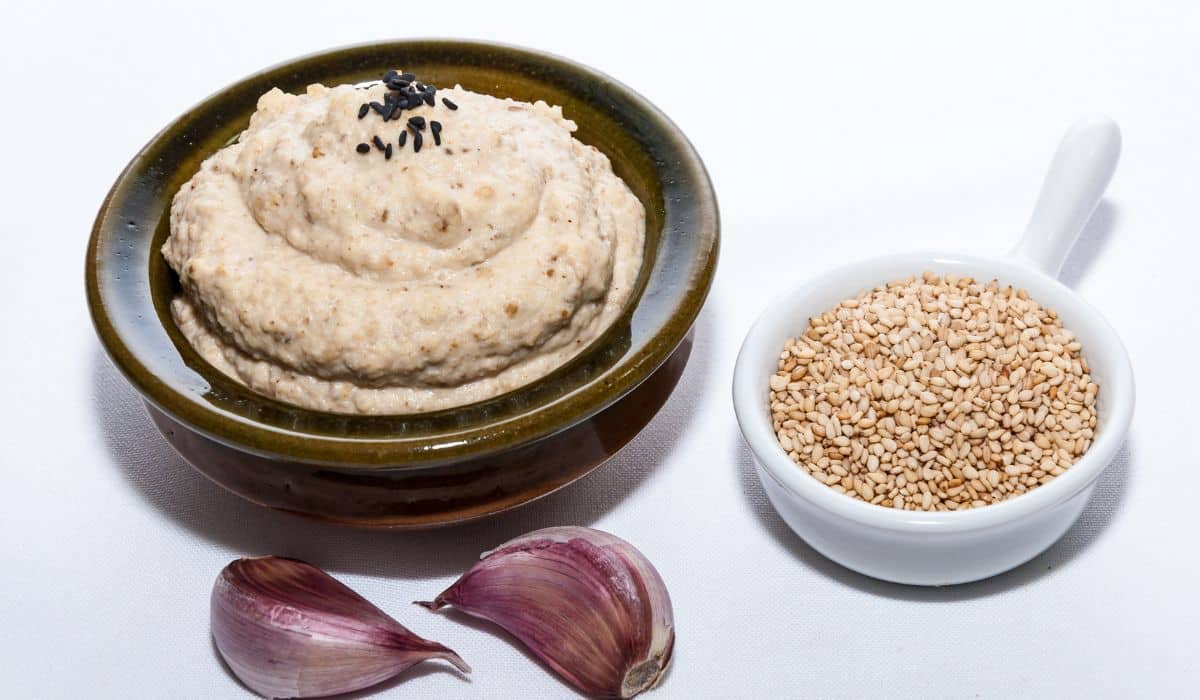
    Tahini is a paste made of sesame seeds, and it’s delicious in salad dressing. Mix up equal parts of tahini and olive oil, then add lemon juice to taste and water to make it thinner if you like. Pour over your vegetables of choice and enjoy! It’s a little bit earthy but also very bright, and delicious with all kinds of salads.

    Nutrition

    Per 2 tbsp.

    • Protein: 5 grams
    • Fat: 16 grams
    • Carbs: 6 grams
    • Fiber: 3 grams

    For the Omega-6 and PUFA-watchers, the fat breakdown per 2 tbsp. is:

    • 2 grams saturated
    • 6 grams monounsaturated
    • 7 grams polyunsaturated

    Pair with…

    Leftover lemon and thyme chicken, pomegranate salmon, or zaatar grilled chicken - on a bed of spinach with some cucumbers and sumac onions.

    Substitutes

    Nut butter-based dressings can offer a similar texture; check out cashew butter or almond butter for potential alternatives.

    What’s in your favorite salad? What’s your secret ingredient to make it delicious? Let us know on Facebook or Twitter!

    Filed Under: Learn About Paleo & Keto Diets

    Paleo for Picky Eaters: 7 Tips for Kids and Adults

    November 6, 2018 by Paleo Leaper Leave a Comment

    Picky Eaters

    There's no one set definition of "picky eater," but in general, picky eaters refuse to try new foods and/or eat only a very limited set of foods. Depending on which study you look up, the percentage of people who are picky eaters varies a lot although it does tend to peak in the toddler years and go down by age 6 or so. Some people are picky eaters for their whole lives, though - there are adults who still gag if they touch a vegetable.

    Picky eaters tend to eat less meat (except for processed meat - they’ll eat bologna but not chicken drumsticks!) fruit, and vegetables - in other words, basically all the Paleo staples. If this is you (or your kid), the thought of eating meat and veg every day might seem totally overwhelming - here are 7 tips to help make it work.

    1. Deal with any digestive issues right away

    Some picky eaters report feeling really full, really fast, or they get bad heartburn. Other people are picky specifically because they know that lots of foods irritate their digestive system, so they feel nervous about trying new ones. Some suggestions for dealing with this:

    • Digestive enzymes - can help with the feeling of food sitting like a brick in your stomach.
    • Probiotics - can help with gassiness, bloating, diarrhea/constipation, and assorted other gut problems. Probiotic foods are good in theory, but could be really challenging for people who are already picky eaters.
    • Fiber supplements - picky eaters tend to have lower fiber intake and more issues with constipation. If that’s a concern, a fiber supplement might be helpful.
    • Food sensitivities: if you’re sensitive to FODMAPs or fructose or anything else, get it off your plate

    This is really the low-hanging fruit of picky eating: if your (or your child’s) pickiness is really caused by digestive reactions rather than taste/texture aversion, then you can get pretty far just by healing your gut.

    2. Lean on “gray area” foods for the transition.

    paleo Bowlofwhiterice

    It rarely works well to go cold turkey from a diet of hot dogs and white bread to a diet of liver and raw broccoli, especially for a picky eater. A more reasonable approach could include adding new foods slowly while seeking out more Paleo-friendly alternatives for staples. For example, plain white rice with butter is better than bread, if only because white rice doesn’t contain the same antinutrients that wheat does.

    Or if the picky eater in your house will only eat super processed meat (bologna, hot dogs, etc.), what about some healthier versions of those? There are lots of Paleo-friendly organic hot dogs in the world; they’re a bit more expensive, but they do exist. Work with what you have, and slowly move towards a more unprocessed direction.

    3. Find foods and preparation methods that work with your (or your child’s) tastes.

    There’s no one single food that’s required for Paleo, and with a little creativity, you can accommodate a lot of different tastes. Depending on what specifically is the issue, here are some suggestions:

    General aversion to new foods: repeated low-pressure exposure (even just having it on the table so you can see/smell it can be helpful), imitation foods like Paleo bread/bread mixes, and vegetables in the same family as ones you already like. For example, if you already like carrots, try rainbow carrots, beets, and winter squash. If you already like onions, try leeks. If you already like broccoli, try cauliflower, broccolini, or Chinese broccoli.

    Won’t eat meat unless it’s breaded/fried: Use almond flour or almond meal as a breading instead and carry right on! For example, try these mustard-crusted drumsticks.

    Sensitive to bitterness/hates vegetables: it’s OK if you don’t want to eat tons of vegetables at first. Eat lots of animal foods and berries and use lots of spices for the antioxidants. When you start adding vegetables, roast them with lots of fat and add salt to taste. Or try sweeter vegetables with honey or maple syrup in the sauce, like these honey-roasted carrots or this this stuffed squash.

    Won’t eat anything mixed: no problem; separate everything, just do it with Paleo foods!

    4. Cutting caloric drinks might help.

    Sugar

    Some research suggests that picky eaters make up for the food they won’t eat by drinking milk, juice, or other high-calorie liquids between meals. Water is always fine, but taking away calorie-dense drinks between meals might be the perfect way for a picky eater to work up enough of an appetite to legitimately want food at mealtime.

    And as a bonus, getting rid of caloric drinks between meals will also help cut down on some of the extra sugar. Picky eaters already tend to eat more sugar than non-picky eaters; getting rid of fruit juice and sugary soda can really help. Can’t stand plain water? Try sparkling water, flavored soda water, or slowly diluting juice with water a bit more each time.

    5. Don’t stress too much about nutrient deficiencies

    This review found that picky eaters generally aren’t that much more at risk of nutrient deficiencies than typical eaters. Granted, typical eaters on the standard American diet aren't usually doing so hot nutrient-wise, but they're not typically keeling over from scurvy or rickets.  Vitamin E and folate were nutrients of some concern for picky eaters, but unless the person is literally eating only five foods or something totally extreme, the review indicates that it’s not likely to be an emergency. Humans are resilient creatures and adapt well to even less-than-ideal diets - there's plenty of time to ease into things and add new foods slowly.

    6. For kids, texture exposure might be key

    This study found that when researchers gave picky children a yogurt that they liked, changing the texture would cause them to reject it even though changing the color didn’t. This study also suggested that texture plays a huge role in picky eating. Specifically:

    • Eggs seem to be problematic, for whatever reason.
    • Slimy/mushy textures are unappealing (slimy food is gross to just about everyone, but mushy foods like applesauce, overcooked vegetables, etc. bear mentioning).
    • The texture of raw vegetables can be challenging.

    None of these are required on Paleo and you can skip them all if you like! Or skip whatever other food is just Not An Option for you.

    Fascinatingly, this study found that when children could play with a texture with their hands first, they were more likely to eat foods with that texture. Asking kids to help arrange or prepare raw vegetables (like carrot sticks or orange slices) might be a good way to get in that first exposure.

    7. Make it a dialogue

    This study takes an interesting perspective: a lot of “picky eating” is in the eye of the parent. It’s normal for kids to temporarily go on crazes for particular foods or refuse to eat certain foods for a while. It's not personal; it's just what kids do. If parents get really anxious about this and start pressuring the kid, the kid picks up on it and gets anxious and resistant right back, and boom: an actual problem is born!

    And high-pressure tactics don’t even work that well - this study found that pressuring kids to eat wasn’t associated with them actually eating more vegetables. Insisting on the short-term goal (getting the kid to eat the food on the plate right now) takes away from the long-term goal (teaching healthy eating patterns/habits for life).

    Instead of insisting on a particular outcome, the first study suggests…

    • Giving a choice: instead of “You have to eat all the vegetables on your plate,” try “would you like carrots or broccoli?”
    • Accepting a certain number of bites as a compromise
    • Explaining why certain foods are good to eat
    • Asking the child how he/she feels ("Does your stomach feel full?")
    • Involving the child in grocery shopping/meal prep

    Basically, instead of “I need to make my kid eat this,” the approach is “my kid and I will communicate to help him/her learn and practice healthy eating patterns.” No word from the authors whether this approach works with spouses, partners, and the inner five-year-old that lives inside all of us, but it can’t hurt to keep the focus on building long-term habits rather than fixating on any particular piece of broccoli.

    As for the individual household rules - like whether you will or won't make separate meals for the picky eaters, or what kinds of snacks are allowed between meals - that's for each family to decide based on what works for them, but the dialogue/long-term approach is a good way to start thinking about it.

    What's your favorite picky-eater Paleo recipe? Got a no-fail strategy? Let us know on Facebook or Twitter!

    Filed Under: Learn About Paleo & Keto Diets

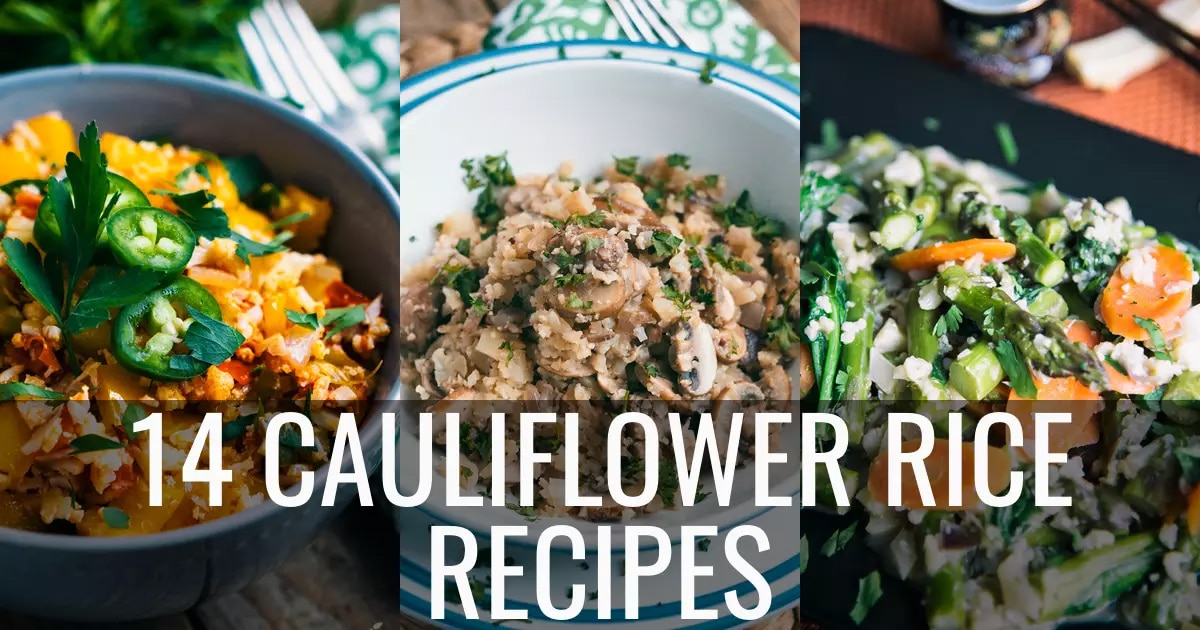
    14 Paleo Cauliflower Rice Recipes

    October 13, 2018 by Paleo Leaper Leave a Comment

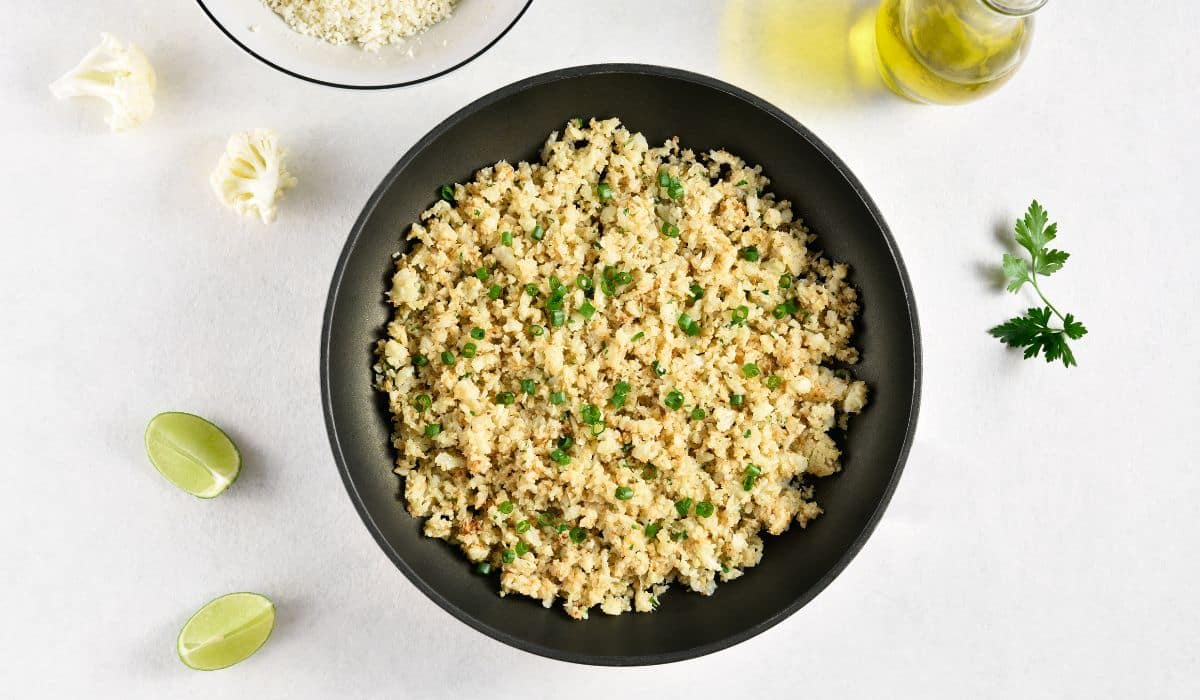
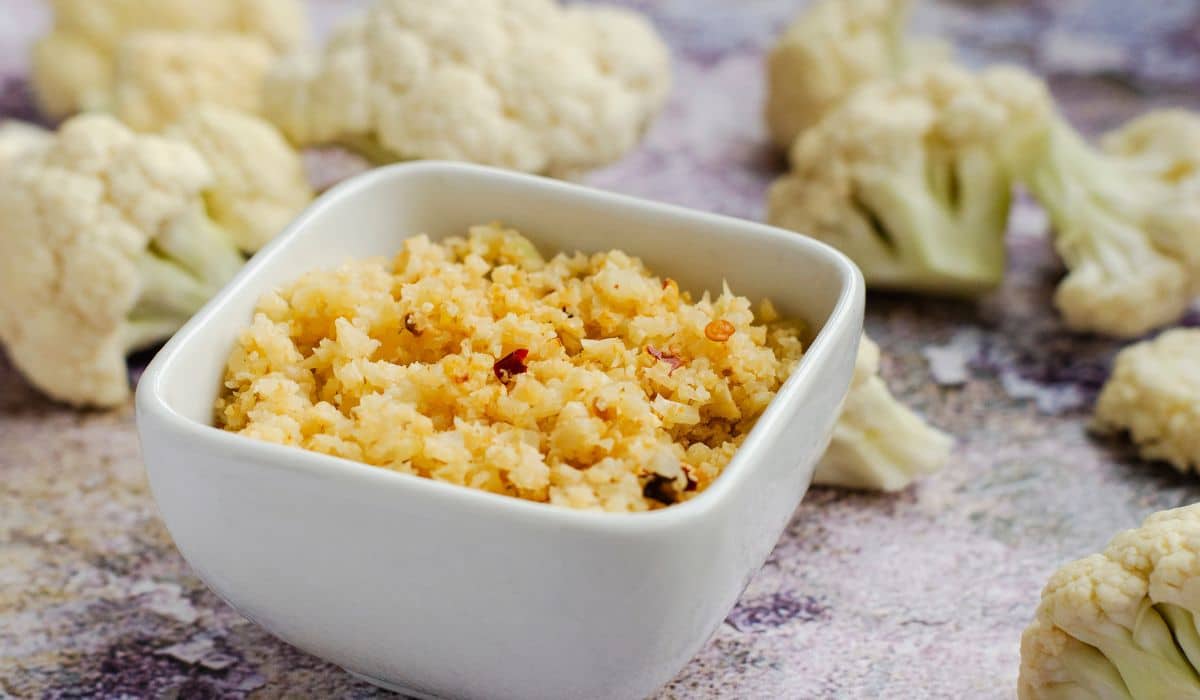
    Cauliflower, now known as a versatile vegetable - and rightfully so when it can be made into a low-carb mashed potato alternative, tortillas, rice, pizza crust and more. For this roundup though, we're focusing on cauliflower rice.

    Cauli-rice is just as versatile as a cauliflower floret and can be made into so many dishes, especially those made with traditional rice, making it perfect for Paleo eaters avoiding grains. And as we already mentioned, it contains less carbs, fitting right in on a low-carb or a keto diet.

    These 14 Paleo cauliflower rice recipes are creative, flavorful, many are also vegetarian, and can be either a side dish or star of the dinner table. So pull out your food processor and shredding attachment, or buy it pre-riced to create these recipes. You can even create cauliflower rice with a good old box grater if neither of the former are available to you.

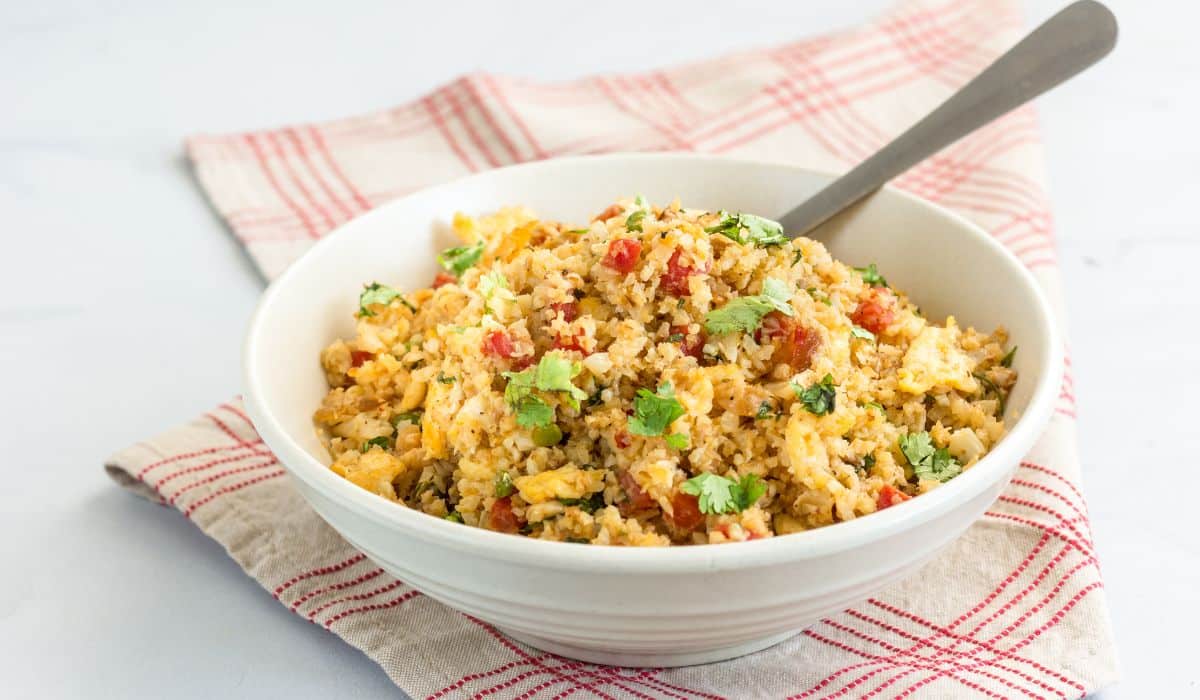
    Mexican Cauliflower Fried Rice - by Paleo Running Momma

    A complete meal that is ready in less than 30 minutes! Add your favorite ground meat, plenty of chopped green chilis and a homemade chipotle ranch dip.

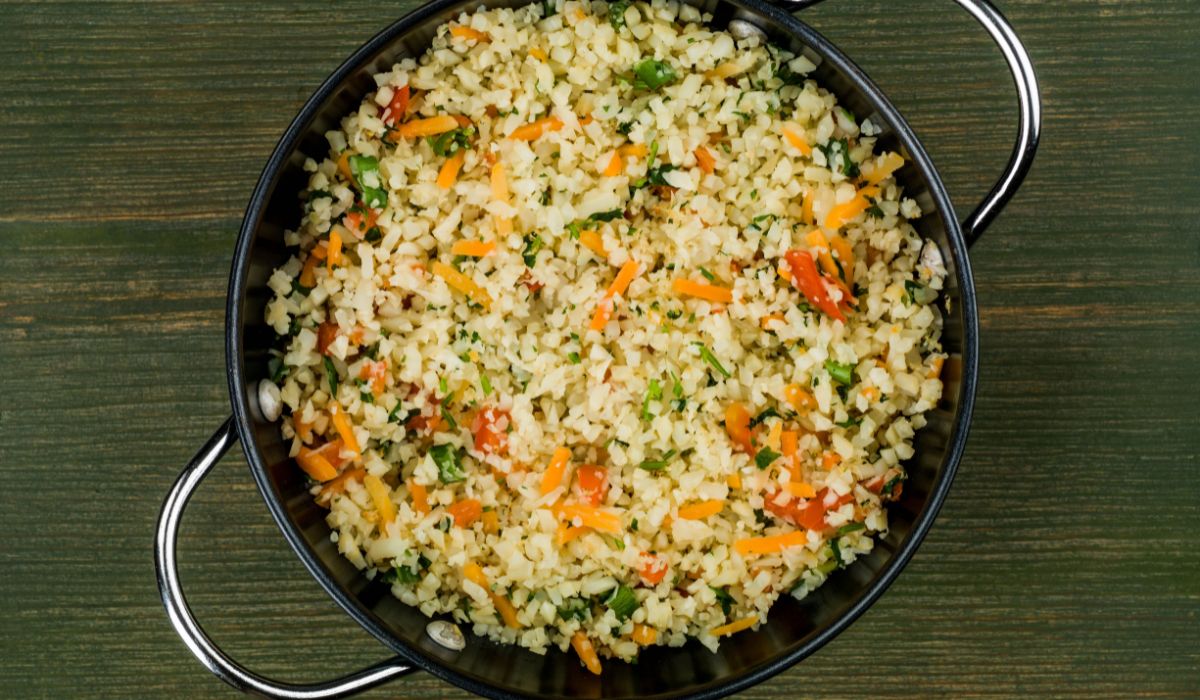
    Mediterranean Cauliflower Rice - by A Saucy Kitchen

    This cauliflower rice is a zingy and quick-to-fix side dish that brings unexpected excitement to your leftovers.

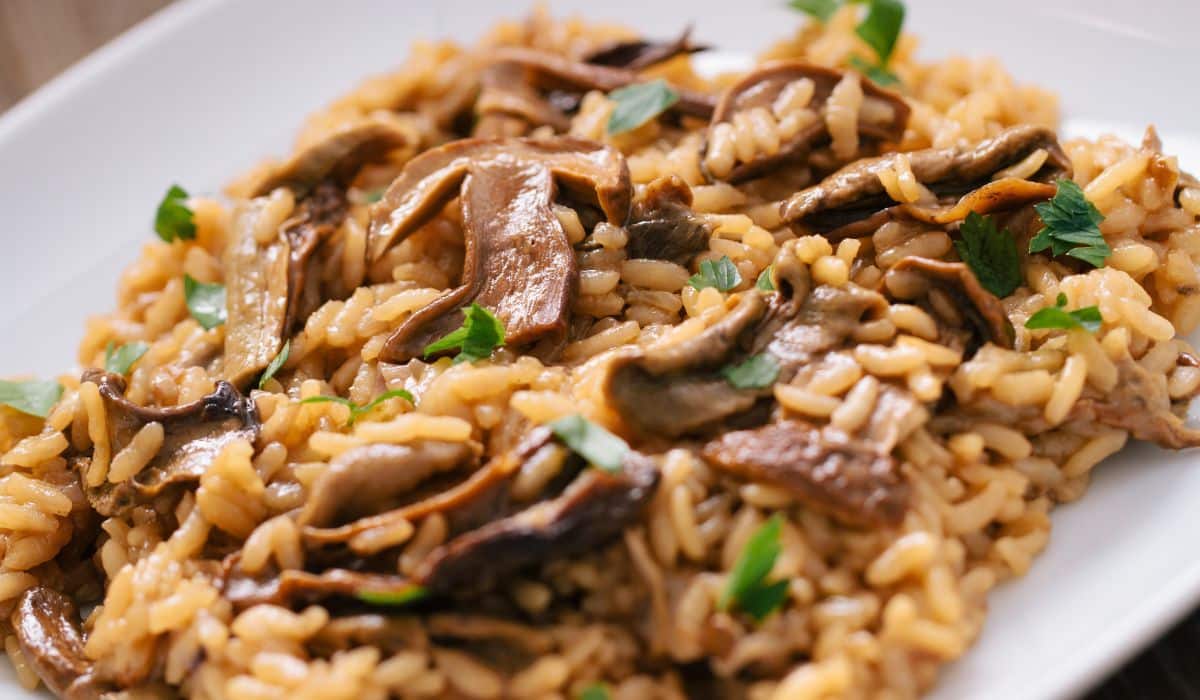
    Cauliflower Mushroom Risotto - by Paleo Leap

    Mushrooms are incredibly nutritious and delicious - and it turns out that they taste absolutely amazing when simmered in leftover chicken stock with cauliflower rice.

    Whole30 Cauliflower Chicken Fried Rice - by Tasty Thin

    Make it as is, or mix it up in a variety of ways: swap the chicken for shrimp, leave out the meat for a vegetarian option, add spicy sriracha sauce for the hottest bites.

    Spanish Cauliflower Rice - by Ketogasm

    Toss in a couple handfuls of shredded chicken breast and let the cumin, chili and garlic powder work their magic.

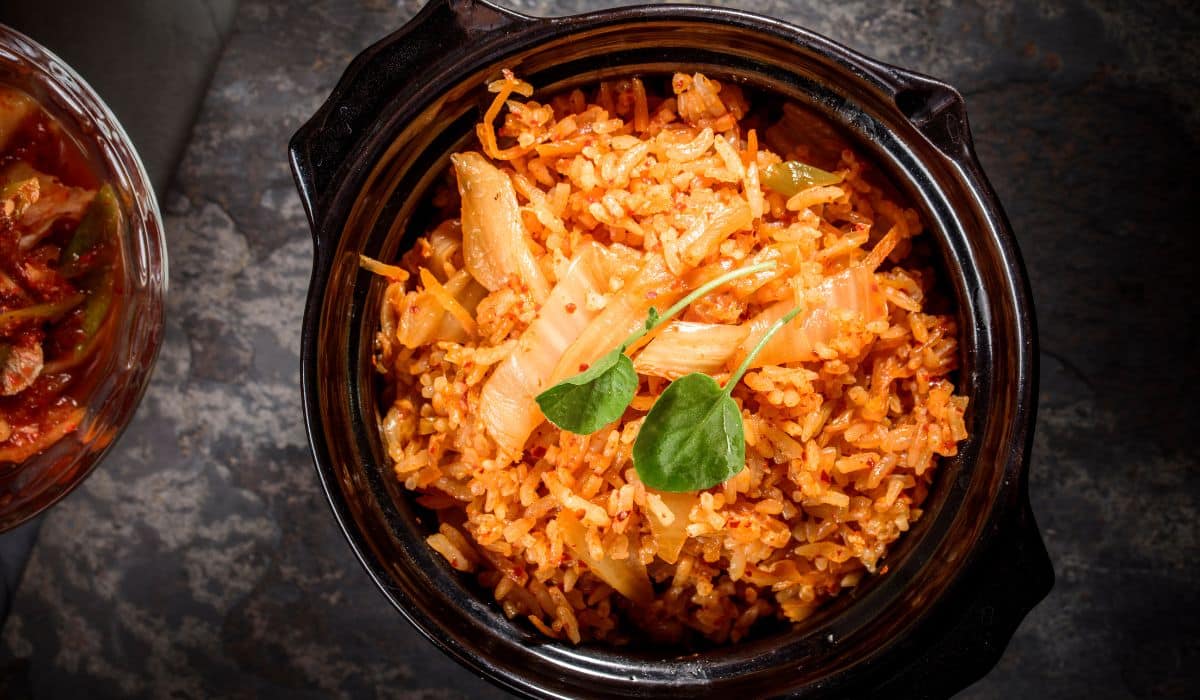
    Paleo Kimchi-Bacon Fried Cauliflower Rice - by Worthy Pause

    Take the chance to skip the boring rice and chicken, and use bacon instead! Lots of tasty bacon and spicy kimchi. It's delicious!

    Garlic Cauliflower Fried Rice (Filipino Sinangag) - by Low Carb Yum

    Garlic in my breakfast? Yes, please! If those are your sentiments too, this cauliflower rice is for you.

    Creamy Chicken Broccoli Cauliflower Rice Casserole - by Savory Lotus

    Low-carb and naturally gluten-free, this casserole was made to simplify your dinner.

    Southwest-Style Vegetable Cauliflower Rice - by Paleo Leap

    What's not to love about cumin, jalapeños, and bell peppers tossed together with a handful of other ingredients to make a colorful dish? Add chicken or steak to make it a complete meal.

    Tandoori Chicken With Curry Pineapple Rice - by Melissa Joulwan

    There are no words to describe the amazing aromas that fill your home as you cook this dish, it's guaranteed that everyone will want seconds!

    Whole30 Mongolian Beef Stir-Fry - by The Define Dish

    Admittedly, this recipe is more about the mouthwatering flank steak, but the cauliflower rice keeps things "traditional".

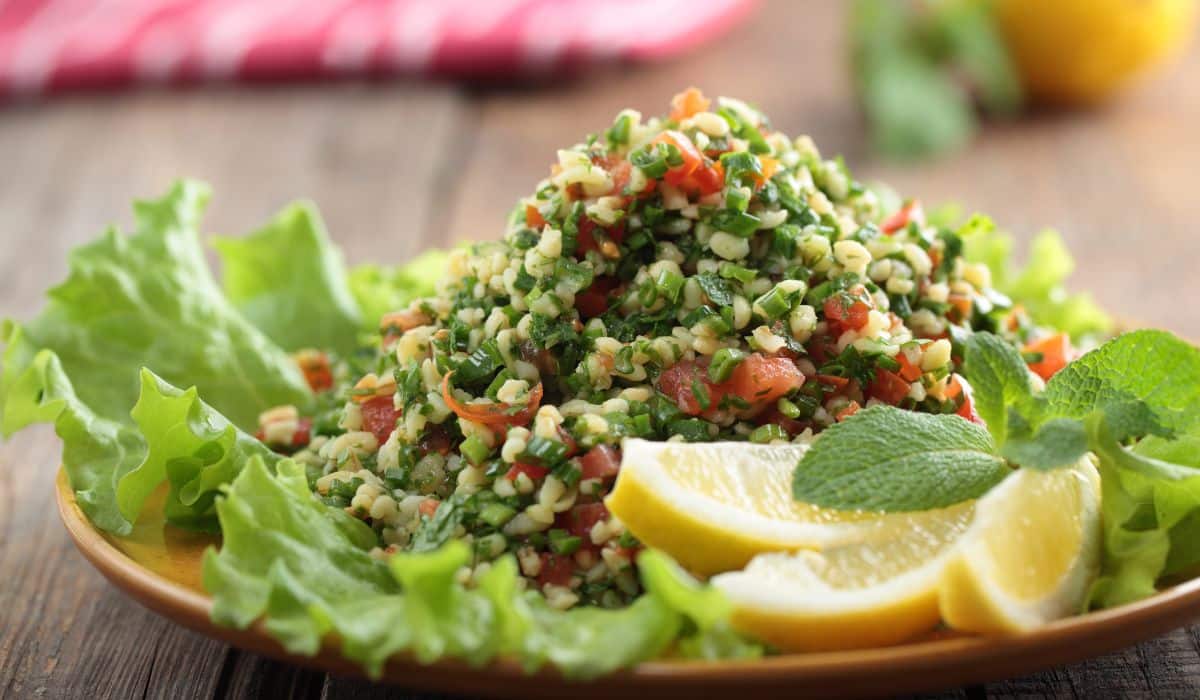
    Cauliflower Tabbouleh Salad - by The Real Food Dietitians

    Cleverly replace the traditional bulgur with cauliflower rice to make this refreshing salad Paleo and low-carb.

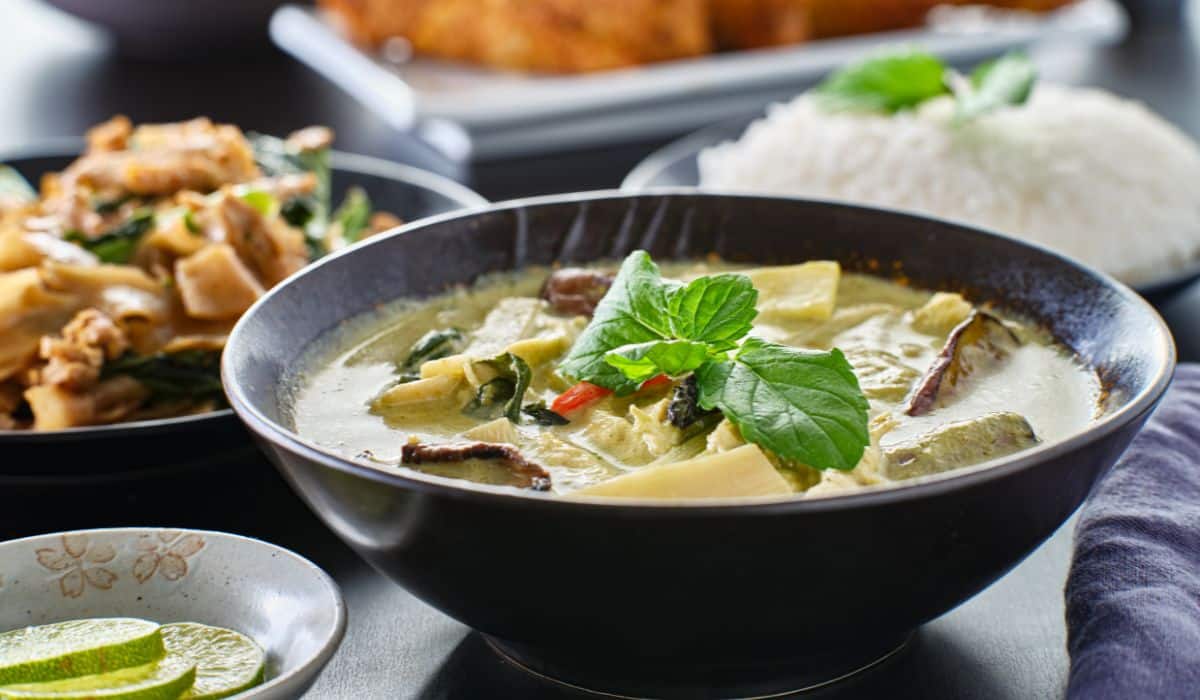
    Vegetarian Thai Green Curry Cauliflower Rice - by Paleo Leap

    This vegetarian dish uses a homemade green curry paste to spice up all those healthy vegetables.

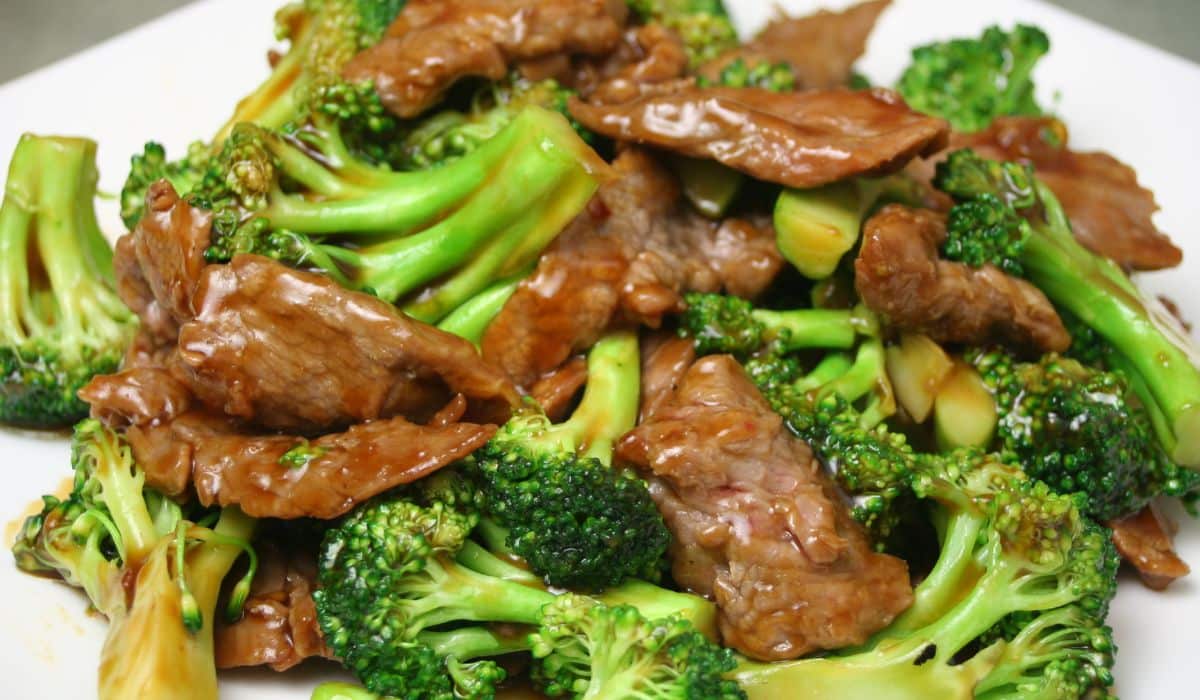
    Beef and Broccoli Cauli-Rice - by The Healthy Foodie

    Sometimes the cauliflower rice is the main event, other times it complements the steak in a subtle way.

    Filed Under: Paleo Recipe Compilations

    6 Easy, Paleo-Friendly Keto Substitutes for High-Carb Foods

    January 3, 2018 by Paleo Leaper Leave a Comment

    Paleo Friendly Keto

    If you hunt long enough, you can find a keto replacement for almost any food, but a lot of them either rely on non-Paleo ingredients or take forever to pull together. That’s not exactly practical for Wednesday night dinner! So in the spirit of simple keto cooking for busy people, here are 6 workhorse substitutes that don’t take a huge amount of time and money.

    Just to be clear: most of these aren’t intended to exactly imitate the taste of grain-based foods. They’re functional substitutes: you can use them to do the same thing that the grain-based foods used to do in your cooking. Vegetable noodles are a substitute for wheat noodles because you can load them up with lots of alfredo sauce and meatballs and have a satisfying meal, not because they taste exactly the same.

    1. Zucchini noodles (4 grams net carbs per 2 cups) for wheat pasta (73.3 grams net carbs per 2 cups)

    You can buy zucchini noodles all pre-noodled in grocery stores now (and you don’t have to go spend half your paycheck at Whole Foods: even mid-range stores have them now). Or you can make your own with a cheap handheld spiralizer - the upfront cost is about $20, but in the long run you’ll save money compared to buying pre-spiralized noodles at the store.

    Zucchini noodles are delicious with tomato sauce and meatballs, with creamy white sauce (a great way to get more fat in your diet!), or with basically anything else you’d normally put on pasta. They also go really well with Asian flavors.

    Recipe: Keto Zucchini Noodles with Tomato-Basil Sauce

    2. Riced cauliflower (2 grams net carbs per 1.5 cups) for rice (79 grams net carbs per 1.5 cups)

    Rice is an amazingly easy way to rack up a lot of carbs in a very little package. As anyone who’s ever eaten Chinese or Indian takeout knows, it’s very easy to plow through a whole lot of rice, especially if it’s covered in some kind of delicious sauce.

    The keto solution: keep the delicious sauce, add more butter (because everything’s better with more butter), and put it over riced cauliflower instead! Riced cauliflower is just as good as a sauce absorption vehicle. It can give texture to a soup just like regular rice, and it can double for rice in stuffed peppers or other recipes. You can buy pre-riced cauliflower either fresh or frozen, or rice it yourself in a food processor.

    Cauliflower bonus: you can also whiz it up in a blender and add plenty of butter and/or heavy cream to make a great mashed potato substitute.

    Recipes: Keto Creamy Mashed Cauliflower, Coconut Curry Shrimp with Cauliflower Rice

    3. Stevia (0 grams net carbs per tbsp.) for sugar (12.5 grams net carbs per tbsp.) - if you need a replacement at all

    Sweeteners are always a tricky question when you’re eating for good health, and a lot of people

    coffee
    Love coffee but need to quit adding sugar to it? Try a splash of coconut milk for some healthy fat instead.

    just psychologically do better without any sweeteners. Even 0-carb, 0-calorie sweeteners just get them craving the real deal. If that’s you, the best substitute for sugar might be “getting used to your food being less sweet.”

    But if the taste of sweetness doesn’t cause you any psychological issues, stevia is probably the best of the 0-carb options:

    • Sugar, honey, and maple syrup are obviously off the table: too many carbs
    • Sugar alcohols (sorbitol, erythrytol, etc.) can be OK for some people but famously cause GI problems for a lot of people. Since keto can already cause some issues, sugar alcohols probably aren’t the greatest choice here.
    • Artificial sweeteners (Splenda, aspartame, etc.) can also be OK for some people, but there are still questions about how they affect the gut biome

    Stevia looks like the best of the 0-carb sweetener options - again, that’s if you absolutely have to have a sweetener at all.

    Recipe: instead of a recipe with stevia, have one for a dessert without any sweetener: Keto Chocolate Almond Butter Fat Bombs.

    4. Lettuce wraps (1.3 grams net carbs/4 leaves) for sandwich bread(31.6 grams net carbs per 2 slices

    Sandwiches are such a basic staple of lunch food that it’s almost hard to imagine how to do

    without them. But take your cues from sandwich companies, some of which now actually offer lettuce wraps on the menu as an alternative to bread.

    To make it work: use a flexible type of lettuce (butter lettuce, bibb lettuce, or green/red leaf lettuce often work better than Romaine, since Romaine tends to have those thick, inflexible stalks - Swiss Chard also has really big, flexible leaves that could work perfectly here). Don’t be afraid to make several smaller wraps instead of trying to cram an entire sandwich-sized amount of filling into one wrap.

    You can make wraps with your favorite sandwich fillings (roast beef, horseradish, and cheese; tuna salad; turkey slices with pickles and mayonnaise) or you could fill the wraps with any other type of thing that sounds tasty.

    Recipe: wrap a lettuce leaf around this Keto Tuna Salad.

    5. Pork rinds (0 grams net carbs per 1 ounce) for potato chips (13.7 grams net carbs per 1 ounce)

    (For reference, 1 ounce is about the size of the snack bags that you get out of vending machines.)

    Crunchy snack food is one of the biggest things that people miss on Paleo or keto: without popcorn or chips, it might seem a little bleak. But if you’re craving that crunchy snack, no need to turn to deep-fried carbs for an answer. Just pick up some pork rinds instead! Pork rinds are high in fat and protein (and since they’re made from the skin of the pig, those proteins have a lot of collagen and other good stuff we don’t get enough of in the modern world).

    The recipe for this one is super simple: buy pork rinds, open bag, dig in and enjoy!

    6. Ground almonds (4.3 grams carbs per ½ cup) for breadcumbs (21 grams carbs per ½ cup)

    Need to batter something and fry it? Something like, say...a delicious fillet of fish, or maybe a nice slice of liver? Throw out the breadcrumbs and grab some ground almonds - the carb count is a lot lower. You could also do this with any other nut of your choice (for example, hazelnuts have 2.6 grams of net carbs per ½ cup ground; pecans have 2 grams).

    Another alternative is coconut flakes (2.9 grams carbs per ½ cup of shredded unsweetened coconut). Make sure to get unsweetened! Don’t let a surprise sugar bomb in your coconut derail your keto train.

    Recipe: Mustard-Crusted Chicken Drumsticks

    What's your favorite fast, simple kitchen substitution to use in keto-friendly recipes? Let us know on Facebook or Twitter!

    Filed Under: Learn About Paleo & Keto Diets

    5 Research-Backed “Medicinal Foods” For Cardiovascular Health

    July 2, 2017 by Paleo Leaper Leave a Comment

    Cardiovascular Health

    The Greek physician Hippocrates famously said to “let thy food be thy medicine and thy medicine be thy food.” Of course, there’s clearly a point where this breaks down - there’s no diet that can prevent or cure all disease, and modern medicine is pretty amazing. But in terms of chronic “lifestyle diseases” like heart disease, there’s a lot of truth to the idea that food has medicinal value - the power to help maintain or restore health. "Medicinal foods" are so good for you that it's possible to measure their specific benefits the same way you would measure the benefits of a drug.

    But which foods? Well, take a look at five of them with research to support their value in real human diets. All of the studies in this list are in real humans actually eating whole foods: no mice, no rats, no test tubes, no weird purified supplements and extracts.

    Also, none of them are funded by industry groups. These groups fund a lot of research, but they have a huge financial interest in making their particular food look good, so it’s a little debatable how reliable those studies are. Some people don’t worry about that, but here’s another way to look at it: if a food really is that great, shouldn’t there be at least one independently-funded study in its favor? In that spirit, this list doesn’t include any studies funded by trade or lobbying groups.

    With all of that in mind, take a look at 5 foods with evidence-backed benefits for cardiovascular health:

    1. Extra Virgin Olive Oil

    Extra virgin olive oil (EVOO for short) has two things going for it: a very high proportion of monounsaturated fat and a lot of antioxidants. The antioxidants are the difference between the “extra virgin” oil and the regular oil. Research has consistently shown that antioxidant-rich olive oil improves markers of cardiovascular health.

    For example, in this study, the researchers gave men either refined olive oil (few antioxidants) or EVOO and told them to cook with that instead of their regular cooking oil for 3 months. They found that the EVOO significantly reduced the oxidation of LDL cholesterol. As the study explains (it’s free full-text if you want to read it), oxidized LDL cholesterol is bad news for heart health, and preventing LDL oxidation is a positive sign:

    “The free radical process of lipid peroxidation is involved in the pathogenesis of atherosclerosis through the formation of oxidized LDL. Consequently, the prevention of LDL oxidation by exogenous antioxidants could have a great potential for prevention of this major disease.”

    Here’s another study. The researchers studied 200 healthy men and had them eat 25 mL of olive oil (a little more than 1 tablespoon, or about half a shot glass) every day. They compared olive oils with different levels of antioxidants and found that the high-antioxidant oil increased HDL cholesterol (that’s the kind everyone agrees on as “good”), reduced triglycerides, and reduced oxidative stress.

    2. Eggs

    Yep, eggs! Eggs have been demonized for their cholesterol content, but if you actually look at egg consumption, it seems to be neutral for heart health at worst - and some studies have found that it’s protective.

    For instance, this study tested the theory that eating eggs is actually good for cardiovascular health. The researchers studied 38 healthy men and women. The subjects got no eggs for 2 weeks, and then they had a slow ramp-up: 4 weeks with 1 egg/day, 4 weeks with 2 eggs/day, and 4 weeks with 3 eggs/day.

    paleo 12eggs

    The results were dramatic: blood pressure went down, HDL cholesterol went up, LDL cholesterol went down, and plasma choline went up. The benefits started at 1 egg and were maintained in the 2 and 3-egg groups. As far as the researchers could measure, eating eggs actually improved the subjects’ cardiovascular health, rather than damaging it.

    3. Garlic

    Garlic supplements are a thing, but this list is about foods, so here’s a study on ordinary garlic, eaten as a food. The subjects in this case were elderly, with an average age of around 70. The researchers gave them 0.1 gram of garlic per kilogram of bodyweight per day. To translate that into real-world measurements, here's how many cloves of garlic you'd have to eat to get the amount in the study (assuming that 1 clove of garlic weights approximately 3 grams):

    That’s a realistic amount of garlic that a real human might actually eat in a day. And it really helped: the garlic reduced markers of oxidative stress and improved antioxidant capacity. Remember from above that oxidative damage is a big factor in cardiovascular disease.

    4. Berries

    OK, this is cheating a little bit, because “berries” is technically a food group and not a food. But berries in general are extremely rich in important antioxidants and phytochemicals that help protect against oxidative stress and other kinds of cardiovascular damage.

    For proof of that, take a look at this study. 72 men and women were divided into a berry group and a control group. The berry group ate two servings of berries a day in different forms (raw, juiced, jam, etc.). After 8 weeks of that, they had improved platelet function (basically, that means they were less likely to get blood clots and have strokes), lower blood pressure, and higher HDL cholesterol.

    5. Salmon (and other fatty fish)

    The “active ingredients” that make salmon medicinal include omega-3 fats, selenium, iodine, and other vitamins and minerals, not to mention the high-quality protein. It’s good stuff, especially the wild-caught variety. And some research has found that it’s beneficial for heart health in various ways.

    This study highlighted the benefits of eating salmon (and other fatty fish, too). The subjects were 126 Chinese women between age 35 and age 70. The women all ate lunch that had either fish or other meat that they normally ate. All the types of oily fish were good, but the salmon totally stole the show: it reduced triglycerides, markers of heart disease like apolipoprotein B, and inflammatory markers like interleukin-6 (IL-6) and tumor necrosis factor alpha (TNF-α).

    In that study, the women ate fish for lunch every day, but another study on both men and women found that twice a week was enough to see benefits. In the study, 142 subjects were basically given two servings of fatty fish every week and instructed to eat them during the week whenever they wanted. Their triglyceride levels went down right on schedule.

    The Limitations of Focusing on Particular Foods

    With any list like this, it’s good to step back and take a look at the big picture. Overall diet patterns have a bigger influence on someone’s health than any one specific food:

    paleo salmonFlorentine
    This wasn't in any of the studies, but simply based on common sense, eating spinach with your salmon instead of blueberries seems unlikely to be bad for your heart.
    • These aren’t the only five foods that promote good cardiovascular health.
    • Adding blueberries or olive oil as a “supplement” isn’t a quick fix for a lousy diet.

    Instead of focusing on specific foods, take these foods as signs of what to look for generally in a heart-healthy diet: antioxidant-rich plant foods (olive oil, garlic, berries), healthy fats (olive oil, fatty fish), and high-quality animal protein (eggs, fish). The idea of Paleo isn’t to mandate eating any one particular food; it’s to support a generally healthful type of diet, for heart health and everything else.

    Filed Under: Learn About Paleo & Keto Diets

    21 One-Dish Paleo Dinner Recipes

    August 31, 2016 by Paleo Leaper Leave a Comment

    Create dinner in one dish! If you're tired of dirtying up a bunch of dishes to get dinner on the table, try one of these one-dish recipes and make the task of preparing and cooking dinner a little easier.

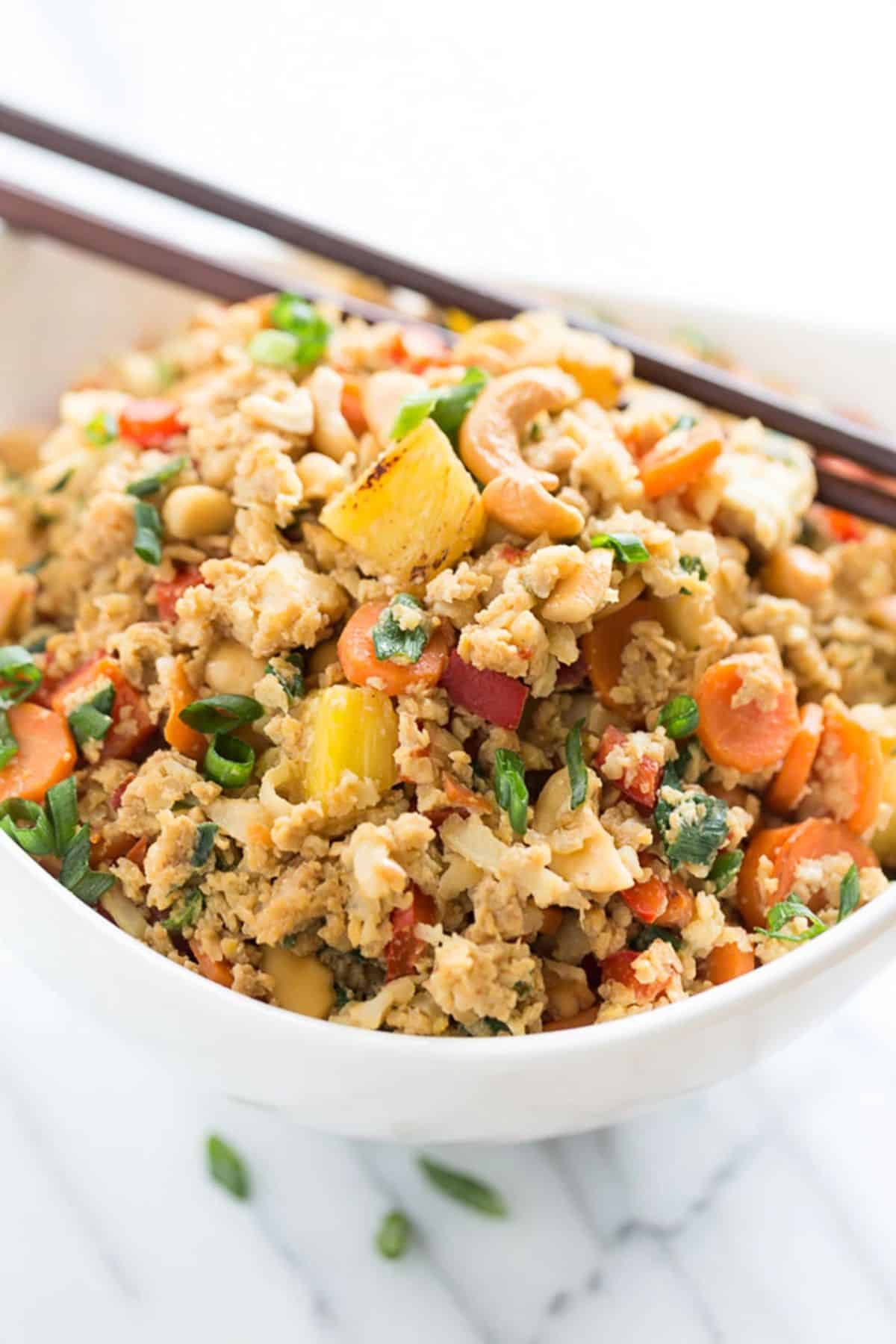
    Paleo Pineapple Fried Rice - by Get Inspired Everyday

    A sweet pineapple-filled fried rice dish with crunchy cashews.

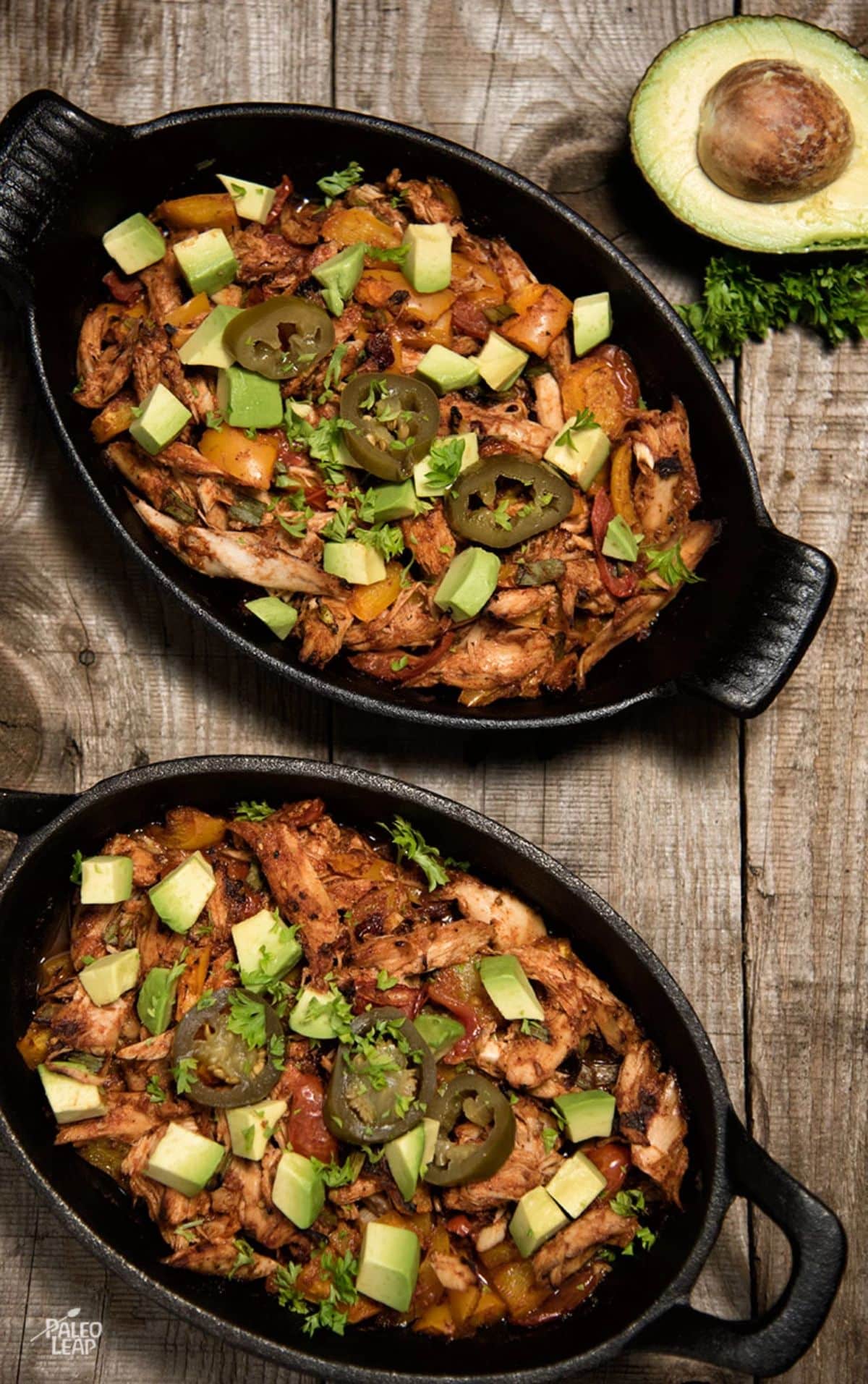
    Tex-Mex Turkey Skillet - by Paleo Leap

    Turkey leftovers for people who are sick of turkey leftovers: get excited about them again with this simple skillet dinner.

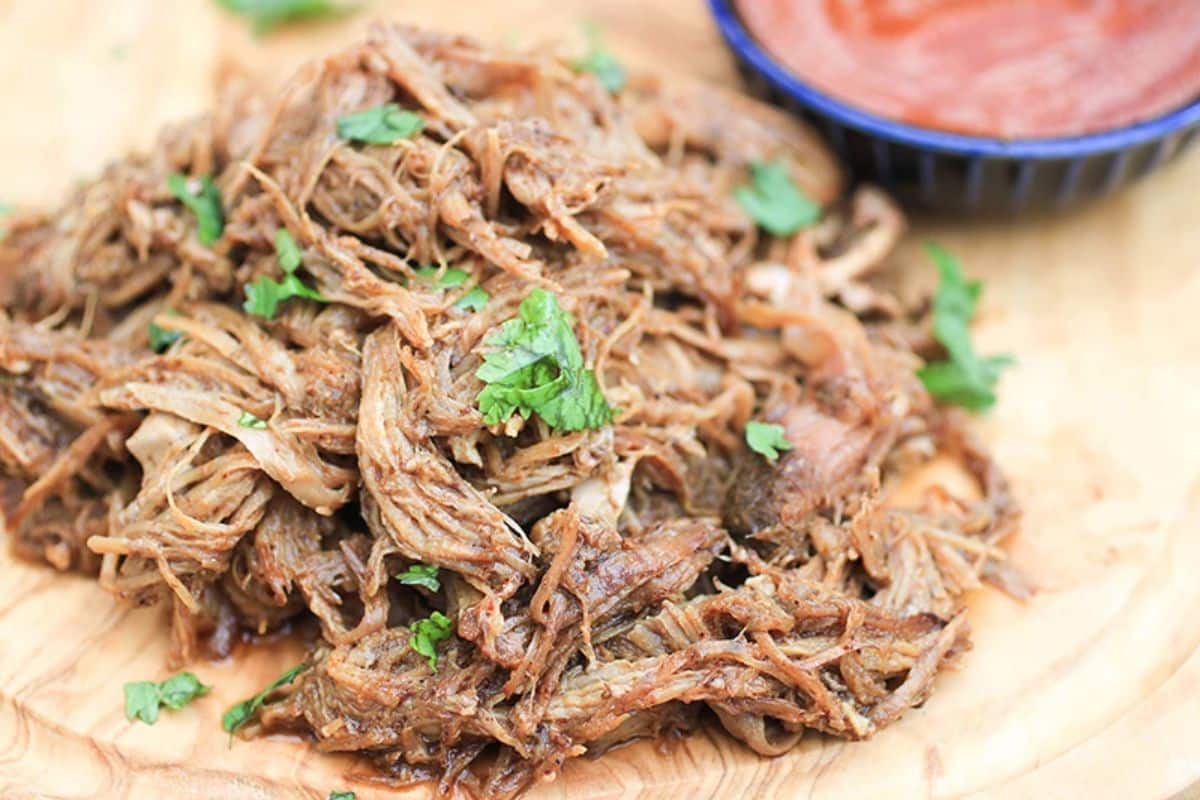
    Slow Cooker Paleo Pulled Pork - by Anya's Eats

    A simple slow cooker recipe packed with big flavor!

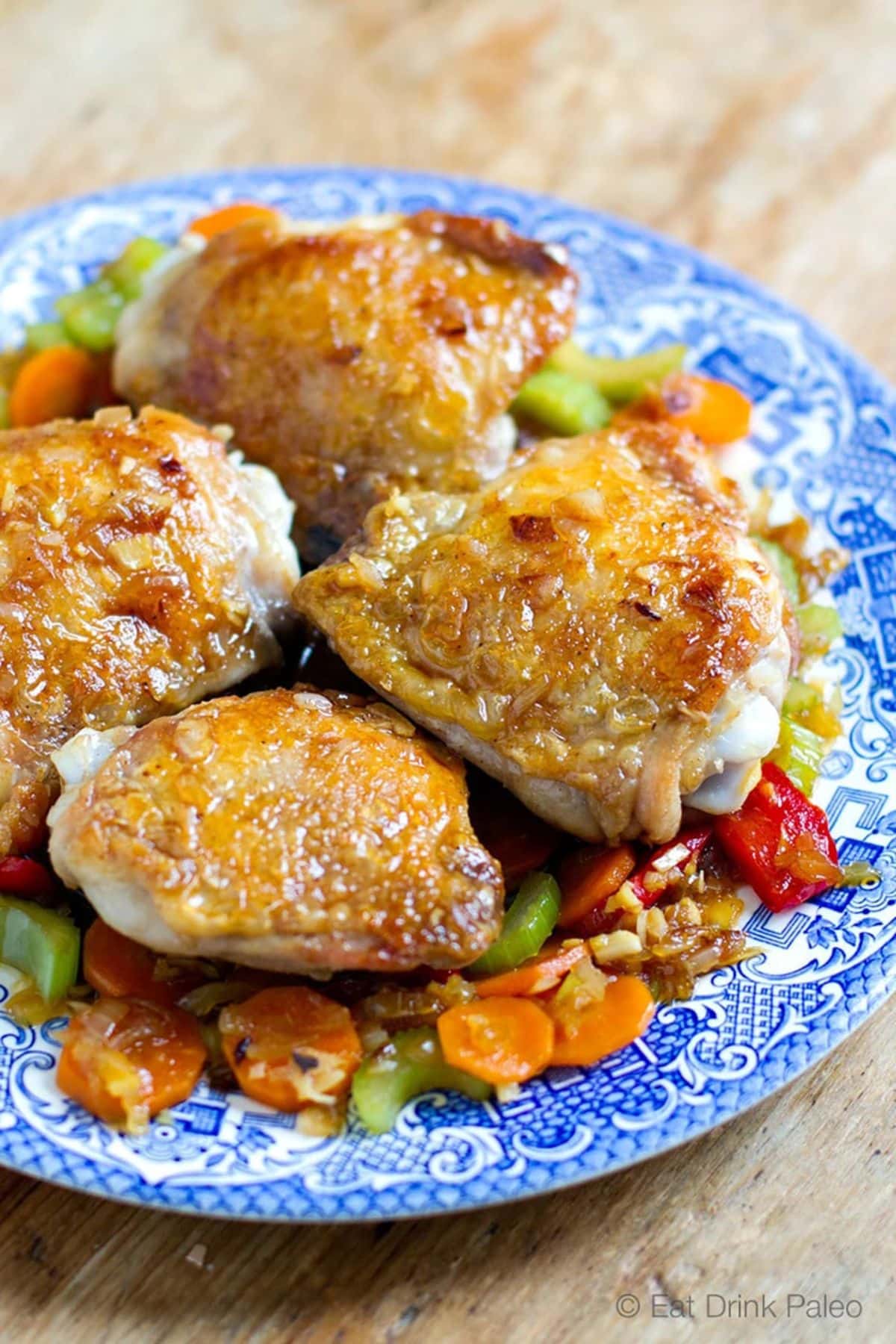
    Crispy Skin Chicken With Honey Garlic Sauce - by Eat Drink Paleo

    Crispy chicken with honey sauce and plenty of veggies.

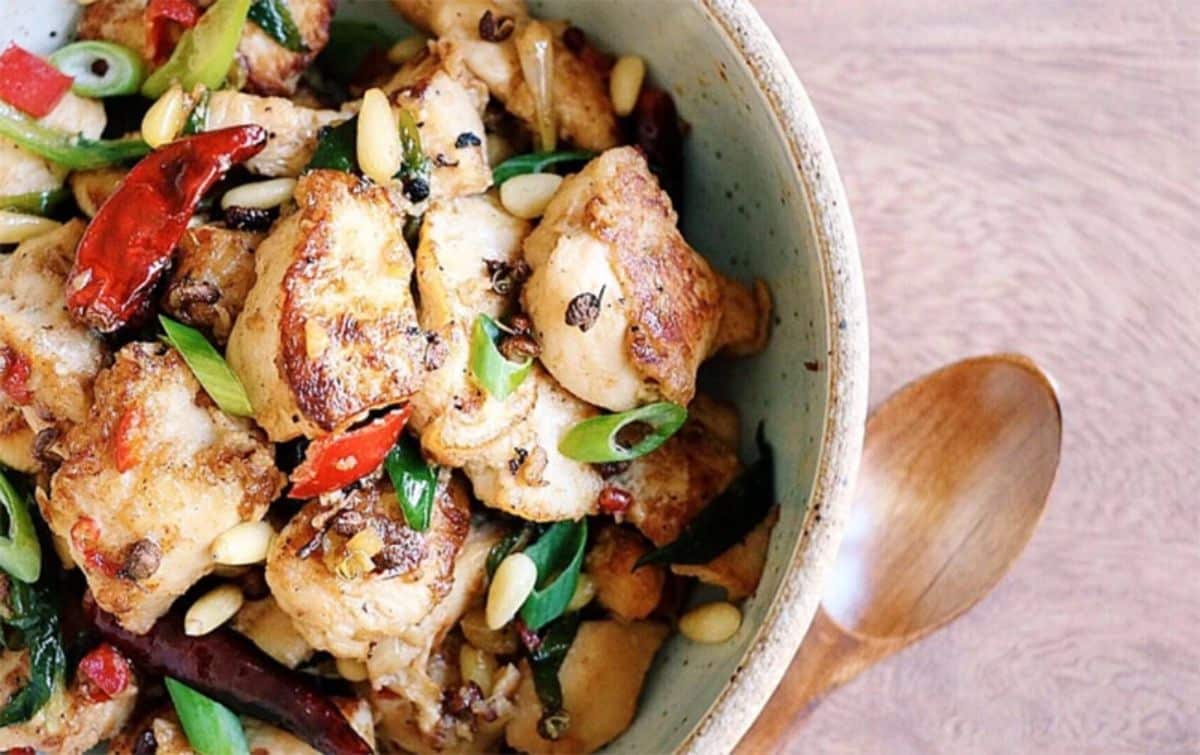
    Chinese Kung Pao Chicken - by I Heart Umami

    Skip the takeout and enjoy this spicy, smoky kung pao chicken.

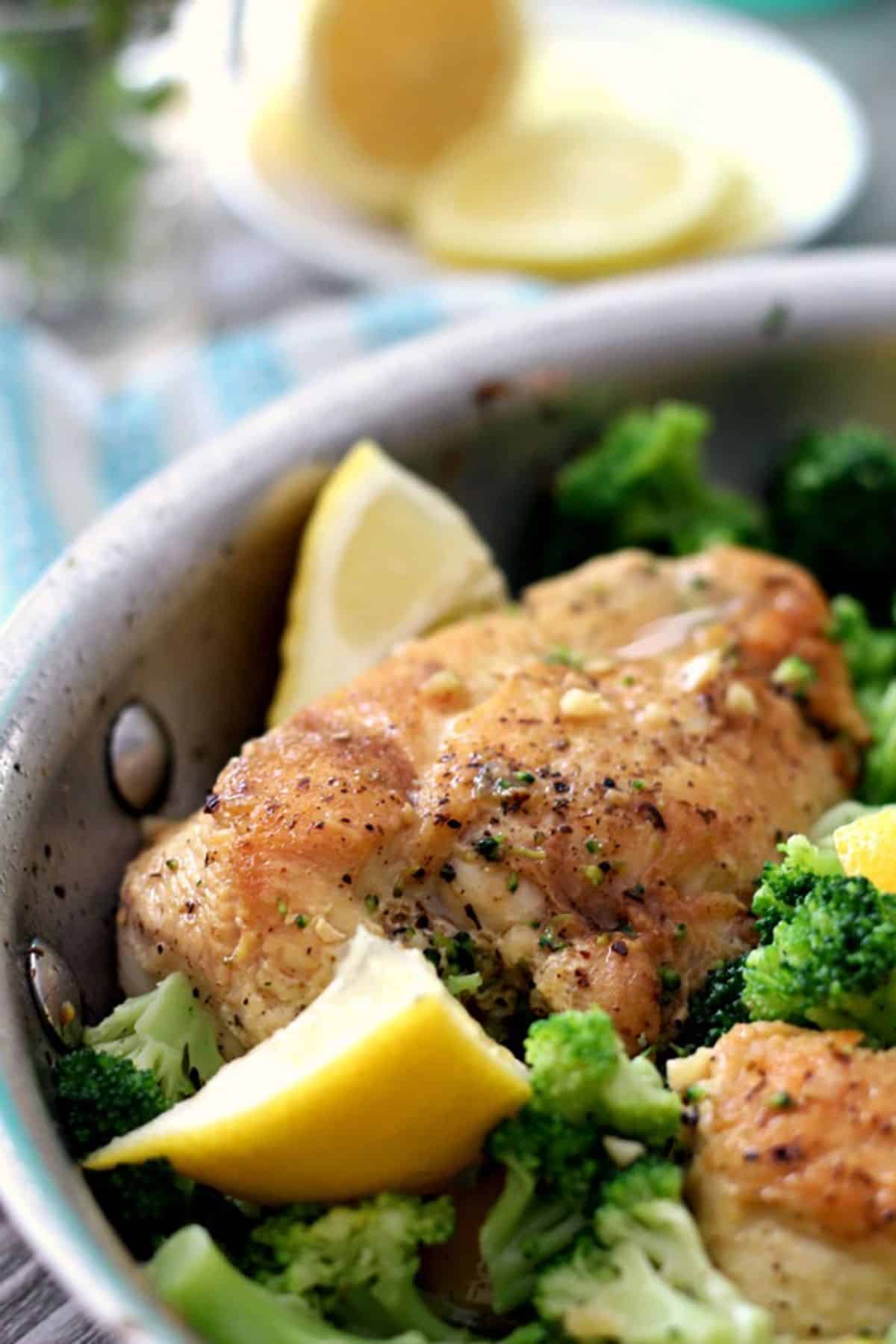
    Lemon Chicken Skillet - by Primally Inspired

    An easy weeknight meal full of flavor and made in one skillet.

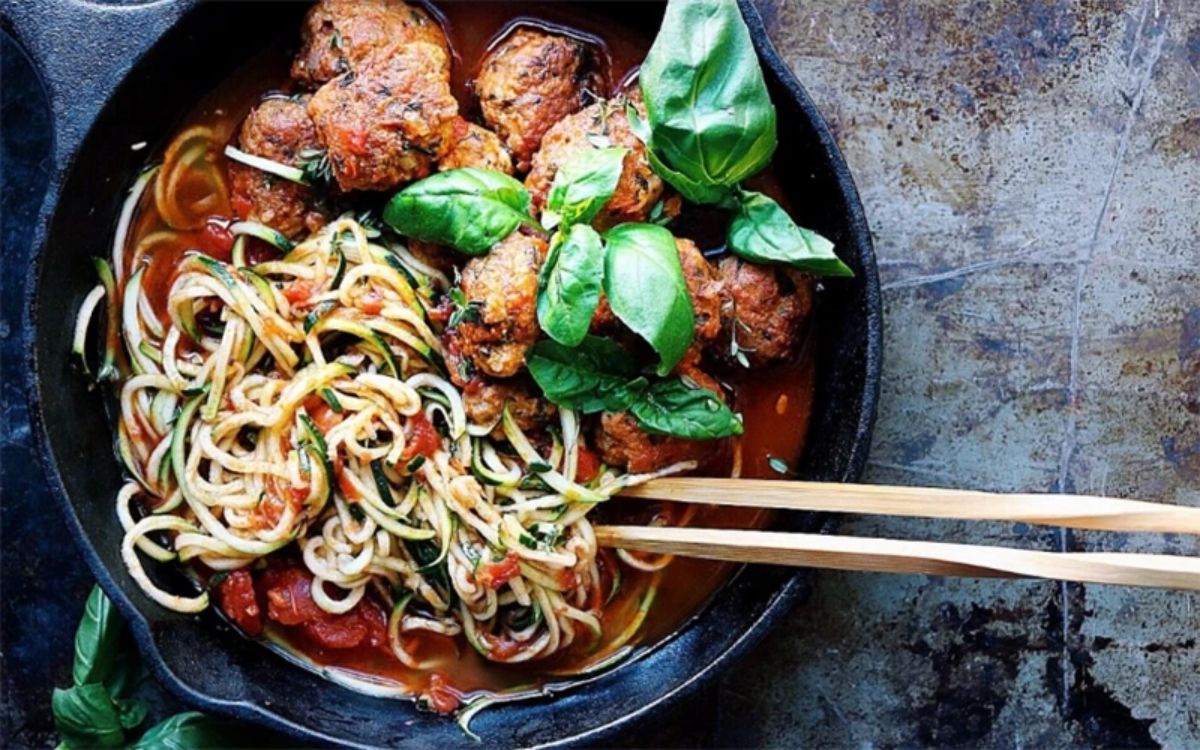
    My Moroccan Meatballs - by I Heart Umami

    A rich Harissa Sauce over pork meatballs and zucchini noodles.

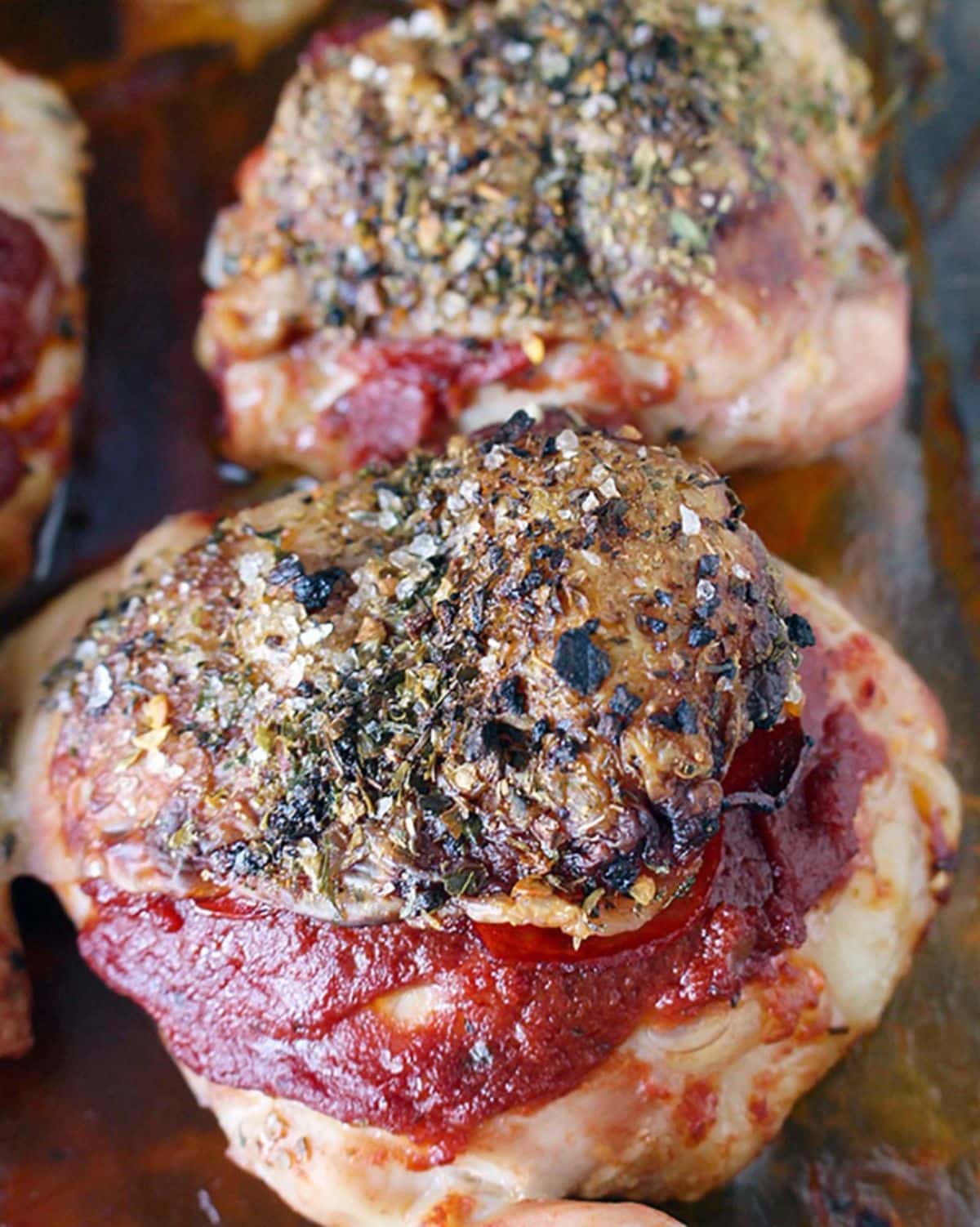
    Paleo Pizza Chicken - by Jay's Baking Me Crazy

    Love pizza? Enjoy all the flavors of pizza stuffed into a chicken thigh.

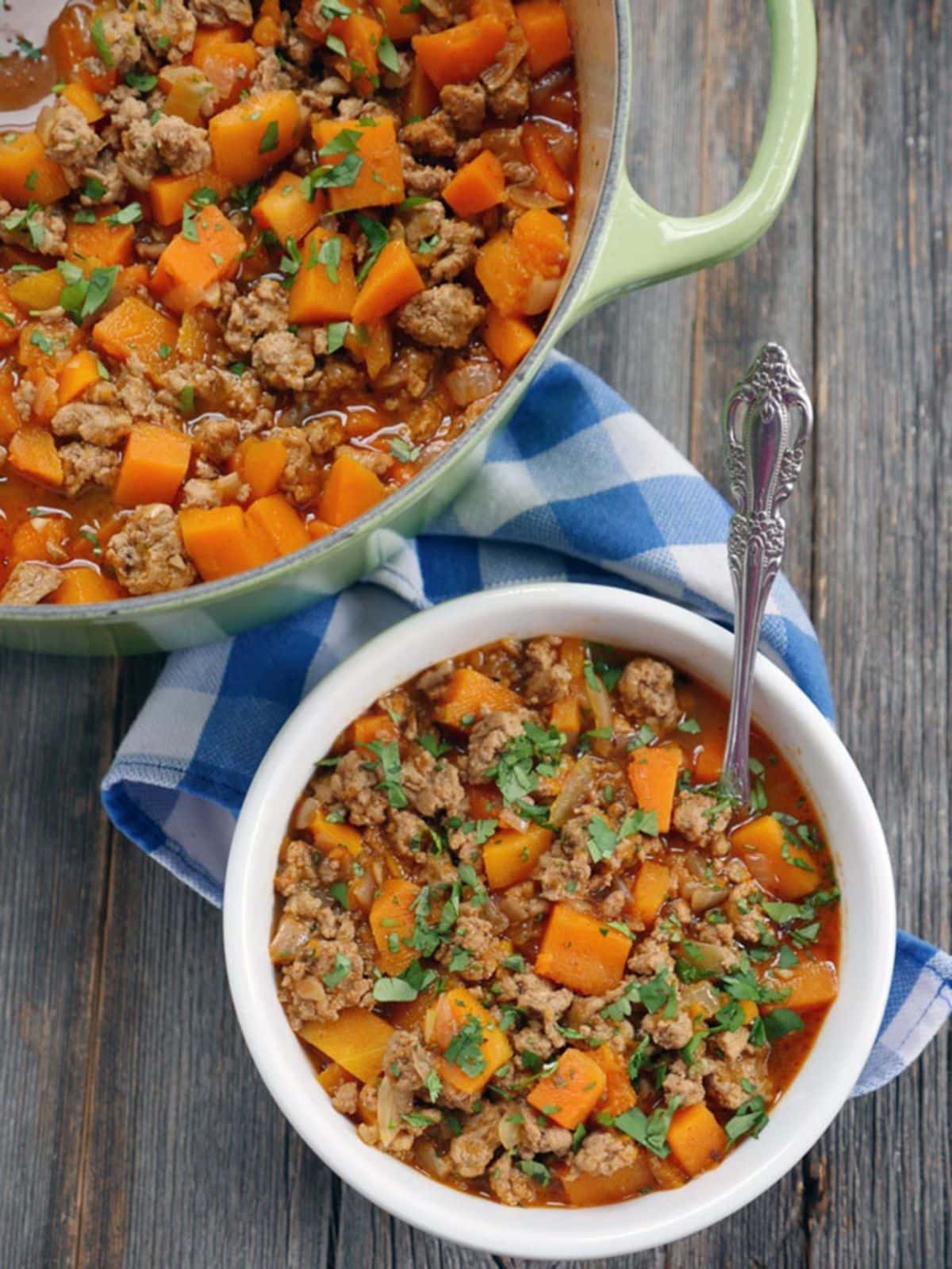
    Spicy Chipotle Butternut Squash Turkey Chili - by My Heart Beets

    A smoky, chipotle chili made with squash and turkey.

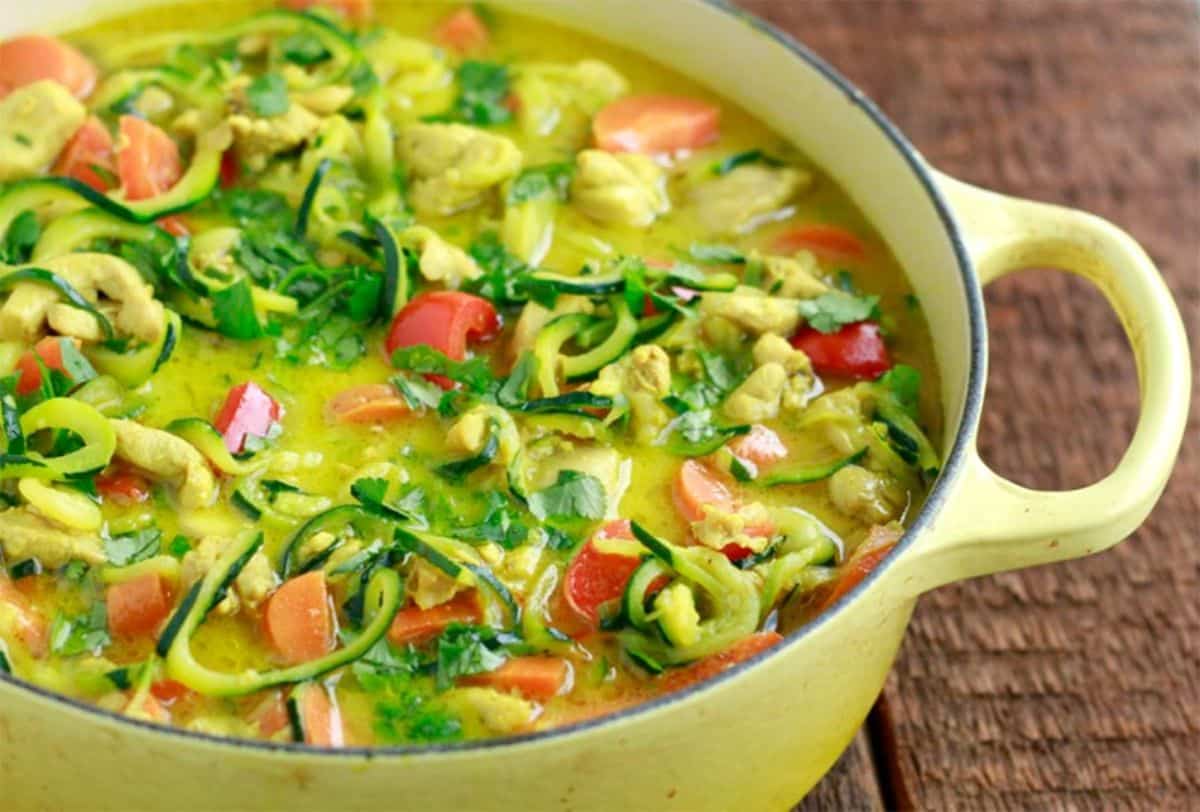
    Chicken Curry with Zucchini Noodles - by Savory Lotus

    A one-pot dish full of warm, flavorful spices, chicken and veggies.

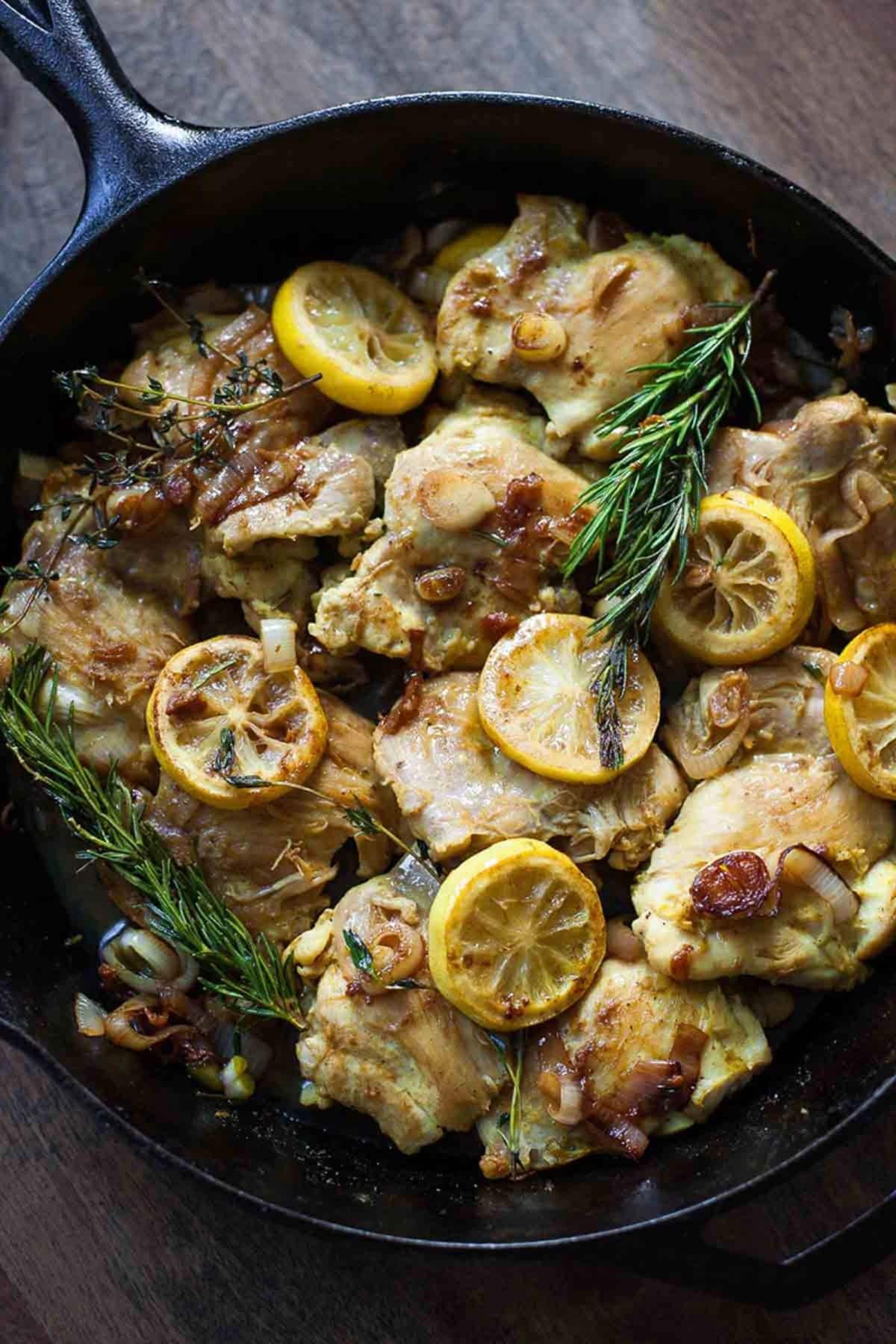
    Lebanese Lemon Chicken - by A Calculated Whisk

    A fast and flavorful lemon chicken with shallots and fresh herbs.

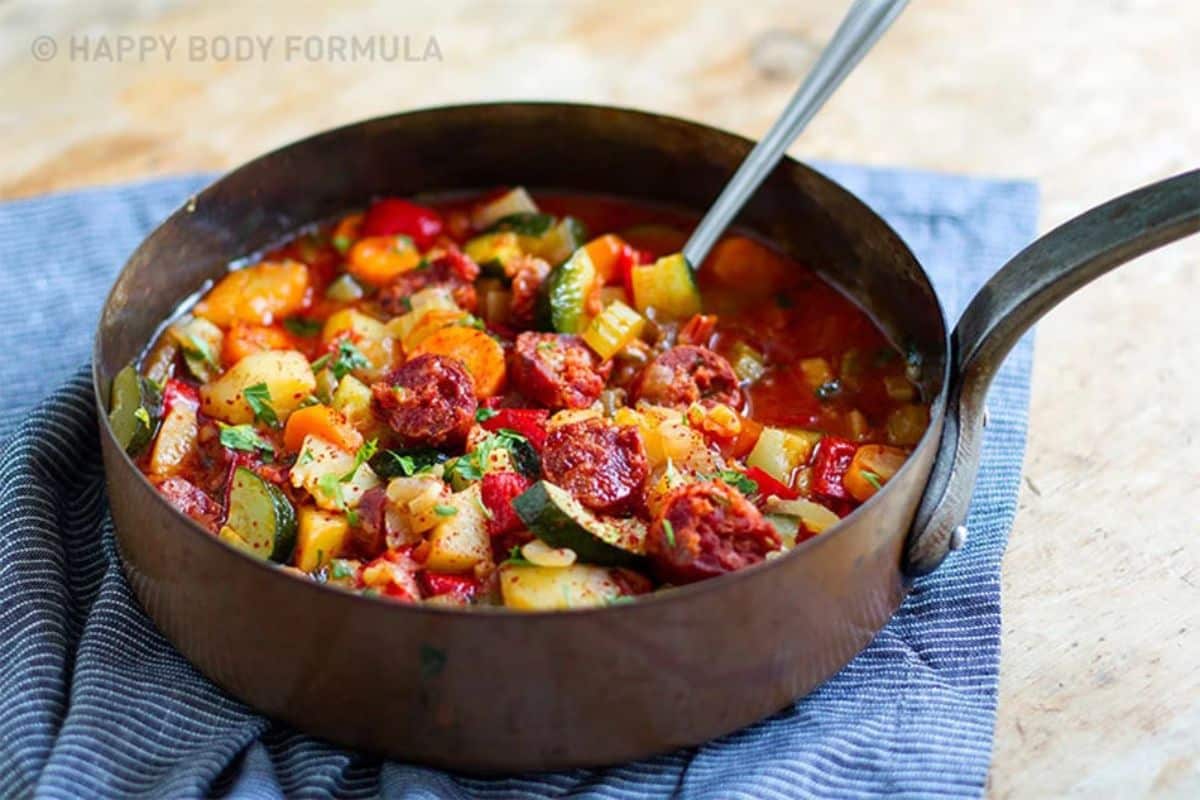
    Best Ever Chorizo & Vegetable Stew - by Happy Body Formula

    A stew stuffed with chorizo, vegetables and tons of spices!

    One Pan Honey Garlic Chicken - by Real Simple Good

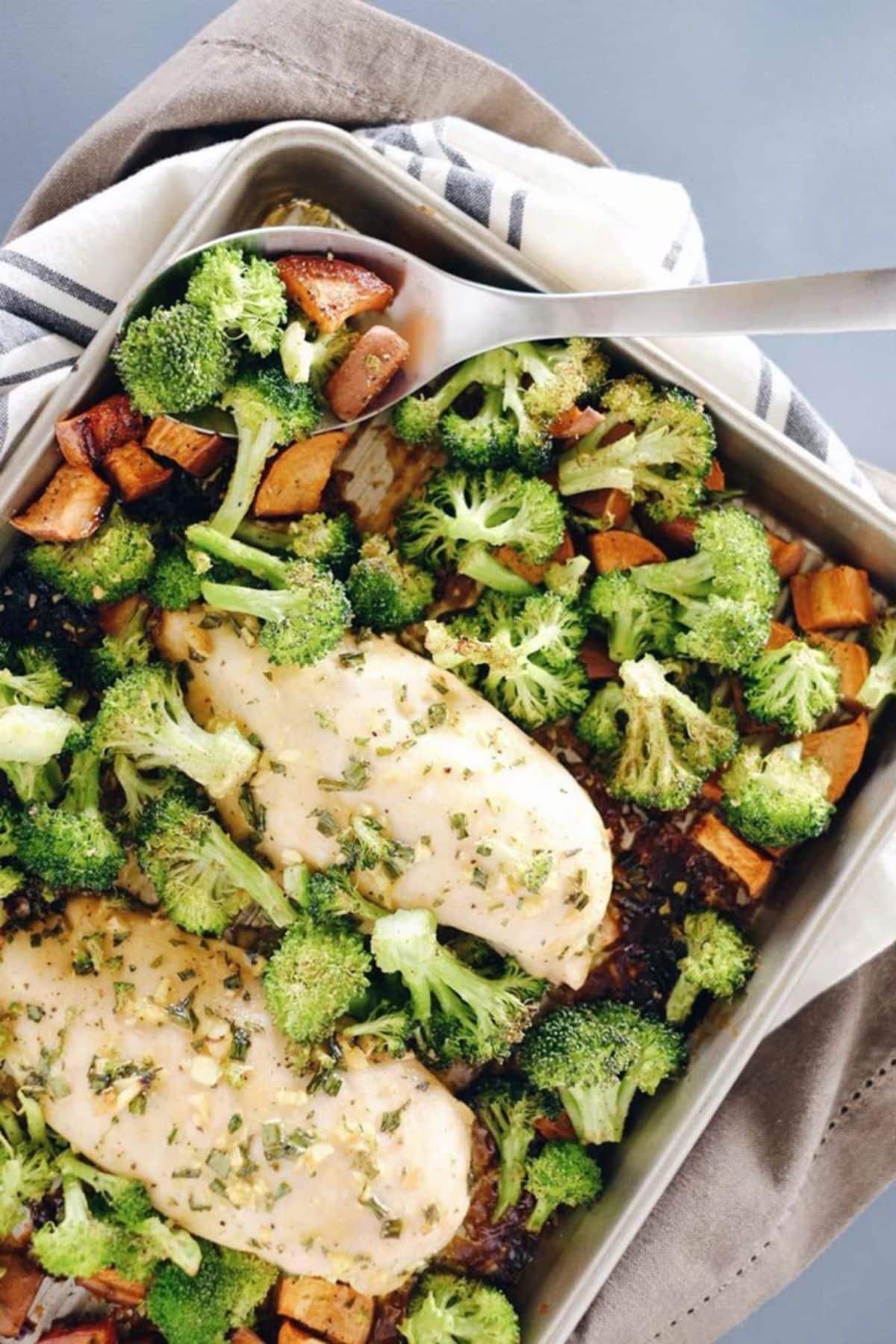
    This dish has it all: vegetables, sweet potatoes and honey chicken.

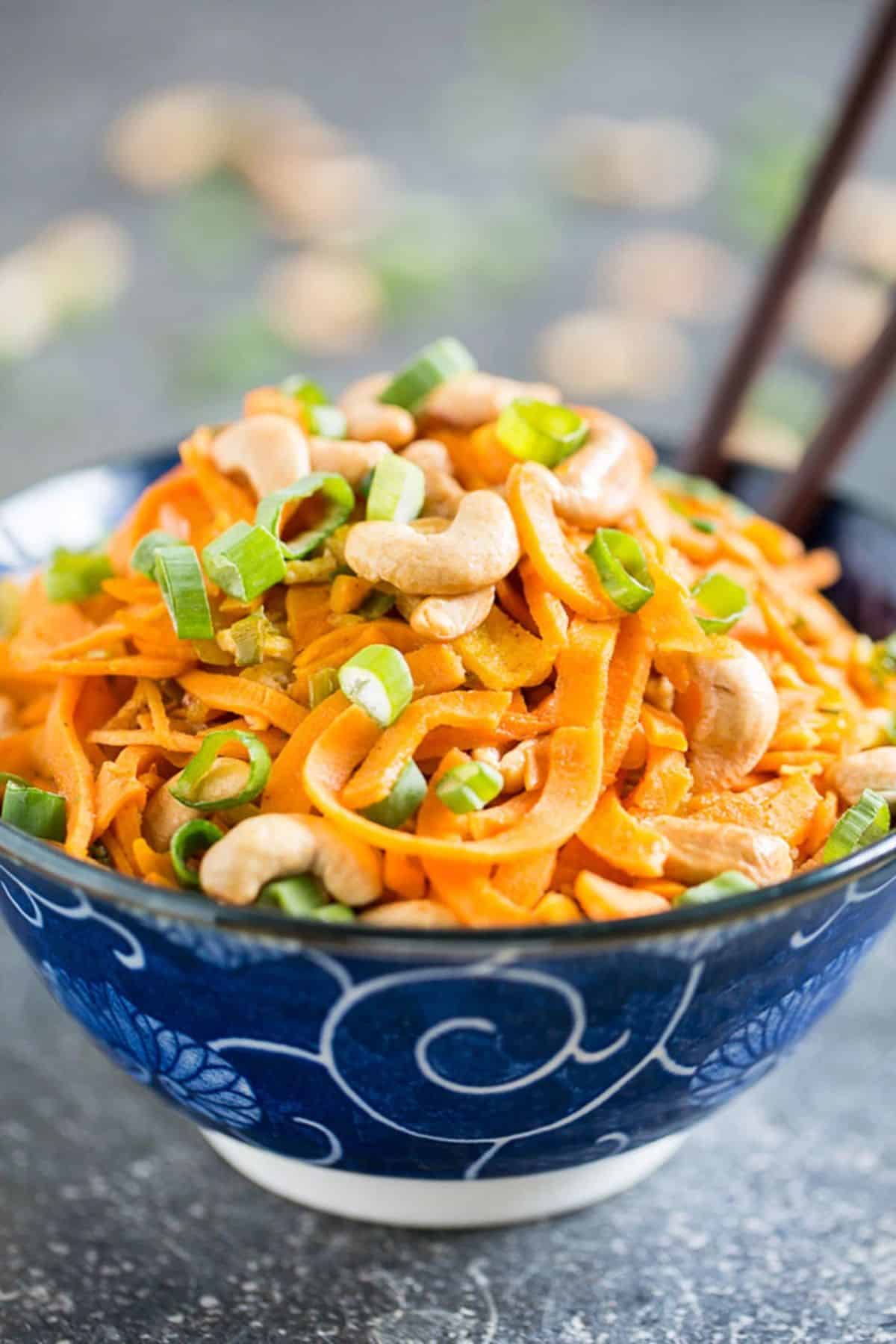
    Simple Sweet Potato Noodle Pad Thai - by Get Inspired Everyday

    An easy veggie pad Thai with loads of spice and flavor.

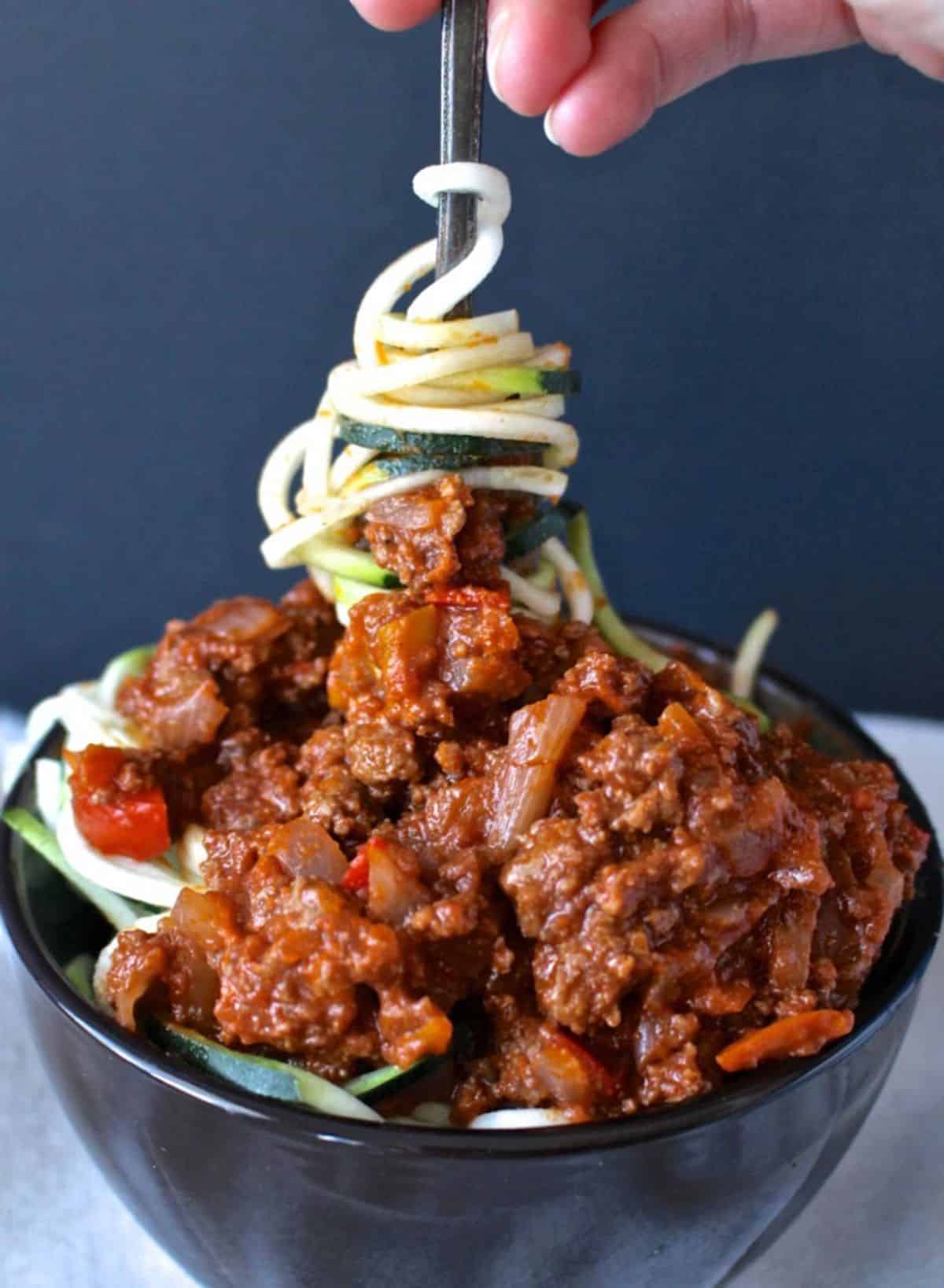
    Sloppy Joes - by Jay's Baking Me Crazy

    A quick and easy Sloppy Joes recipe that the whole family will love.

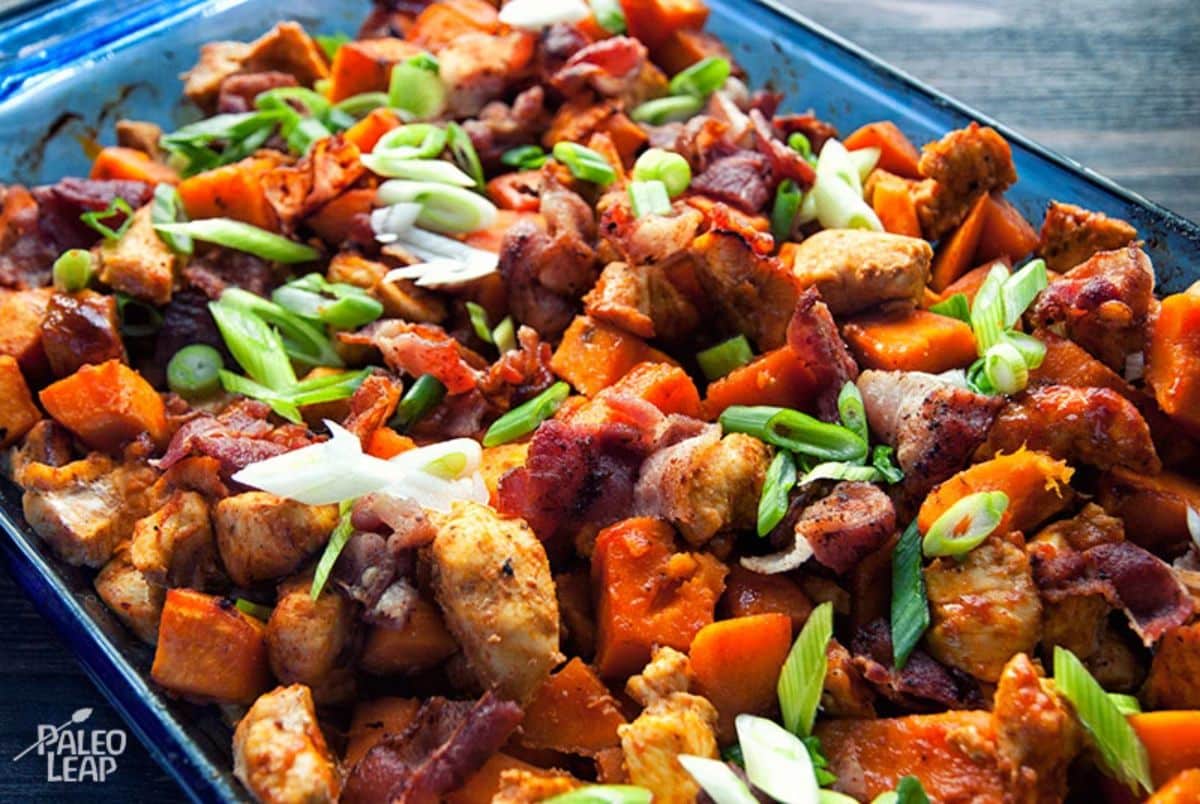
    Potato And Buffalo Chicken Casserole - by Paleo Leap

    A favorite family dinner, made Paleo-friendly without sacrificing convenience or comfort-food value.

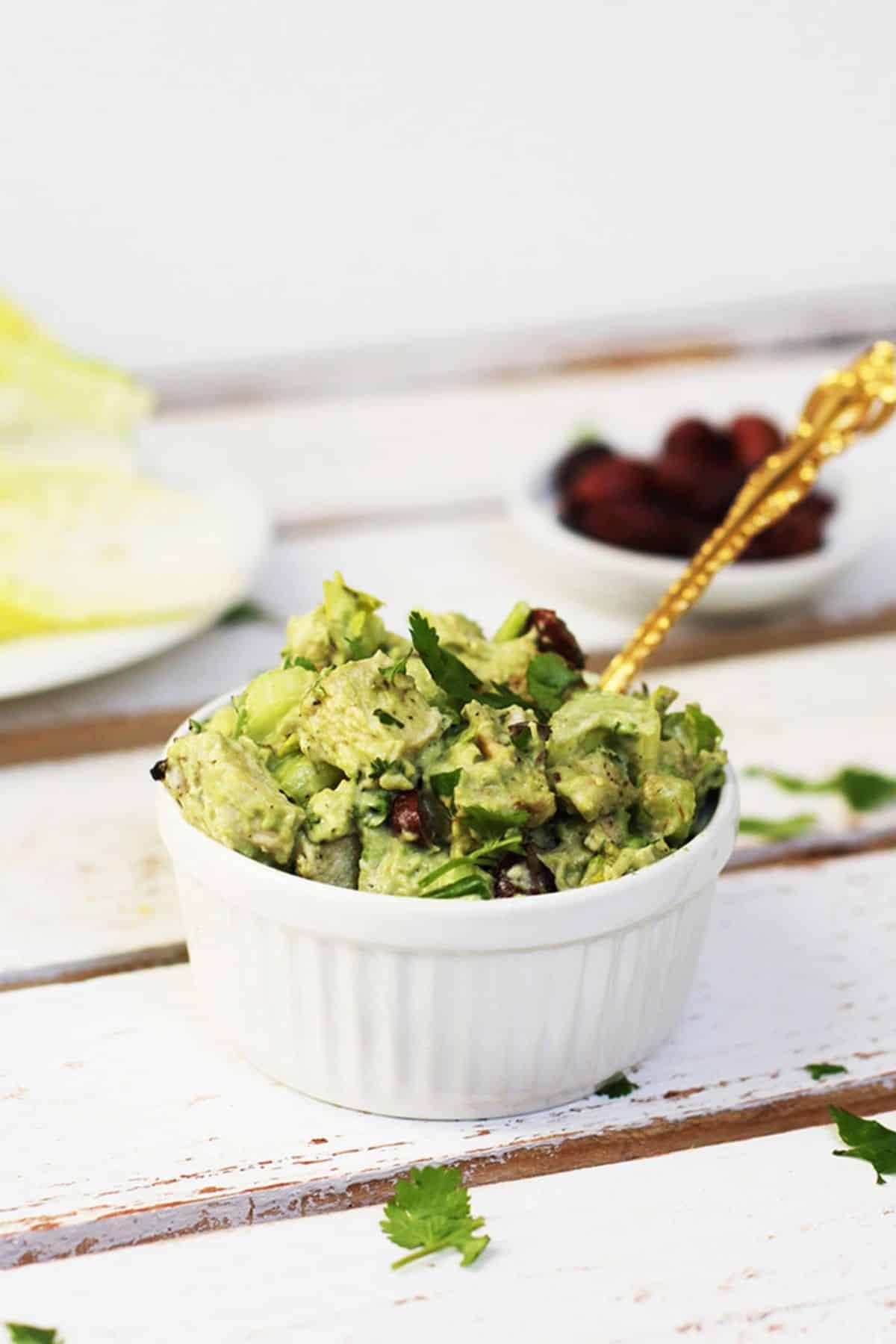
    Clean & Green Paleo Chicken Salad - by Grass Fed Salsa

    A quick, creamy chicken salad topped with olives, celery and tomatoes.

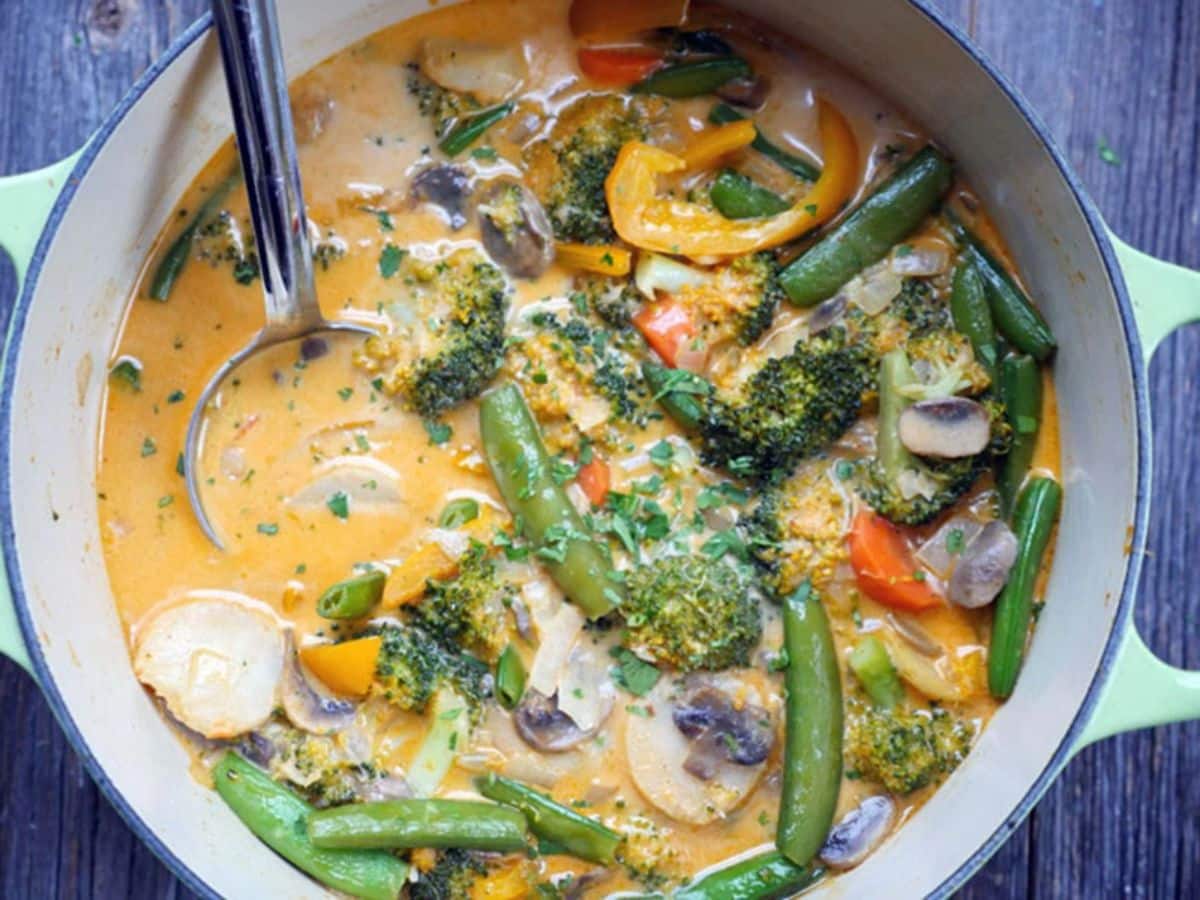
    Thai Red Vegetable Curry - by My Heart Beets

    A creamy Thai curry filled with snap peas and water chestnuts and lots of veggies.

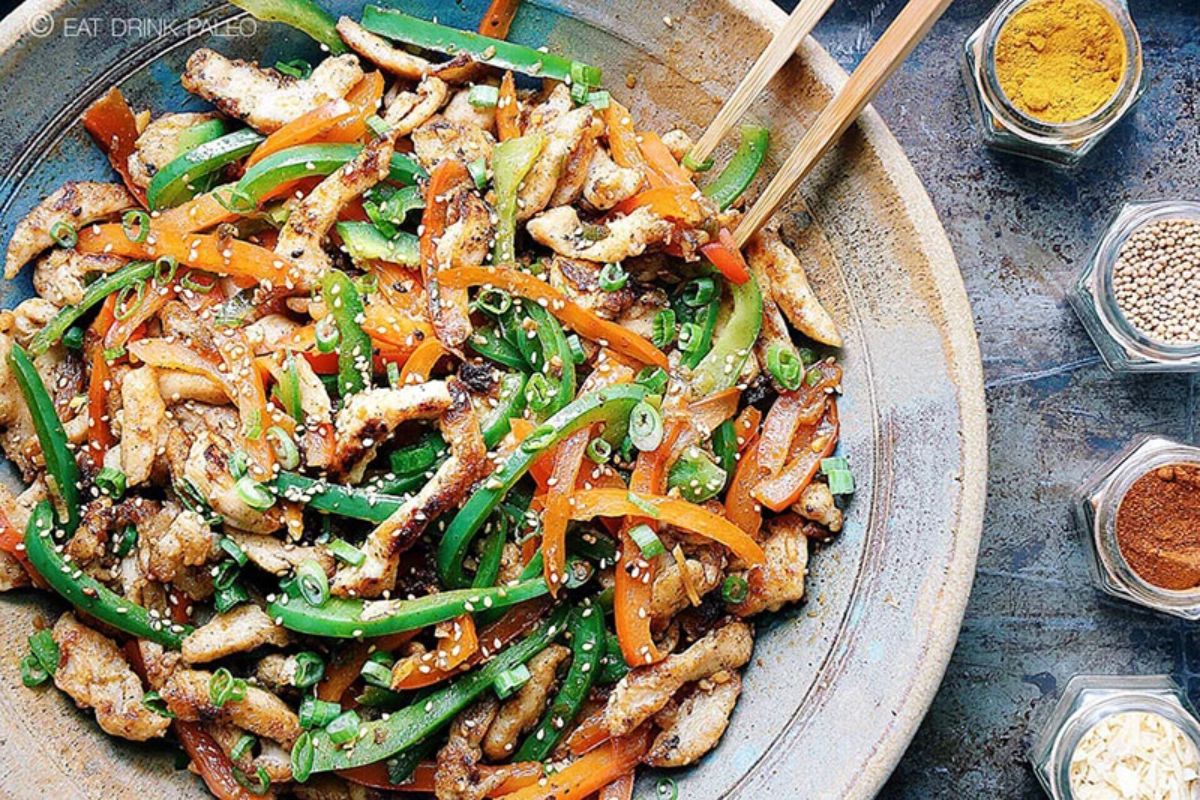
    Crispy Shredded Chinese Chicken - by Eat Drink Paleo

    A crispy, colorful shredded chicken dish with plenty of flavors and veggies.

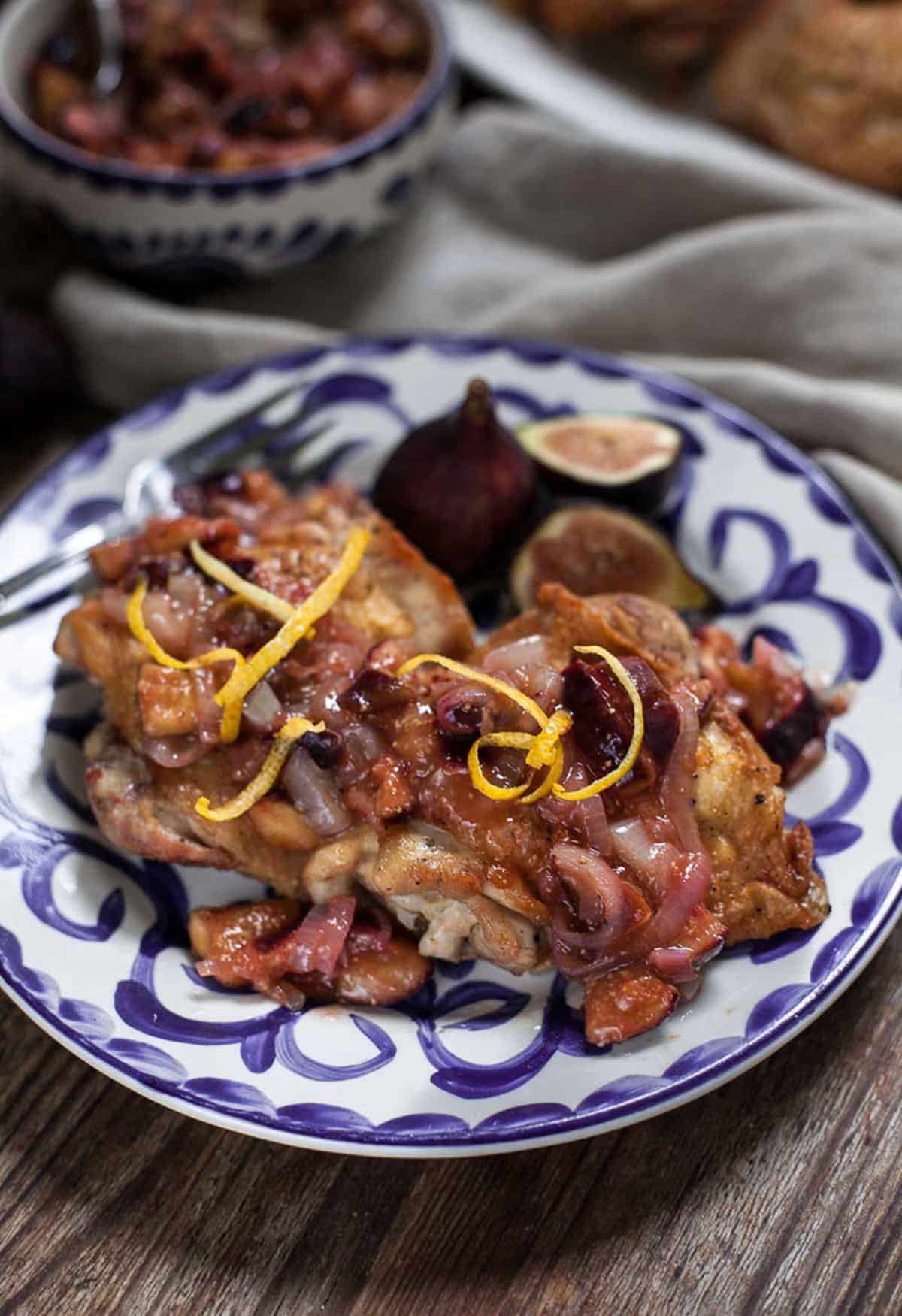
    Crispy Chicken with Fig and Shallot Compote - by A Calculated Whisk

    The fig & shallot compote complete this crispy chicken dish!

    Pumpkin Curry - by Savory Lotus

    A warm and cozy dish made of Indian spices and cubed pumpkin.

    Filed Under: Paleo Recipe Compilations

    5 Things to Know About Breakfast and Weight Loss

    August 26, 2016 by Paleo Leaper Leave a Comment

    Weight Loss

    Breakfast: eat it or skip it? For a while, it was fashionable to call breakfast the most important meal of the day - apparently, if you even thought about skipping breakfast, you'd either waste away into nothing or instantly become obese, depending on whether it was your grandmother or your personal trainer talking. Then came the reaction: it suddenly got fashionable to skip breakfast completely. Apparently, only weaklings and the insulin-resistant need any food before 2 PM.

    But what's fashionable in nutrition and what's actually good for humans are two different questions. So here are 5 things you should know about the eat /skip breakfast debate.

    1. Association Studies Don't Prove Anything About Cause and Effect

    It's very true that in multiple studies, skipping breakfast is associated with obesity. But do people gain weight because they skip breakfast? Or do obese people skip breakfast more often because they're trying to lose weight? Or what about third factors. Many people with very stressful lives skip breakfast because they don't have time to eat it. Stress is asssociated with weight gain. What if stress is the cause of both the breakfast-skipping and the obesity? Association studies can't tell us that.

    This review looked at exactly that problem. The study found that most of the studies that people cite about breakfast and obesity are association studies. What you'd need to do to really prove an effect of breakfast on obesity are randomized controlled trials. A randomized controlled trial is when you give one group an intervention (e.g. skipping breakfast) and leave the other group alone and observe the differences between the groups. It's what you have to do to actually prove that the intervention causes some kind of change.

    So leaving the association studies to the side, what do the intervention studies say?

    2. Some Studies Show No Effect.

    Instead of giving people breakfast in a lab and making them eat it, the researchers in this study gave people instructions to eat or skip breakfast and then let them do it themselves in the real world. This is a much more realistic model of what happens when someone thinks "I'm going to start eating breakfast" or "I'm going to try skipping breakfast." Here's what the researchers found at the end of the study:

    "A recommendation to eat or skip breakfast for weight loss was effective at changing self-reported breakfast eating habits, but contrary to widely espoused views this had no discernable effect on weight loss in free-living adults who were attempting to lose weight."

    Over 90% of subjects in both groups did as they were told (at least according to their self-reported food intake), but it didn't seem to matter much.

    This study took obese adults (age 21-60) and assigned them to either a breakfast group or a no-breakfast group for 6 weeks. They found that the group basically made no difference in weight loss:

    • The breakfast group ate more calories, but they were also voluntarily more active during the day.
    • The no-breakfast group compensated a little bit by eating a bigger lunch, but they still ate slightly fewer calories over the day. On the other hand, they were less active during the day, so their body just compensated for the lower calories with less energy expenditure.

    Ultimately, there was no weight loss difference between the groups. (Although the breakfast group had slightly better insulin sensitivity at the end of the trial, which is nice for them).

    This doesn't mean that skipping breakfast never works, but if studies sometimes show no effect at all, then the benefit of eating or skipping breakfast will probably be small or individually variable. Or the subjects could have been eating the wrong breakfast foods - maybe instead of breakfasts high in protein and fiber, they were all filling up bowls of sugary breakfast cereal.

    3. "Breakfast" is Too Vague and Broad

    This review looked at all the evidence about breakfast and weight management. The authors found that if you lump all "breakfast" into one category, there's not conclusive evidence for it or against it.

    This makes a lot of sense: "breakfast" to one person might be two Krispy Kremes and a Red Bull in the car on the way to work, but "breakfast" to another person might be hard-boiled eggs with leftover sweet potato. Obviously, those two breakfasts are going to have totally different effects on the people who eat them, and lumping them together into one category of "breakfast" doesn't make much sense.

    Instead, you have to look at who's eating the breakfast and what type of breakfast they're eating. Which brings us to...

    4. Breakfast Composition Matters.

    Even though there wasn't any evidence in favor of "breakfast" as a catch-all, the review above found some evidence supporting breakfasts high in protein and fiber. An example of a breakfast high in protein and fiber would be a scramble with eggs, green peppers, onions, mushrooms, and whatever other vegetables you like.

    To take an example study, this one found that obese Chinese teenagers at less at lunch if they had an egg breakfast compared to a bread breakfast. The researchers found that the egg breakfast increased levels of satiety ("I'm full") hormones like PYY, and proposed that the higher amount of protein in the eggs helped keep the teenagers feeling fuller than the bread.

    This study looked at 20 girls who usually skipped breakfast. The study compared  an "egg- and beef-rich" breakfast with 35 grams of protein to a cereal breakfast with 13 grams of protein but the same number of calories. Compared to skipping breakfast, both the breakfasts improved the girls' appetite regulation, but the high-protein breakfast was better and only the high-protein breakfast reduced evening snacking.

    5. Routine Matters...but Maybe Not the Way you Think

    quick paleo dinners

    Another thing that the review mentioned: most studies on breakfast didn't control for whether the participants usually ate breakfast or not.

    This study is from all the way back in 1992, but it's one of the few long intervention studies on breakfast eating vs. skipping, so it's well worth a look. So cast your mind back to the George H. W. Bush presidency and take a look at the results: 52 obese adult women were assigned to a breakfast group or a no-breakfast group.

    The researchers found that the more the women had to change their eating habits, the better they did. Habitual breakfast eaters did better when they had to skip breakfast. Habitual breakfast skippers did better when they had to eat breakfast.

    Weird, right? But it makes a certain kind of sense: the change in breakfast habits shook up the women's routines and pulled them out of their old food habits first thing in the morning. Then they had the ability to start from scratch and build new habits on a blank slate instead of trying to resist the bad habits they'd already made.

    So if you've always eaten breakfast and you want to change your whole diet, it might be worth trying to skip it - to bust yourself out of your routine if nothing else.

    6. It Affects How Your Workouts Burn Fat

    Now for an indirect effect of breakfast on weight loss: if you do morning workouts, you should be aware of the way breakfast affects your body's fuel utilization during your workout.

    When you work out, your body can either burn carbs or fat. In general, if you've just eaten a lot of carbs (carb-heavy breakfast, Gatorade, most varieties of energy chews/gels/beans), your body will preferentially use those carbs. But if you haven't eaten carbs recently, or after you've burned through all your easily-available carbs (e.g. the middle of a long run), your body will switch to burning fat.

    This study tracked 10 young obese men. For one week, they woke up, worked out, and then ate breakfast. Then for a second week they woke up, ate breakfast, and then worked out.

    • The fasted workout caused the men to burn more body fat.
    • But the trade-off was higher stress hormone (cortisol) levels in the fasted group. Cortisol is well-known to spell trouble for weight loss and the researchers worried that "increased cortisol levels following exercise after overnight fasting may negatively affect long-term weight loss"

    In theory, this means that working out before breakfast might be more effective for fat burning. But maybe keep an eye on your stress levels - if you're otherwise stressed (mentally or physically), then it might be helpful to eat something so your workout doesn't overwhelm your body with an extra burden of stress.

    So What's the Takeaway?

    The takeaway is that nobody can really say how "breakfast" as a catch-all category affects weight gain or loss in all humans.

    • Changing your breakfast habits may help you make big-picture diet changes, but this is obviously going to depend on what you've been doing.
    • If you're going to eat breakfast, eating a protein-rich, fiber-rich breakfast is likely preferable.
    • If you work out in the morning, pick a pre-workout or post-workout breakfast depending on your needs and goals.

    Filed Under: Learn About Paleo & Keto Diets

    Paleo as a High-Pleasure Diet

    May 31, 2015 by Paleo Leaper Leave a Comment

    Here’s a radical thought: pleasure is not something bad or shameful that you have to sacrifice to be healthy, and you shouldn't feel guilty about wanting pleasure in your life. In fact, no "healthy" diet is worth the effort if it doesn’t bring you more pleasure than it takes away.

    But wait, you say, if I lived by that principle I’d never eat Paleo! After all, our brains are literally wired to find the fat-sugar-salt combo in processed foods overwhelmingly pleasurable. So if I wanted to eat for pure pleasure, wouldn’t I be on a steady diet of pizza rolls and cinnamon buns?

    cheat day food
    Hopefully NOT pictured: the most meaningful pleasures in your life.

    Maybe, if you’re only counting the pleasure you get from the taste of your food (although many people actually find that their Paleo meals taste better than what they used to eat, so it’s not necessarily inevitable). But what about all the pleasure in your life as a whole?

    Which do you think would ultimately give you more pleasure: eating a bowl of ice cream, or taking your wedding photos confidently free from acne? Which would give you more pleasure: eating a bag of Cheetos and waking up the next morning feeling sick to your stomach, or foregoing the Cheetos and waking up feeling like a million bucks?

    Pick one: the pleasure of eating takeout Chinese food, or the pleasure of taking a stroll through a beautiful forest without your crippling autoimmune disease weighing you down. Or choose between living your last 10 years in a wheelchair on oxygen, but having all the cookies you want, vs. living your last 10 years mobile and mentally sharp, but without the junk food.

    When you think about life as a whole, it’s easy to see how eating well can bring you a net gain in pleasure, even if (and that’s a big if) it reduces your possible pleasure at mealtimes.

    Eating for Pleasure vs. Dieting for Thinness

    There’s an important distinction to make here between eating for pleasure and eating for thinness.

    In a way, most people on “diets” think they’re eating for a kind of long-term pleasure: they’re sure that they’ll be happy if they can only get thin. They put off happiness until then, and they forego the pleasure of food for a promise of some future pleasure once they reach a certain weight.

    The problem with this is that being thin doesn’t actually make you happy; it just makes you thin. There is no pixie dust that magically bestows happiness upon you when you hit your goal weight. Thinness is not an automatic ticket to happiness: ask anyone who's lost a lot of weight.

    Dieters who give up everything on the assumption that they’ll be happy once they’re thin are giving up any pleasure they might have gotten from eating tasty but unhealthy foods, for the sake of an illusion. And that’s assuming that they even get there: it never seems to occur to these dieters that the future is uncertain. What if they get hit by a car, or suddenly have a heart attack. It could happen! Then they will have suffered so much, and given up so much pleasure…for what?

    “But being thin does give me pleasure! Now I can go hiking/ride my bike/fit into the seats on carnival rides/walk my dog/walk up stairs/[fill in your favorite activity here]” – yes, but the pleasure comes from doing the activity and/or feeling better, not from being thin. If you eat well, in a way that supports your health (as opposed to “dieting” only for the sake of thinness), you’ll get that pleasure, and you’ll get much more of it than you would if you focused only on being thin.

    Eating well may make you thinner if you have weight to lose, but the additional pleasure you get isn’t from the thinness itself. It’s from being healthier: feeling great all the time, and being able to do things you couldn’t do before. And that kind of pleasure isn’t something you have to put off and hope for until you finally make it down to a certain size or weight: it’s something you start feeling right away when you change your diet, and it only gets better over time.

    What does it Look Like to Eat for Pleasure?

    When you eat for health and pleasure, as opposed to dieting for the promise of something better once you’re thin, here’s what it looks like:

    • You eat enough calories, carbohydrates, and fat to feel strong and energetic all the time. If you’re weak and starving, you’re probably not feeling much pleasure. You may lose weight more slowly this way, but you'll enjoy your life while you're doing it.
    • You maximize food quality. Prioritize your pleasure by choosing foods that don’t upset your stomach, and eat nutrient-dense foods that make your body feel amazing.
    • You find a diet that works for you, instead of sticking to someone else’s idea of what’s “good” just because someone else said so.
    • You eat food that tastes good, even if it doesn't taste as overwhelmingly intense as highly processed junk food. You enjoy your meals; you don't punish yourself with unnecessarily bland or tasteless "diet food."

    Eating for pleasure also means you’re not afraid to compromise on Paleo if that will improve your life in the long run. Maybe it means jumping up and grabbing that special opportunity to go to a foreign country you’ve always dreamed about, even though you’ll be staying in hostels and you might not be able to eat perfectly while you’re there. Paleo is a means to an end; it’s something you can compromise on for the right reasons.

    Summing it Up

    If your diet doesn’t bring you a net gain in joy and pleasure, ditch it.

    That doesn’t mean that you’ll necessarily choose your diet based on which foods are the most compelling in the moment. Junk food can be very delicious, but it can also be worth foregoing for the bigger pleasure of better health and all the things you can do with it.

    But on the other hand, if you’re constantly sacrificing foods you love to meet an aesthetic ideal on the assumption that you’ll feel pleasure once you get there, it might be worth taking a step back to re-evaluate: how can you transform your diet into a something you enjoy right now? What are you missing out on for the sake of that promise of future happiness? You deserve a way of eating that will bring pleasure into your life while you’re eating that way, not just after you cross some mythical finish line and arrive at “thin.”

    Filed Under: Learn About Paleo & Keto Diets

    Paleo Foods: Duck Eggs

    October 24, 2014 by Paleo Leaper Leave a Comment

    Duck Eggs

    Imagine a perfect egg cooked medium-hard: a soft and creamy yolk just bordering on runny, delicious with a grind of black pepper and a sprinkle of salt. Crack it over a big plate of roasted vegetables with some crispy bacon and dig in at any time of day!

    Now imagine a different egg, with a yolk even richer and even bigger relative to the white – if the chicken egg is a very serviceable Honda, this is the Cadillac of eggs. It’s so luxuriously good you can barely believe it’s healthy – but in fact, it’s even more nutritious than its smaller, paler cousin.

    And best of all, this delicious gift of nature is actually quite widely available and getting increasingly popular: it’s a duck egg.

    Duck Eggs and Nutrition

    Chicken eggs are one of the most nutritious Paleo foods around. But take a look at how duck eggs stack up:

    (The percentage listed is the % Daily Value, which isn’t perfect, but works well enough to give you an idea of what kind of numbers you’re talking about).

    NutrientChicken egg (1 egg)Duck egg (1 egg)
    Iron (mg)0.9 (5%)2.70 (15%)
    Phosphorus (mg)95.5 (10%)154 (15%)
    Zinc (mg)0.6 (4%)1 (7%)
    Selenium (mcg)15.8 (23%)25.5 (36%)
    Vitamin A (IU)244 (5%)472 (9%)
    Vitamin E (mg)0.5 (2%)0.9 (5%)
    Thiamin/Vitamin B1 (mg)0.02 (2%)0.1 (7%)
    Riboflavin/Vitamin B2 (mg)0.2 (14%)0.3 (17%)
    Vitamin B6 (mg)0.1 (4%)0.2 (9%)
    Folate/Vitamin B9 (mcg)23.5 (6%)56 (14%)
    Vitamin B12 (mcg)0.6 (11%)3.8 (63%)
    Pantothenic Acid/Vitamin B5 (mg)0.7 (7%)1.3 (13%)
    Choline (mg)*126184
    Total Omega-3s (mg)*3771.4
    Total protein (grams)6.288.97

    *There is currently no %DV for choline or Omega-3 fats.

    Duck eggs win hands-down, probably because proportionally they have much more yolk (where all the nutritional goodness is) and much less white (which is just empty protein). More micronutrients, more protein, and more Omega-3s.

    A few of these nutrients are particularly notable because there aren’t many sources of them aside from eggs:

    • Choline is incredibly important for liver health: there’s some evidence that fatty liver disease is very closely connected with choline deficiency. Egg yolks are a staple dietary source of choline (if you don’t eat organ meats, they’re probably by far the biggest source of choline in your diet), and duck eggs simply have more.
    • Folate, or Vitamin B9, is especially important for mental health, pregnant women and nursing mothers. Eggs are a key source on Paleo because many other sources – like beans and lentils – are out. One duck egg has over twice as much folate as one chicken egg.

    Duck eggs also have other benefits as well. The whites of duck eggs may have different proteins than the whites of chicken eggs, and some people can tolerate duck eggs even if they can’t tolerate chicken eggs. So if you’re struggling to find good breakfast options, check with a doctor to see whether duck eggs might be a better alternative for you than chicken.

    It’s also worth noting that duck eggs are still a specialty food sold primarily by people who really care about food quality. This means that the ducks that produce duck eggs are rarely fed soy or wheat: if you’re sensitive to even the slightest trace of these things in the eggs, duck eggs are probably a safer choice.

    Where to Find Duck Eggs

    OK, that’s all good, but where does anyone actually find such a strange and exotic food?

    Actually, duck eggs aren’t so rare; you just have to be on the lookout for them. If you’re not aware of them, it’s easy to skip right over them, but once you’re looking, they’re not hard to find.

    The best place to get duck eggs is from a farmers’ market. A lot of smaller poultry farms like ducks for various reasons (they’re hardier than chickens, they eat unwelcome insects and help with pest control, and their manure is more useful for the rest of the farm). Farms that raise ducks for meat will often sell the eggs as well.

    Many higher-end grocery stores, like Whole Foods, also carry duck eggs; you just might have to search a bit through the rows of chicken eggs to find them. Sometimes you can even buy each individual egg separately, which is nice to get a preview without shelling out for the whole dozen. Local co-ops that get food directly from farmers are also a good bet.

    Because they’re larger than chicken eggs, duck eggs are likely to be more expensive per egg. But you’ll probably also need fewer duck eggs to make a meal, because they’re fattier and more filling. All in all, it usually works out to roughly the same price per egg-based meal, or even a little bit less.

    Cooking with Duck Eggs

    So, you’re now the proud possessor of a dozen (or half a dozen; often you can get half-cartons to try) duck eggs! Now what?

    You can use duck eggs almost anywhere you’d use chicken, provided that you account for the larger size of the duck eggs (roughly 2 duck to 3 chicken eggs, although it varies depending on your recipe and the relative sizes of your eggs). Here are some ideas:

    • Hard- or soft-boiled, fried, or scrambled duck eggs are great: make sure to leave the yolk a little soft so you can get the most out of that creamy texture! Any seasonings that go well with chicken eggs will also be good with duck.
    • Salted duck eggs are a traditional staple of Chinese cooking.
    • Salt-cured egg yolks are a delicious way to make something “cheesy” without the cheese.
    • Duck egg mayonnaise: if you thought mayo couldn’t get any better, you thought wrong.
    • Ducky coconut flour biscuits: baking with duck eggs isn’t just for unhealthy food!

    You could also make any kind of frittata or omelet with duck eggs just to enjoy that rich, delicious flavor.

    Summing it Up

    You can eat Paleo without ever touching a duck egg, but it’s always nice to have luxuries, and duck eggs are a great way to give yourself a treat that’s also a true “treat” for your health. They have a much richer flavor and a creamier yolk than chicken eggs, with roughly twice the nutrient content to boot – and you can cook them just about any way you’d cook any other type of eggs. Why not give them a try?

    Filed Under: Paleo Diet Foods

    Paleo Foods: Brassicas (and not Just the Ones you Know)

    September 14, 2014 by Paleo Leaper Leave a Comment

    Brassicas

    What if you could get a giant dose of vitamins, minerals, and anticancer phyotchemicals, in any one of several different delicious packages? Well, actually you can: welcome to the brassica family!

    “Brassicas” or “cruciferous vegetables” refers to species in the genus Brassica, which is part of the mustard family. It’s a big group, including everything from canola to cauliflower to cabbage, plus lesser-known species like daikon and tatsoi (a lot of Asian cooking greens are actually in this family). If you eat them raw, most of these vegetables have slightly bitter undertones, but cooking them brings out a very pleasant mild sweetness – think roasted cauliflower or kale fried in bacon fat.

    Their taste isn’t their only selling point, though: these vegetables are packed with nutrition, including a few particularly significant cancer-fighting compounds. On the other hand, they also aren’t right for everyone: several are high in FODMAPs carbohydrates, and anyone with impaired thyroid function might want to be wary of eating too much at once (more on this below).

    Brassica vegetables include...

    • Broccoli
    • Cauliflower
    • Brussels sprouts
    • Cabbage
    • Turnips/turnip greens
    • Collards
    • Kale
    • Bok choy
    • Other, less familiar names (see below)

    Health Benefits of Brassicas

    It’s hard to generalize about an entire family of vegetables, but overall, brassica vegetables are particularly high in…

    • Vitamin C (this is great if you don’t eat a lot of fruit)
    • Folate (Vitamin B9), which is particularly important for women who are pregnant or trying to conceive.
    • Vitamin K1 (not the Vitamin K2 you get from pasture-raised beef and dairy, but valuable anyway).

    The dark-green-and-leafy members of the family (kale, collards, and friends) will also provide some calcium – in fact, collard greens are actually the richest source of bioavailable plant calcium around.

    Brassica vegetables also get good press for their cancer-fighting powers. Just to start with the obligatory disclaimer, there is no one food that can “prevent” or “cure” cancer (in fact, “cancer” isn’t even one single disease to “prevent” or “cure” in the first place). But with that said, brassica vegetables do contain potentially anti-cancer phytochemicals called glucosinolates (these are the same compounds that give them their slight bitterness).

    In test-tube and animal trials, glucosinolates have been found to break down into various other compounds that help prevent cancer in different ways. In humans, the evidence is mixed: some studies show that people who eat more brassica vegetables get less cancer; other studies show that there’s no connection. It also probably depends on the specific type of cancer. But this review concluded that “a frequent intake of vegetables of the cruciferous family lowers the risk and may lead to a weaker metastasis of tumors in some persons.” A lower risk of cancer and weaker tumors if they do appear, all for the price of eating something that would be delicious anyway? Sounds pretty good!

    Downsides of Brassicas

    Even with all their benefits, brassicas still have some downsides. Specifically…

    They can be hard to digest if you have trouble with vegetables.

    GreenLeafyVegetable Paleo

    Many brassicas are high in FODMAPs carbohydrates, which can cause a whole slew of digestive symptoms like gas, bloating, and constipation or diarrhea (this is where all the off-key jokes about the cabbage soup diet come from). If you’re having gut trouble, it might be wise to get rid of them temporarily, and then reintroduce in slowly increasing quantities, to see how much you can tolerate at once.

    They can be goitrogenic, especially when raw.

    This one is tricky because in most people with healthy thyroid function, there’s absolutely nothing to worry about unless you’re actually eating a dump truck’s worth of cabbage every day. But in people who already have thyroid problems, goitrogenic foods can sometimes make it worse. Essentially, goitrogenic foods are foods with the potential to impair thyroid function. By far the biggest offender here is soy, which isn’t Paleo anyway, but you might also have trouble from huge quantities of raw brassicas (e.g. kale juice).

    Cooking food makes it much less goitrogenic – here’s a good discussion of this if you want to know more. But again most people shouldn’t have issues with this; it’s only really a concern for anyone with pre-existing thyroid issues, or anyone who isn’t getting enough iodine.

    Cooking and Eating Brassicas

    Now for the good part: how to get all that nutrition-packed, anti-cancer goodness on your plate.

    Brassicas: Everyday Edition

    First up are the brassicas everyone knows about – in your mental stock photo of “vegetables,” these are probably in there. You’ll find them at every grocery store, usually in several options (raw, pre-cut, and frozen, at least). Vegetables like broccoli, cauliflower, and kale fall into this category.

    Some recipe inspiration to get them on the plate:

    • Cabbage: oven-roasted garlic cabbage or coleslaw with apples and poppy seeds.
    • Brussels sprouts: Asian stir-fried Brussels sprouts
    • Cauliflower: cauliflower with lime and cilantro, fresh vegetable salad with black olives, or try these cauliflower substitutes for unhealthy foods.
    • Kale: kale chips or raw kale salad
    • Broccoli: broccoli and apple salad with walnuts or beef and broccoli stir-fry (also has Brussels sprouts)

    Brassicas: New and Different

    Now it’s time to shine the spotlight on some vegetables that might not be regular guests on your table. If you’re feeling like mixing something up, try one of these on for size.

    Kohlrabi

    • Looks like: a bumpy green or purple knob with leaves sprouting up from the top – like a green or maroon-colored turnip.
    • Tastes like: broccoli, but mild and sweeter.
    • Recipe inspiration: Moroccan Carrot and Kohlrabi Salad (Paleo Fondue)

    Rapini (Broccoli Rabe)

    • Looks like: broccoli, but with longer stems and smaller florets.
    • Tastes like: broccoli.
    • Recipe inspiration: Broccoli Rabe with Garlic (There’s a Cook in My Kitchen)

    Napa cabbage (Chinese cabbage)

    • Looks like: regular cabbage, but a little bit elongated, wrinklier, and paler green.
    • Tastes like: very mild cabbage.
    • Recipe inspiration: Paleo won-ton soup (Christian Jax)

    Tatsoi (“spoon mustard”)

    • Looks like: bite-sized, dark green leaves shaped like little spoons.
    • Tastes like: very mildly mustard-flavored; much less “peppery” than arugula.
    • Recipe inspiration: Quick Beef Pho (Everyday Maven)

    Mizuna

    • Looks like: feathery, bright-green leaves – a little like dandelion leaves.
    • Tastes like: a little milder than arugula, but with a slight mustard-y edge.
    • Recipe inspiration: Bacon Mizuna Frittata (Paleo Periodical)

    Daikon

    • Looks like: a giant, white carrot (or alternately, like a turnip that got stretched way out).
    • Tastes like: a very mild radish.
    • Recipe inspiration: Cherry-Braised Chicken Salad (Grazed and Enthused)

    Wasabi

    • Looks like: the actual wasabi plant looks like a dirty, bumpy root, but the wasabi you buy in stores is already ground into a paste or powder. Look for it in the Asian food aisle.
    • Tastes like: a kick to the back of your nose – wasabi is powerful, so if you’re not into spicy food, beware.
    • Recipe inspiration: Seared Ahi with Wasabi Slaw (Paleo Girl’s Kitchen)

    Pick with a tried-and-true favorite, or branch out into something new – either way, you’ll get the health benefits of brassicas in a delicious plate full of nutrient-dense food.

    Filed Under: Paleo Diet Foods

    Paleo and Food Fraud: What you Need to Know

    June 19, 2014 by Paleo Leaper Leave a Comment

    Remember the horse meat scandal a while back? It didn’t cause much of a stir in the Paleo world because it mostly affected people who eat pre-packed freezer meals, which aren’t exactly known as a Paleo staple. But unfortunately there are a lot of unscrupulous food producers in the world, and a lot of food fraud does affect Paleo-friendly fare.

    Most commonly, this is because Paleo is all about high-quality food, where there’s a lot of temptation for manufacturers to replace real ingredients with cheaper substitutes and pocket the difference. You just can’t make much money substituting something else for white flour or corn oil: they’re already cheap. But when it comes to the good stuff – relatively expensive ingredients like olive oil, chocolate, or honey – there’s a real incentive to cut corners.

    Rather obviously, fake ingredients like corn-syrup “honey” or canola oil in your “olive oil” won’t give you the health benefits you look for in the real thing. So to avoid the counterfeit junk, take a look at some Paleo foods to watch out for, and how to get the real stuff:

    (unless otherwise noted, information in this post is taken from the USP’s Food Fraud Database)

    Olive Oil

    Did you know that olive oil laundering is one of the biggest moneymakers for the Italian mafia? According to this report, food fraud in Italy makes 12.5 billion Euros of money a year for various criminal groups.

    Olive oil has such impressive health benefits that people are willing to pay a lot of money for it, but the real deal is relatively expensive to produce. So importers just replace it with peanut oil, canola oil, palm oil, soybean oil, sunflower oil, lard, hazelnut oil – or in one case in 2012 something the Food Fraud Database listed as “swill or gutter oil (refined oil from recycled food and livestock waste).” Yum!

    And even if it’s actually made from olives, “extra-virgin” olive oil typically isn’t: it’s usually a lower grade of olive oil (with a less delicious taste and fewer antioxidants). Less concerningly, 40% of “Italian” olive oil actually comes from somewhere else – this is more a matter of principle than health, though, because there isn’t much difference between Italian, Spanish, and Greek oil.

    Avoiding olive oil fraud is unfortunately very difficult. A study from the University of California found that California olive oil was less likely to be fraudulent – but the University of California is hardly an unbiased source, so take this one with a grain of salt. Your best bet might be to find a small local producer with a website or a contact number that will let you talk to someone in charge and satisfy yourself of their honesty.

    The good news is that other Paleo-friendly fats (like coconut oil and animal fat) are rarely adulterated or fraudulent, so if you don’t have the budget for real olive oil, you can avoid the problem altogether by picking a different cooking fat.

    Spices

    Real spices have amazing health benefits. But sawdust with added food coloring doesn’t. Take a look at some of the contaminants the USP has discovered in various spices over the years:

    • Paprika and other products made from red peppers (chili powder, cayenne pepper, red pepper flakes…) are often colored a bright red with a powerfully carcinogenic dye called Sudan red. To avoid this, look for a spice that’s reddish-brown: if a bottle of paprika is the color of a fire truck, put it back on the shelf!
    • Saffron is very expensive, so it’s one of the most common targets of fraud. Sometimes, the “saffron” is just grass with food coloring, but it can also be various different types of flower petals, chalk, starch, or even cornsilk fibers.
    • Black pepper: papaya seeds, or dyed seeds of various other plants.
    • Cayenne pepper: ground rice, sawdust, salt, mustard seed husks, and various red food colorings (including red lead!) And all this is in addition to the carcinogenic Sudan dye mentioned above.
    • Turmeric: rice flower, sawdust, clay, chalk powder, starches, and various yellow food colorings (again, including lead). Turmeric also sometimes contains Sudan dyes.

    Other spices (cinnamon, coriander, oregano, basil, star anise, and spice blends) are also commonly contaminated. To avoid fraudulent spices, be very wary of the cheap buys: pick a reputable merchant and avoid the massive $1.50 bargain-bin jars at Aldi or Wal-Mart. Yes, it’s more expensive. But would you rather pay $1.50 for sawdust or $3.00 for an actual spice?

    Honey

    paleo-honey

    Most of the honey you buy in the store is actually honey - that is, it was made by bees in a hive. But it’s also typically imported from China under a false country of origin label – and imported Chinese honey is contaminated with heavy metals and illegal antibiotics.

    Luckily, it’s fairly simple to avoid the Chinese products – just get to know a local beekeeper or buy honey from a producer you can verify. It’s in the nature of honey that nobody can be 100% sure exactly what’s in it (since bees fly where they will, and if they happen to find a spilled popsicle on the sidewalk, they’re going to go for it). But at least you can find a supplier who isn’t intending to deceive you!

    Fish

    In an investigation that ran from 2010 to 2012, ocean conservation group Oceana found that 33% of fish samples in grocery stores nationwide were mislabeled, meaning that consumers weren’t getting the kind of fish they thought they were. The worst offenders:

    • Snapper: 87% of fish labeled “snapper” wasn’t.
    • Tuna: 59% was not tuna.

    Also, some fish marked “wild-caught” (especially salmon) was also farm-raised. This might not seem like such a big deal, but considering that farm-raised salmon is much less nutritious, it’s potentially robbing you of a lot of the goodness you’re expecting from your dinner.

    If you’re buying fresh fish, one step towards avoiding fish fraud is to pick whole fish over fish sticks or other similar products. And in several tests, canned fish was a lot less likely to be fake than whole fish, since there are fewer steps in the distribution and processing line.

    Another way to protect yourself against fish fraud is to find a local grocery store that participates in the Trace and Trust program, which tracks fish from boat to plate, and gives you a unique ID number to look up your particular fish and see where it came from. But as always, the best way is to catch it yourself, or go to a real fish market and put a few questions to the fishmonger.

    Fruit juice

    100% fruit juice should have one ingredient: fruit (and maybe some water).

    100% fruit juice should not include beet sugar, corn sugar, high-fructose corn syrup, MSG, ascorbic acid, or water purification byproducts. It also should come from the type of fruit listed on the label – so if your juice is labeled “cranberry,” cranberries should be what you’re getting.

    But most juice on grocery-store shelves is apple juice, regardless of what the label says, and even that is often contaminated with fillers and other ingredients. Sometimes, the “juice” actually contains no juice at all.

    Orange juice is one of the worst offenders here, as are trendy juices like pomegranate. But all kinds of juices commonly contain fraudulent or even dangerous ingredients, so a better alternative is to buy and juice your own fruit. That way you can be absolutely sure about what you’re getting.

    Maple Syrup

    You already know to avoid “breakfast syrup,” “pancake syrup,” or “maple flavored syrup:” those ones have the high-fructose corn syrup right on the label. But even if your bottle is labeled “maple syrup” on the ingredients list, it might be hiding a blend of cane sugar and artificial flavors, beet sugar, beet syrup, corn syrup, cane syrup, high-fructose corn syrup, or just plain sugar water.

    Unless you have a very sharp taste for processed sweeteners (most people don’t), the only way to make sure you’re getting something from a real maple tree is to buy from a farmer you trust. This can be tricky for people who don’t live in maple-syrup producing areas, but many small operations now sell their product online, making it accessible even to consumers across the country.

    Tea

    Tea can be contaminated with ingredients as diverse as Prussian blue (a blue dye familiar from watercolor paint), leaves from the wrong plant, spices, food starch, sand, clay, or sawdust. This is especially true of the cheapest brands, since the people who buy these teas aren’t expecting a gourmet flavor and won’t be as vigilant about the taste.

    One quick and easy way to avoid fraudulent tea: buy loose-leaf instead of tea bags. Tea bags can hide a lot, so it’s easier to sneak unsavory additives past the radar in bag form. As a bonus, loose-leaf tea is considerably cheaper per cup; you have to buy a tea ball at first, but it pays for itself in a week or two.

    Coffee

    coffee

    Thirsty for some sticks, roasted soybeans, acorns, sugar, or potato flour in your morning cup of Joe? That’s what you might be getting in off-the-shelf “ground coffee,” especially the cheap brands. More alarmingly, one 2012 report found coffee contaminated with barley, which could be very dangerous for the gluten-sensitive who weren’t expecting to find grains in their mug!

    To avoid this, buy your beans whole and grind them at home. That way, if there’s anything wrong inside, you’ll see it right away.

    Avoiding Food Fraud

    As well as the tips and tricks listed under each specific item, some good strategies for avoiding food fraud are:

    • Buy from someone you know. All of this fraud and deception can only happen because there’s such a huge gulf between producer and consumer. If you buy local and cultivate a relationship with the people who grow your food, there’s accountability. You can ask about the product – often, you can even see it being made, if you care to visit the farm.
    • Buy whole foods. It’s easy to fake apple juice. It’s a lot harder to fake an apple. Faux cinnamon sticks are rare, but faux cinnamon is common. It takes a little more effort on your part, but you’re much more likely to get what you’re paying for.
    • Beware prices that are too good to be true. They probably are.

    Some of these foods are best avoided entirely if you don’t have the money or other resources to make sure of what you’re getting. Coconut oil, for example, is very rarely fraudulent: if you can't get good olive oil, just cook with coconut oil and buy some whole olives if you want their health benefits. Maple syrup and honey are “sometimes” foods anyway: nobody needs them to eat well, and if money is tight, your budget would be better put to work on quality meat and vegetables.

    If this all makes you angry – good! It should make you angry. Rampant fraud is just one symptom of a food system that revolves around profits, not health. This is not how food should work. But unfortunately, this is how food does work in today’s world, and while we're busy fighting for a better system, it's up to us as individuals to protect ourselves from the one we have.

    Filed Under: Learn About Paleo & Keto Diets

    Health Benefits of Spices

    December 29, 2013 by Paleo Leaper Leave a Comment

    “Delicious” isn’t really the first word that comes to mind when we think of medicinal plants. Most of us probably picture a stringy green blob of some no-doubt powerful herb, or an odd-smelling tincture of bark or roots. It might be worthwhile to choke them down for the sake of your health, but they certainly aren’t foods we’d choose to eat, given the option of something more appetizing.

    This is actually a false assumption, though, since spices – which we deliberately add to our food to make it taste better – are some of the most powerful medicinal plants around. Some of the earliest folk remedies in ayurvedic and traditional Chinese medicine involved spices of one kind or another, and as it turns out, the old wives’ tales might actually have a grain of truth to them: spices are powerful medicines, and free of many of the side effects that make prescription medicines so dangerous.
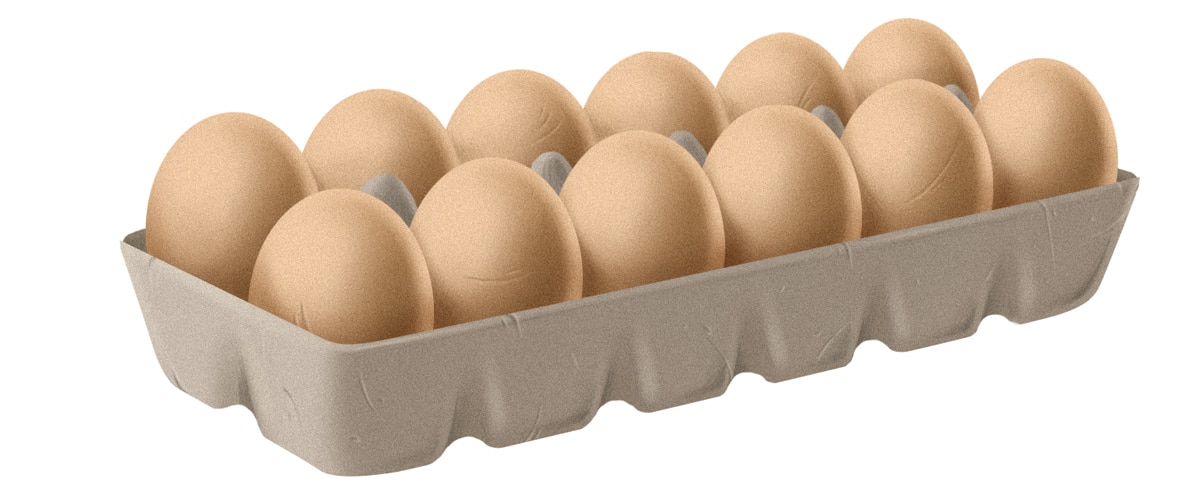
    These all-natural therapies have great benefits when they’re concentrated in pill form, but even better, some of them actually work even in the small amounts you’d ordinarily sprinkle on your food. Without even walking into a health-food store, take a look at what ordinary flavorings can do for you:

    Blood Sugar Control

    A quick overview of blood sugar (also called blood glucose; glucose is just a kind of sugar): when you eat a food containing carbohydrates, your body uses those carbs for fuel, especially for your muscles (that’s why athletes generally need more carbs than the rest of us). Insulin is the hormone that opens the door into the muscles, and lets the carbohydrates in. In a metabolically healthy person, this will result in a predictable pattern after a carbohydrate-rich meal: a temporary increase in blood sugar, and then a decrease as all that sugar leaves the blood and enters the muscles instead.

    In diabetics on the other hand, blood sugar is chronically high, because diabetics either don’t produce enough insulin (Type 1) or their muscles aren’t getting the message from the insulin signaling (Type 2). Chronically high blood sugar is bad news: it sets off a vicious cycle of inflammatory reactions, and often ends up being stored as fat (the reason why diabetes and obesity are closely related).

    To summarize very briefly, chronically high blood sugar is a serious problem, and blood sugar control is especially important for diabetics. So how can spices help with this?
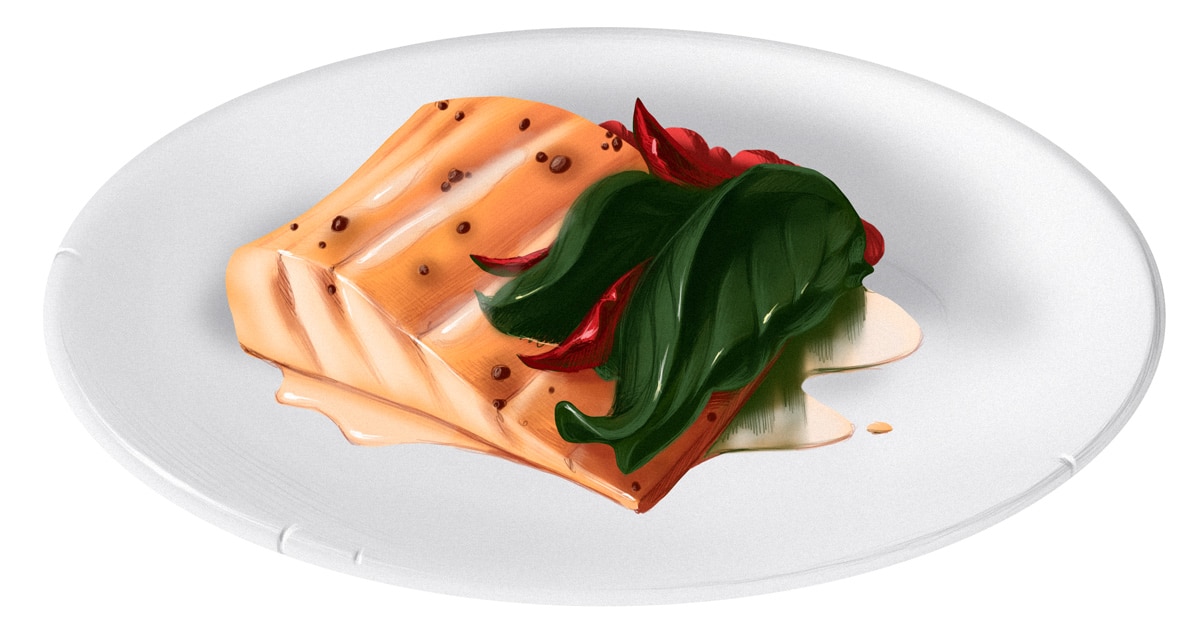
    First up to bat is cinnamon. It’s a delicious coincidence that cinnamon goes so perfectly with sweet potatoes, because from a health perspective, it’s the perfect accompaniment to everyone’s favorite safe starch.
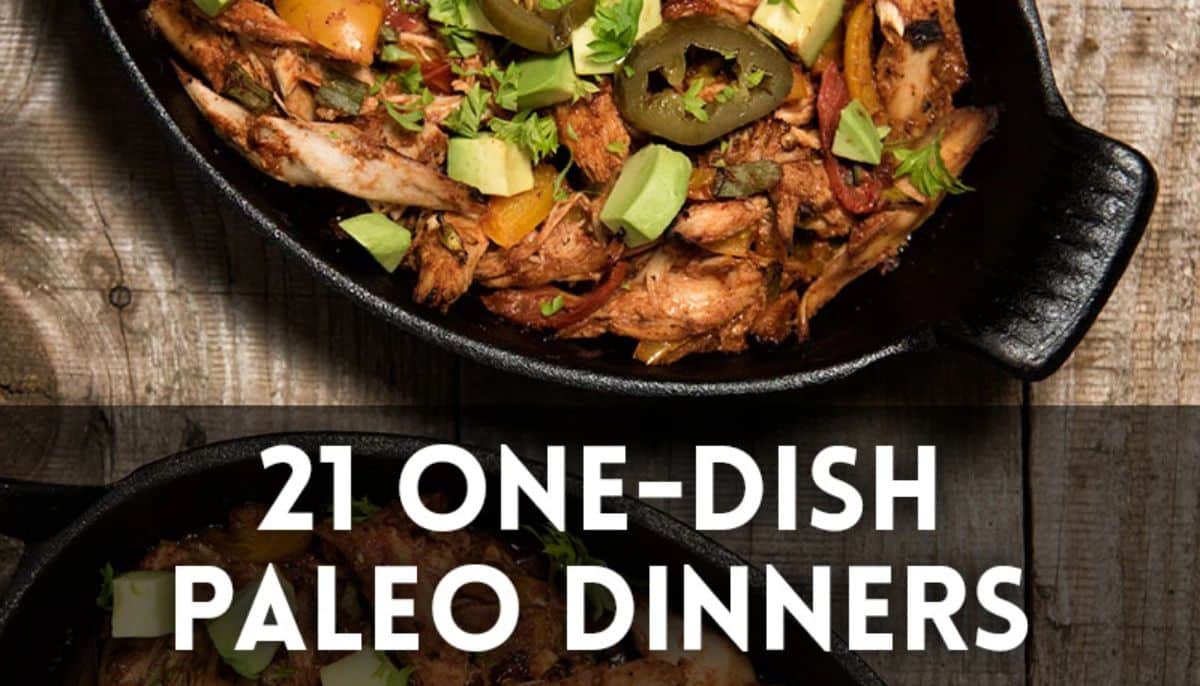
    In one study, 3 grams (just under 2 teaspoons) of cinnamon every day for eight weeks improved blood sugar control, lipid profile, and BMI in diabetic patients. Another study found important benefits for doses as low as 1 gram (less than a single teaspoon) daily.

    Even healthy people can benefit from this. One study fed patients rice pudding, and found that pudding flavored with 3g cinnamon helped control the insulin response to the carbohydrate-rich meal (in other words, it helped them metabolize the carbohydrates better).

    A less famous seasoning is fenugreek, a spice best known from Indian and Middle Eastern cuisine. In one study, fenugreek seeds at lunch and dinner improved blood sugar control and blood lipids in Type 1 diabetic patients. Fenugreek probably wouldn’t go well with your sweet potatoes, but why not roast up some white potatoes in butter or coconut oil, with a sprinkling of fenugreek and curry powder?

    Blood Lipid Improvements

    Blood lipids (triglycerides and cholesterol) are a topic of hot debate. There’s no real evidence to prove that dietary cholesterol raises blood cholesterol, but that doesn’t necessarily mean that blood cholesterol itself is harmless; it just proves that egg yolks are innocent of raising it. So even if you’re happily and healthily chowing down on butter, liver, and other extremely nutritious cholesterol-rich foods without a trace of guilt, blood lipid profiles are still something to keep an eye on.

    A quick review of the acronyms:

    • LDL Cholesterol: This is the “bad cholesterol” that most doctors agree you should reduce (although even this is much more complicated than it sounds).
    • HDL Cholesterol: This is the “good cholesterol” that most doctors are fine with.
    • Triglycerides: these are another kind of blood lipid associated with cardiovascular disease – interestingly enough, the best way to raise triglyceride levels is not eating fat, but rather eating a lot of refined carbohydrates!

    Many of the same spices that help improve blood glucose control also help improve blood lipids (probably because insulin and blood sugar are very closely related to cardiovascular health). Several of the cinnamon studies, for example, noted that not only did cinnamon improve subjects’ blood sugar levels, but it also lowered their LDL cholesterol, and increased or did not change their HDL cholesterol. This means the subjects had an improved ratio of LDL to HDL, a pattern associated with a lower risk of heart disease.

    Another study specifically on cholesterol found that fenugreek powder (also familiar from the blood sugar section), used as a flavoring in any dish the study subjects wanted to eat, lowered total cholesterol and LDL. Considering that poor blood lipid profiles are so closely associated with diabetes, and that both are signs of overall inflammation, it’s not surprising that the same anti-inflammatory spices provide benefits for both.

    A third beneficial spice for blood lipid improvement is ginger. In a study in Iran, patients who got 3 grams (just under 2 teaspoons) of ginger every day had reduced triglycerides, total cholesterol, and LDL cholesterol compared to a placebo group.

    Improve Blood Pressure

    Hypertension (high blood pressure) doesn’t actually result from eating too much salt, but that doesn’t mean it isn’t an issue to be aware of. Despite how little we actually know about the causes of hypertension, it’s probably a safe bet to aim for a normal blood pressure. Amazingly enough, cinnamon comes to the rescue again here: after 2 grams of cinnamon per day for 12 weeks, a group of Type 2 diabetics showed lower blood pressure compared to controls.

    spices

    Food Preservation

    Spices don’t just act as antioxidants within the human body; they also help to prevent the nutritional degradation of food during storage. In one study, for example, annatto and coriander were extremely effective at preserving the valuable Omega-3 fatty acids in meatballs during storage. Although Omega-3s are very good for you, they are still a type of PUFA and accordingly they’re quite fragile and prone to oxidation and going rancid. The spices in this study helped to prevent that, keeping the fats intact and healthy rather than oxidized and inflammatory.

    Preventing the oxidation of these fragile fats helps avoid the creation of advanced glycation end-products (AGEs), which create oxidative stress and speed up the aging process. The best illustration of this is a recent test where researchers gave men with Type 2 Diabetes one of two types of burger patties. The first patty was seasoned with salt only. The second had salt and a spice mix containing cloves, cinnamon, oregano, rosemary, ginger, black pepper, paprika, and garlic powder.

    Compared to the control group, the group eating the spiced patties had fewer markers of oxidative stress: the antioxidants in the spices protected the fats in the hamburger both during cooking and during digestion. The spiced burgers also helped improve the function of the endothelium, the cell layer that lines the inner surface of blood vessels. Impaired endothelial function is one major risk factor for cardiovascular diseases, so this represents a significant cardiovascular benefit.

    This is a dramatic illustration of how spices can help make your food better for you by reducing these small problems that aren’t noticeable individually but add up over time. If you like to cook once a week and freeze the results for quick and easy dinners all week long, this is definitely a benefit to pay attention to.

    Reduce DOMS

    Delayed-Onset Muscle Soreness (abbreviated DOMS) is familiar to any athlete who’s ever pushed it a little too hard in the gym and woken up the next day barely able to move. But did you know that your post-workout meal could save you some of that pain? In this study on female martial artists, one group of researchers found that 3 grams (slightly less than 2 teaspoons) of ginger effectively reduced muscle soreness.

    Improve Gut Flora Function

    As it turns out, our gut flora love spices just as much as we do, and they seem to be particularly fond of turmeric. A spice instantly recognizable for its bright golden-yellow color, turmeric is most frequently used in Indian and Southeast Asian cuisine.

    In this study, subjects ate curry either with or without turmeric. After their meal, researchers tested the subjects’ breath to see how much hydrogen was in it. The turmeric group had more hydrogen in their breath, and the carbohydrates in the meal seemed to be moving through their small bowel faster. These are both signs of a healthy response from the gut flora.

    Another study, which gave subjects 72-144mg/day (less than 1 teaspoon) of turmeric for 8 weeks reported that digestive symptoms were significantly improved in the intervention group compared to a placebo group. Interestingly enough, this study measured IBS symptoms, but in people without diagnosed cases of IBS, suggesting that turmeric is beneficial even for people without serious pre-existing problems.

    Improve the Taste of Healthy Food

    This might seem like a no-brainer (of course nobody wants to eat bland food, and obviously if your food tastes better, you’ll like it more and want to keep eating it), but it’s worth mentioning just in case Paleo is starting to feel a little boring. One of the best ways to keep yourself enthused about cooking and experimenting in the kitchen is to try a new spice, and anything that keeps you out of the clutches of delivery pizza or takeout Chinese definitely counts as a health benefit.

    Prevent and Treat Nausea

    It’s sometimes surprising how often traditional folk remedies actually turn out to be useful when we start studying them in a lab. Ginger has traditionally been prescribed to pregnant women as an antiemetic (an anti-nausea drug) to help treat morning sickness. And now we can tell from studies that it actually works. As well as being less expensive than prescription drugs, this also has safety benefits: unlike harsh pharmaceuticals (most famously thalidomide), ginger does not carry any risk of birth defects.

    With the equipment in modern labs, we can now confirm that this old wives’ prescription is quite effective. After several smaller studies, a 2005 meta-analysis showed that 1-1.5 grams of ginger every day (about 1 teaspoon) was not only effective for nausea in pregnancy, but also free from potentially dangerous side effects. There haven’t been any studies specifically on ginger for other types of nausea, but if you always get bad motion sickness on planes or in cars, a cup of ginger tea is definitely worth a shot!

    Stave Off Cravings

    Capsaicin, the active ingredient in red pepper and hot peppers, gets a lot of press for its metabolism-boosting effects, but there are two big problems with this. First of all, the studies that show this effect rely on enormous quantities of red pepper, much more than anyone would ever want to eat unless they took it in a pill. And secondly, this miraculous metabolic effect only amounts to approximately 50 calories/day, even with such extreme doses. So sprinkling red pepper flakes on your salad unfortunately won’t get you very far in terms of increased calorie burn.

    What it might do, though, is help prevent junk food cravings in the first place. One study gave subjects approximately 1 gram of red pepper flakes (as part of a meal, representing a normal food consumption of red pepper) and found that after eating a meal with the red peppers, subjects were less preoccupied with food, and had lower desire to eat fatty, salty, or sweet foods.  Interestingly enough, this effect was stronger among people who didn’t normally eat spicy foods, suggesting that spice-lovers eventually get used to the flavor and need to eat a little more to get the same effect.

    Another study found that after a lunch flavored with chili peppers, subjects showed no sign of thermogenic benefits, but did have decreased levels of ghrelin (the hormone that tells you when you’re hungry). In other words, they felt fuller after eating. Another study confirmed this: after eating a bowl of red-pepper-flavored soup, subjects voluntarily ate less at the rest of the meal. In this study, though, the dose had to be high enough to register as “spicy,” suggesting that the taste of the red pepper is just as important as the other biochemical aspects.

    star anise

    Taking Care of your Spices

    The chemical compounds in spices that account for their health-promoting effect (mainly phytonutrients) are sensitive to decay and oxidation, so if you want to get the most out of your spice collection, make the effort to take care of it properly. This doesn’t have to be time-consuming or difficult, but it does require a little bit of planning. In particular:

    • Whenever possible, buy whole spices and grind them yourself. This ensures that the spices will be as fresh, flavorful, and nutritious as possible.
    • Light, heat, and moisture are deadly to your spice collection. Store spices in opaque tins that seal tightly. As much as you can, try to keep them away from e oven and stove. If you want to store them for more than a few months, stick them in the freezer and defrost as necessary.
    • Ethnic markets are usually better sources for spices than grocery stores, since they have a higher turnover, so the spices are likely to be fresher. They’re also usually much cheaper.
    • Buying spices online often saves a lot of money, since you have the option of buying them in bags and re-using your own jars. Like ethnic food stores, online retailers will also often have fresher stock, because they sell out faster. The same goes for buying them in bulk at a health food store.

    Another spice-buying tip: save your money by avoiding spice blends (pumpkin pie spice, for example). It’s a lot cheaper just to buy the ingredients and mix them up yourself.

    Spice-Rich Recipes

    Now comes the tasty part: cooking up all these delicious spices to enjoy the double benefit of a delicious dinner and better health. Take a look at some recipes you can use:

    Cinnamon (for blood sugar, blood lipids oxidative stress, blood pressure, and cardiovascular health): cinnamon chicken, apple cinnamon fruit rolls, or baked apples. For an even simpler way to enjoy cinnamon, shake it over winter squash or sweet potatoes.

    Hot peppers (for cravings): jerk chicken, spicy pork chili, spicy pulled pork, or spicy scallop salad.

    Ginger (for nausea and DOMS): ginger-citrus roast chicken, sweet potato lime soup, or Thai coconut soup. Ginger is also delicious as ginger tea, which you can buy in teabags or simply make yourself by boiling some cut-up pieces of ginger in water for about 10 minutes.

    Turmeric (for gut flora): green chicken masala, chicken tajine with apricots, or Moroccan-style roast chicken. Alternately, add it to some homemade mustard to get the bright-yellow effect that you’re used to.

    Fenugreek (for blood sugar and blood lipids): add it to anything Indian or Middle Eastern, like curried shrimp and spinach or shakshuka. Or play around with it in recipes that can work with any combination of spices, like this warm broccoli slaw.

    Other spices (for food preservation, reducing oxidative stress, and adding flavor): salad dressings and vinaigrettes often have a lot of spices already in them: use them as marinades to give your meat a flavorful health boost. Or use a dry rub (a mix of spices without oil or vinegar) to add punch to your meat before grilling or roasting. Alternately, it’s also beneficial to simply include more spices in your everyday cooking. Vegetable recipes are perfect for this – something very basic like oven-roasted cauliflower can become the base for any number of spicy additions.

    What if I Don’t Like Spices?

    Are you sitting here reading all about the benefits of hot peppers with a sinking heart because you just can’t stand the stuff? You’re not alone – plenty of people just aren’t spice people. But don’t feel guilty about it: nobody has to eat spices to be healthy. They’re more like a bonus on top of an already excellent diet. If you really can’t stand them, don’t force yourself to choke them down. The most important thing is to eat healthy food you enjoy, whether or not it’s full of turmeric or fenugreek.

    Conclusion

    Sometimes the healthy choice is also the tasty choice, and the numerous health benefits of common spices are the perfect example. And you’ll notice that all the research cited in this article used amounts that a person could reasonably eat in their food: these aren’t effects that come from injecting cinnamon into mouse livers or bathing test-tube cells with marinades. They’re real, significant, and delicious health benefits that you can get just by doing something that tastes better anyway: definitely a win-win for everyone concerned.

    Filed Under: Learn About Paleo & Keto Diets

    The Paleo Guide to Food Additives

    April 10, 2013 by Paleo Leaper Leave a Comment

    What’s in a can of olives? Most people expect just one ingredient: olives. Maybe some water or salt at the very most. But pick up an actual can, and you’ll probably find other things like ferrous gluconate or citric acid on the label as well. It's nothing compared to the huge list of tongue-twisters on the back of a TV dinner, but even some Paleo-friendly foods like coconut milk or canned broth can raise a few eyebrows with unfamiliar ingredients. What are these things, and can they really be safe?

    Food Additives

    If you Google pretty much any common food additive + cancer, you’ll come up with at least one person who claims to have found a link, but all the recent hype about red meat and cancer proves that it’s very important to analyze these connections carefully, and determine whether they’re actually based on science, or on scare tactics. If the only sources for claiming something is dangerous are studies on rats and mice, make sure to check the concentrations used in the studies. As discussed in the article on salt, feeding a rat an extreme amount of anything will make it sick.

    Also, make sure to distinguish between preservatives and the foods they’re in. A high intake of preservatives usually indicates a high intake of nutrient-poor processed foods, so if the connection is as vague as “people who eat more X get more cancer,” there are probably a lot of other factors at work besides that one particular additive. In these cases, an overall malnourishing diet is likely to be doing much of the damage, so it’s not a serious concern for Paleo dieters.

    The list below is an alphabetical guide to some of the most common eyebrow-raising ingredients in minimally processed Paleo foods. It completely ignores additives used only in non-Paleo foods, and it shouldn’t even be an issue for most of your shopping cart. If everything you buy has at least one of these ingredients, you’re probably not eating Paleo to begin with.

    On the list, if something is marked as “probably” safe, it means "probably safe for a healthy person eating a nutrient-dense Paleo diet, without any special allergies or intolerances." Plenty of people have individual sensitivities to these chemicals, so if you feel better or healthier avoiding even the “safe” additives, by all means do it. Even if it’s just the placebo effect, feeling good about your food can have a huge impact on digestion and health. The best diet is the one that works for you, so take the list as a guide and do your own experiments from there.

    Annatto

    Found in: Butter and cheese

    What does it do? Annatto gives butter and cheese an attractive yellow color.

    Is it safe? Probably, unless you have an allergy. Annatto is a derived from the fruit of a tropical tree called the achiote; it doesn’t add anything nutritionally but it’s also not a major gut irritant. Even in rat studies, where the rats were fed absurd concentrations of annatto, researchers couldn’t find much of an effect. Some people have severe allergies to annatto (as with any other substance), so those people should go for products without it, which aren’t hard to find. Just make sure you aren’t fooled by the color of your butter into thinking it has more nutrients than it does: annatto only imitates the deep yellow color of real grass-fed butter; it doesn’t contain any of the Vitamin K that makes pastured butter so nutritious.

    Ascorbic Acid, Ascorbyl palmitate

    Found in: Cured meats

    What does it do? It’s an antioxidant.

    Is it safe? Yes; it’s just Vitamin C. In fact, it’s even beneficial, because it helps inhibit the conversion of nitrites to nitrosamines (see nitrites, below).

    Autolyzed Yeast Extract

    Found in: Store-bought broth

    What does it do? It brings out savory flavors.

    Is it safe? Nobody knows! The biggest health concern regarding autolyzed yeast extract is that it contains MSG. Some food manufacturers claim that the MSG in autolyzed yeast extract is “naturally occurring,” but it’s basically the same thing – see MSG.

    Benzoate (sodium benzoate)

    Found in: Fruit juice, carbonated drinks, pickles

    What does it do? It’s an antimicrobial agent to prevent bacteria from growing in the foods.

    Is it safe? Probably not. Sodium benzoate by itself is not dangerous, but when it combines with Vitamin C, it can form benzene, which is a recognized carcinogen. The food industry likes to point out that we also get benzene from breathing polluted air and drinking polluted water, but this doesn’t mean we shouldn’t eliminate it where we can! Fortunately, there’s not a lot to worry about for the Paleo crowd, since by far the largest source in the modern diet is soft drinks.

    BHA (Butylated Hydroxyanisole) and BHT (Butylated Hydroxytoluene)

    Found in: Fatty foods like nuts and lard

    What do they do? BHA and BHT are antioxidants.

    Is it safe? Possibly. Some studies show that very high amounts of these chemicals cause tumors in rodents, but others failed to establish the same correlation at normal levels in humans. Other studies even suggest potential health benefits. But the major concern with BHT from a Paleo standpoint isn’t that it’s harmful in itself, it’s that it indicates a processed, low-quality source of fats. Avoid it as a marker for unhealthy fats like trans fats, or fats that have been poorly treated, not on its own.

    Calcium Chloride

    Found in: Pickles, canned tomatoes

    What does it do? It’s a preservative – it’s basically salt (one of our oldest known preservatives) but a kind of salt that doesn’t contain sodium, which pleases the USDA and everyone who buys into their misguided recommendation to reduce dietary salt at all costs.

    Is it safe? Yes. It’s just salt. It’s also used on roads as a de-icer, but so is regular salt. If you inhale it, it’s toxic (just like regular salt), but using it as a preservative is fine.

    Carrageenan

    Found in: Dairy products, non-dairy alternatives (coconut milk, rice milk, soy milk, etc.), processed lunch meats, and some supplements

    What does it do? It’s a thickener, and especially used to replace fat.

    Is it safe? Probably not.

    Just from rat studies, you might think there's nothing to worry about. The WHO has established an Acceptable Daily Intake of carrageenan as 0-75 mg/kg bw. Average daily intake is approximately 250mg/person/day, which falls well toward the low end of the “safe” spectrum.  In order to show any risk to humans, the studies supposedly showing a high risk would have to approximate this level. The animal studies linking carrageenan to intestinal inflammation and leaky gut don’t pass this sniff test. For example, in rats, an administration of either 9,690 mg/kg bw or 3876 mg/kg bw made colon tumors worse: no kidding! This paper  gives a useful overview of the problems with the rodent studies. But that doesn’t mean the stuff is good for you.

    In human studies, some evidence shows that carrageenan increases intestinal permeability.  A study on isolated human intestinal cells found that carrageenan was inflammatory, and suggested it as a factor in the development of inflammatory bowel disease. In another study on isolated intestinal tissue, researchers found that carrageenan had a significant effect on the cells, although they didn’t link it to any specific disease.

    Studies in real live humans would be better, but since these are obviously out for reasons of medical ethics, isolated human tissue is a lot more convincing as an experimental subject than rats. It’s probably safest to avoid carrageenan, at least until we have more research.

    Caramel Color

    Found in: Balsamic vinegar

    What does it do? Caramel color is nothing but dye – it doesn’t change the taste of the vinegar at all.

    Is it safe? Probably. Caramel color is produced by an extreme form of the same browning reaction that gives you the crispy golden skin on a roasted chicken or grill marks on a steak (the same process that creates AGEs). As well as heat, the process usually also uses various forms of ammonia and sulfites. One study from the Center for Science in the Public Interest found that the resulting coloring agents were carcinogenic in mice, but this study used extremely high amounts that no normal human would ever ingest. Another study also using enormous amounts found that the worst problem the treated rats studied was diarrhea.

    On a Paleo diet, caramel color just isn’t a big concern, because the dose is far too small. You’d have to drink a thousand cans of soda a day to get the level of caramel color fed to the mice. In a splash of balsamic vinegar, there’s really nothing to worry about.

    Citric Acid

    Found in: Canned products

    What does it do? It’s an antioxidant, it preserves the color of the product, and it keeps the pH low.

    Is it safe? Maybe. Citric acid is a naturally-occurring substance that your body needs and produces on its own, but that doesn’t necessarily safe as an industrial additive. Some citric acid is made from corn, and some isn’t – and there’s no way to know unless you call the manufacturer. Corn-based citric acid contains some  MSG (see the entry on MSG). Unless you have a severe corn allergy or MSG sensitivity, it’s probably safe.

    Diacetyl

    Found in: Unsalted butter

    What does it do? Butter flavoring.

    Is it safe? Probably. Diacetyl is most famous for causing “popcorn lung” in people who eat a lot of microwaved popcorn and other foods with artificial butter flavoring. But it’s only really dangerous if you inhale it. So microwaving a bag of Orville Redenbacher and then taking a deep breath of the air out of the bag is a bad idea, but popcorn isn’t Paleo anyway. It’s very unlikely that a normal use of unsalted butter would cause you to inhale enough to cause any problems.

    That said, if you do want to avoid diacetyl, beware: manufacturers aren’t required to list it on the label, so they often hide it under very vague terms like “natural flavors.” Check for a butter that contains only ingredients you recognize.

    EDTA

    Found in: Canned foods

    What does it do? EDTA is a chelating agent. It binds to heavy metals to remove them from the food – for example, if the food has picked up any heavy metals during processing.

    Is it safe? Probably. The real risk with EDTA is of creating mineral deficiencies by preventing your own body from absorbing those minerals, especially zinc. However, as far as we can tell from rat studies, this doesn’t appear to be a significant risk if you’re eating an adequate amounts of minerals. Rats fed a nutrient-deficient diet suffered from EDTA consumption, but rats fed an adequate diet did not, even at large doses. In the context of a nutrient-dense diet, there’s nothing to worry about.

    Ferrous gluconate

    Found in: Olives

    What does it do? It's a black coloring.

    Is it safe? Yes. It’s basically an iron supplement. Unless you have another reason not to be taking iron supplements, it’s fine.

    Grape Must

    Found in: Vinegar

    What does it do? It’s a flavoring.

    Is it safe? Yes – it’s just concentrated grape juice.

    Guar Gum

    Found in: Coconut milk

    What does it do? It’s a thickening agent. It prevents the milk from separating, which isn’t necessary to keep the food fresh, but it’s more attractive from a marketing perspective.

    Is it safe? For most people. Guar gum is made from guar beans, and many people have trouble digesting the insoluble fiber from the beans. If you have IBS or FODMAPs sensitivity, try an elimination diet for 30 days to see if it helps. Otherwise, it’s safe.

    Hydrolized Vegetable Protein

    Found in: Soup mixes

    What does it do? It’s there as a flavor enhancer.

    Is it safe? No. First, it’s usually made of soy. Second, it contains MSG (see the entry on MSG for more details).

    Inosinic Acid (disodium inosinate, dipotassium inosinate, calcium inosinate)

    Found in: Savory protein foods (broth, sausages, cheese, and canned soup)

    What does it do? It’s a flavor enhancer; it does basically the same thing as MSG (doesn’t provide any flavor of its own but increases the flavors of other things).

    Is it safe? Probably. There haven’t been a lot of studies on this one, since MSG steals all its thunder on the flavor-enhancing front. It seems to be pretty harmless, but it’s often used in conjunction with MSG, so be careful when you see it on the label.

    Inulin

    Found in: Salad dressings

    What does it do? It’s a bulking agent; basically, it’s just fiber.

    Is it safe? Yes, unless you have trouble digesting FODMAPs.

    Lactic Acid

    Found in: Olives, cheese, butter

    What does it do? It’s a preservative that helps regulate the pH of a food.

    Is it safe? Yes. Lactic acid is a byproduct of the digestion of lactose by bacteria. It’s what gives kefir its typical tangy taste – all the lactose has been fermented into lactic acid.

    Soy Lecithin (not to be confused with soy lectins)

    Found in: Chocolate

    What does it do? It’s an emulsifier (keeps the fat and the non-fat in a food from separating).

    Is it safe? Lecithin that’s not from soy is a perfectly safe and even necessary as a vital source of choline. It’s in all kinds of natural plant and animal foods. But most of the lecithin you’ll see on grocery store packages isn’t from egg yolks, it’s from soy (because soy is very cheap).  Soy lecithin isn’t healthy, but the tiny amounts found in chocolate as an occasional indulgence also aren’t likely to cause any serious harm, unless you’re extremely sensitive to soy.

    Liquid Smoke

    Found in: Meat products, especially bacon and canned fish.

    What does it do? It’s an artificial barbecue flavor.

    Is it safe? Probably not, and it’s not clear why anyone would want to eat a vegan bacon flavoring when you could have real bacon. Liquid smoke is basically the result of trapping smoke from woodchips in a liquid. Studies on rats, mice, and pigs found no ill effects on the weight or organs of the animals, but a recent study from the European Food Safety Authority raised concerns about the genotoxicity of one type of liquid smoke at levels that actually come close to normal human consumption.

    Monosodium Glutamate (MSG)

    Found in: Salad dressings, canned soup, Asian food

    What does it do? MSG is a form of the naturally occurring chemical glutamate, which doesn’t taste like anything by itself, but enhances other flavors, especially savory flavors like meat. Glutamate in its natural form is the source of the flavor umami, found in vegetables like mushrooms and tomatoes.

    Is it safe? Nobody knows! The evidence on MSG is one huge mass of conflicting studies, scare tactics, anecdotal evidence, food industry dishonesty, and unconvincing government reassurances. Many people claim to have a serious sensitivity to MSG in foods (the “Chinese Restaurant Syndrome”), but clinical studies have failed to find a clear or consistent link. Giving human subjects enormous amounts of MSG by itself frequently produces mild symptoms, but a normal amount of MSG in food does not. Similarly, injecting rodents with MSG causes all kinds of problems, but humans don’t shoot it into our veins, so these studies are of very limited utility (just because something doesn’t belong in a rat’s bloodstream doesn’t mean humans shouldn’t eat it).

    Another frequent condemnation of MSG is the link to obesity, but here the evidence is conflicting here too. Researchers in rural China (where people eat few modern processed foods but frequently cook with plain MSG) found that MSG intake was a strong predictor of obesity, even when controlling for other variables like total calorie intake. But another study found no relationship. A further study found that MSG reduced satiety in the short term, but increased it in the longer term. Yet another study found that obese women tasted MSG differently than normal weight women, and the obese women needed more of the MSG to get the same flavor hit. It’s possible that the overweight people in the first study ate more MSG because they were overweight, not the other way around.

    Even among natural foods/Paleo advocates, the consensus isn't solid. A Paleo diet eliminates almost all sources of MSG anyway, since it’s mostly found in Asian restaurant food and pre-made packaged meals. You might find it in store-bought broth or canned soup. Until further research can actually confirm or deny the relationship, avoiding MSG can’t do any harm, but small amounts in Paleo-friendly processed foods aren’t likely to have huge consequences for non-sensitive people, either. Try a 30-day elimination test and re-introduction to see if you react to it.

    Note that many people have strong negative associations with MSG, so food manufacturers try to hide it. If you are interested in avoiding it, also avoid: anything “glutamate,” anything “hydrolyzed,” protein isolates or concentrates, and autolyzed yeast. Also beware anything with “chicken broth” or “vegetable broth” as an ingredient; these often contain one or more of the other forms of MSG.

    Natamycin

    Found in: Cheese and sausages

    What does it do? It’s an antifungal preservative.

    Is it safe? Probably. Natamycin isn’t absorbed from the gut, and doesn’t seem to affect the gut flora at normal levels from food. Nausea, vomiting, and diarrhea were observed in human subjects at levels approximately equivalent to 10kg of cheese or 20kg of sausages in one sitting – not exactly a realistic intake.

    Nisin

    Found in: Dairy, meat, and egg products, canned foods, salad dressings

    What does it do? It’s an antibacterial that prevents food from spoiling.

    Is it safe? Probably. It doesn't seem to affect gut flora or produce antibiotic-resistant germs at the concentrations used in food.

    Nitrates and Nitrites: see Sodium Nitrate

    “Natural flavor”

    Found in: All kinds of products – canned foods, spice mixes, condiments like mustard and vinegar, and anything else that comes in a box or carton can have natural flavor.

    What does it do? It adds flavor, any kind of flavor. Anything derived from something naturally occurring is a “natural flavor,” and “natural flavors” can actually be chemically identical to “artificial flavors;” the only difference is that the chemicals in the “natural” version came from a plant or animal, and the chemicals in the “artificial” version came from a lab.

    Is it safe? It depends. MSG is a “natural flavor,” and so are other disgusting additives like castoreum (a vanilla flavor made from the anal sacs of beavers). Then again, “natural flavor” could be as simple as salt and pepper. Without calling the manufacturer of the food, there’s no way to actually tell what “natural flavor” is, so unless you’re willing to do some research, it’s a safe bet to avoid it.

    Papain

    Found in: Meat

    What does it do? It’s a meat tenderizer

    Is it safe? Yes; it’s just an enzyme that comes from papaya. Unless you’re allergic to it (as some people are), there’s no danger.

    Phosphates, Phosphoric acid

    Found in: Meat (especially cured meat), cheese, dairy products, and egg products

    What do they do? They’re meat tenderizers and make products more attractive (for example, they help cheese keep its shape).

    Are they safe? Probably not. Unlike naturally occurring phosphorous, artificial phosphate is very absorbable in the gut, and has dangerous consequences for cardiovascular and kidney health.  One study found that these additives significantly increased the phosphorous content of the food, which is problematic for kidney dialysis patients, who often struggle with serious complications from too much phosphorous. Too much phosphorous also contributes to vascular calcification (plaque in the arteries), so it’s a serious heart risk.

    Potassium Chloride

    Found in: Anything with a salty flavor (broths, soups, etc.)

    What does it do? It’s a salt substitute.

    Is it safe? Probably. Like calcium chloride (see above), it’s basically a salt flavoring without sodium; it’s very dehydrating and toxic if overdosed, but small amounts found in food are safe.

    Sodium Benzoate: see Benzoates

    Sodium Lactate

    Found in:  Meat and meat products

    What does it do? It’s a preservative and helps regulate the pH of foods.

    Is it safe? Yes – if injected it can cause serious problems, but that’s not a concern for food additives.

    Sodium Metabisulfite

    Found in: Lemon juice, canned tomatoes, fruit juices

    What does it do? It’s a preservative and an antioxidant.

    Is it safe? Maybe. See Sulfites.

    Sodium Nitrate or Sodium Nitrate

    Found in: Processed meats (bacon, hot dogs)

    What does it do? Nitrates and nitrites are coloring chemicals and antibacterial agents.

    Is it safe? Probably. This might come as a surprise to people used to scouring the bacon selections to find ones cured without nitrates, but in fact the hype about nitrates and nitrites is probably overblown. First of all, it’s important to understand that nitrates and nitrites aren’t the same thing. Nitrates are found in plants – in fact, 80% of our total nitrate intake comes from vegetables. Some plants provide nitrites as well, and the human body can also produce them internally.

    The real danger isn’t in the nitrates or nitrites themselves, but comes when they’re heated up, producing nitrosamines. Nitrosamines are carcinogens, but there’s a quick and easy way to prevent them from forming in the first place: antioxidants like Vitamin C. This is why you’ll see “ascorbic acid” (Vitamin C) on packages of cured meats. Processed meats have been linked to cancer in epidemiologic studies, but this is more likely because processed meat is a marker for an unhealthy lifestyle in general (even these studies note that it’s correlated with lower income and higher rates of smoking, for example). Bacon isn’t an ideal staple food in general, but as a treat or a luxury food, it’s not going to give you cancer.

    On the topic of nitrates and nitrates, it’s worth noticing that even products with “no added nitrates or nitrates” aren’t free of these chemicals. Instead, these products use celery, which is a natural source of sodium nitrate.

    Sodium Phosphate: See Phosphates

    Sorbates (sorbic acid, sodium sorbate, potassium sorbate, calcium sorbate)

    Found in: Pickles, cheese, wine, dried fruit

    What does it do? It’s an antimicrobial preservative.

    Is it safe? Probably. Some people who are very sensitive to sorbates have allergic reactions to them, but this is fairly rare and the anecdotal evidence is not backed up by research.

    Soy Lecithin: See Lecithin

    “Spices”

    Found in: Condiments, store-bought canned foods and broths

    What does it do? “Spices” could mean any kind of spice.

    Is it safe? Yes, unless you have an allergy to a specific type of spice.  If you’re allergic, call the manufacturer first to check.

    Sulfites (sulfur dioxide, sodium sulfate, sodium and potassium bisulfite, metabisulfites)

    Found in: Dried fruit, vinegar, and wine

    What does it do? Sulfites are color preservatives (for example, to stop cut fruit from going brown) and antioxidants.

    Is it safe? That depends. Some people have extremely severe sensitivities to sulfites, including anaphylactic reactions as dangerous as the most extreme peanut allergies. Sulfites occur naturally in several kinds of food (including wine), and people who are sensitive to added sulfites are generally sensitive to these natural ones as well. This is a particularly sneaky food allergy, because naturally occurring sulfites are often unlabeled, so it requires a lot of research to maintain a sulfite-free diet.

    The best way to determine if you have a sulfite sensitivity is an elimination diet. Cut out sulfites (including dried fruit and wine) for 30 days, and then try reintroducing them. If you don’t react to them, they’re probably fine.

    Textured Vegetable Protein

    Found in: Processed meat products.

    What does it do? It’s a meat extender (it gives manufacturers a less expensive way to bulk up a meat product)

    Is it safe? No; it’s usually made from soy, but can also be from wheat or oats – eat real meat instead!

    Transglutaminase

    Found in: Meat and seafood, especially the meat in restaurants

    What does it do? It’s glue for meat; it’s used to do things like stick several pieces of meat together into “one” steak.

    Is it safe? No, but not because of the transglutaminase itself. Gluing scraps of meat together poses a serious risk of bacterial contamination, especially if you like your Frankensteak anything less than well-done. In a real steak, the inside is sterile (it’s the outside that harbors bacteria), so a rare steak isn’t dangerous. But if the “steak” is actually a conglomeration of random meat scraps, the uncooked inside could be full of bacteria like E. coli – not a great condiment to your dinner.

    Xanthan Gum

    Found in:Coconut milk, sauces, salad dressings

    What does it do? It's a thickening agent and an emulsifier (stops ingredients from separating)

    Is it safe? Maybe. Xanthan gum is a by-product of fermentation. When a certain species of bacteria ferment simple sugars, they produce a kind of sticky, gooey gunk that's  dehydrated into a powder and then re-hydrated into a gum. This is a little gross to think about but nothing alarming in itself. However, the "simple sugars" often take the form of corn, wheat, and soy (and you won't know unless you actually get in touch with the manufacturer and ask). Allergies to these substances can be triggered by xanthan gum. If you don't have a severe allergy or gluten intolerance, a little bit of xanthan gum isn't going to destroy your health, but guar gum is a better alternative.

    Filed Under: Learn About Paleo & Keto Diets

    « Previous Page
    paleo leap square logo

    Hi, I'm Rick! Paleo Leap is the oldest and biggest resource online, covering everything about the paleo diet. We have over 1500 recipes categorized and plenty of meal plans for you to try.

    More about me →

    Popular

    • Bacon-Wrapped Salmon Featured
      Bacon-Wrapped Salmon Recipe
    • Almond Milk Custard
      Almond Milk Custard Recipe
    • Flourless Banana Pancakes Featured
      Flourless Banana Pancakes Recipe
    • Turban Squash Soup Featured
      Turban Squash Soup Recipe

    Recent Recipes:

    • closeup of a glass of Kale and banana green smoothie with a banana in the background
      Kale and Banana Green Smoothie
    • closeup of a glass of Almond banana cinnamon smoothie on a wood table
      Almond Banana Cinnamon Smoothie
    • glass of Peach and chocolate green smoothie on a wood table with peaches in the background
      Peach and Chocolate Green Smoothie
    • closeup of two glasses of cinnamon and Coconut vanilla milkshake
      Coconut Vanilla Milkshake

    Footer

    ↑ back to top

    About

    • Privacy Policy
    • Disclaimer
    • Cookie Policy

    Newsletter

    • Sign Up! for emails and updates

    Contact

    • Contact

    As an Amazon Associate, I earn from qualifying purchases.

    For your information only. The statements on this website are merely opinions. Paleo Leap does not provide medical or nutritional advice, treatment, or diagnosis. Read the full disclaimer.

    Copyright © 2023 Paleo Leap

    Rate This Recipe

    Your vote:


    A rating is required
    A name is required
    An email is required