Paleo Leap

  • Recipes
    • Beef and Red Meat
    • Chicken and Poultry
    • Pork
    • Fish and Seafood
    • Eggs
    • Soups
    • Salads
    • Sides, Veggies and Appetizers
    • Sauces, Dips & Vinaigrettes
    • Drinks
    • Sweets and Snacks
    • Cooking Tips
  • Learn
  • Your Starting Point
    • Topic Index
    • Paleo 101
    • Paleo Meal Plan
    • Paleo Food List
    • Transitioning to Paleo
    • Am I Doing it Right? - Checklist
    • Mini-Course for Beginners
  • Popular Topics
    • Recipes for Beginners
    • Breakfast Ideas
    • Homemade Condiments
    • Legumes
    • Wheat & Gluten
    • Dairy
    • Nightshades
  • More
    • Compilations
    • Foods
menu icon
go to homepage
  • Recipes
  • Chicken
  • Pork
  • Snacks
  • Salads
  • Learn Paleo
  • Paleo Cooking Tips
  • Paleo Diet Foods
  • Paleo Recipe Compilations
  • Keto Diet Recipes
  • Paleo Beef and Red Meat Recipes
  • Paleo Drink Recipes
  • Paleo Egg Recipes
  • Paleo Fish and Seafood Recipes
  • Paleo Sauces and Dips
  • Paleo Sides, Veggies and Appetizers
  • Paleo Soup Recipes
  • Paleo Tips & Tricks
  • Paleo Topic Index
    • Facebook
    • Instagram
    • Pinterest
    • Twitter
    • YouTube
  • search icon
    Homepage link
    • Recipes
    • Chicken
    • Pork
    • Snacks
    • Salads
    • Learn Paleo
    • Paleo Cooking Tips
    • Paleo Diet Foods
    • Paleo Recipe Compilations
    • Keto Diet Recipes
    • Paleo Beef and Red Meat Recipes
    • Paleo Drink Recipes
    • Paleo Egg Recipes
    • Paleo Fish and Seafood Recipes
    • Paleo Sauces and Dips
    • Paleo Sides, Veggies and Appetizers
    • Paleo Soup Recipes
    • Paleo Tips & Tricks
    • Paleo Topic Index
    • Facebook
    • Instagram
    • Pinterest
    • Twitter
    • YouTube
  • ×
    Home » You searched for stir-fry

    Search Results for: stir-fry

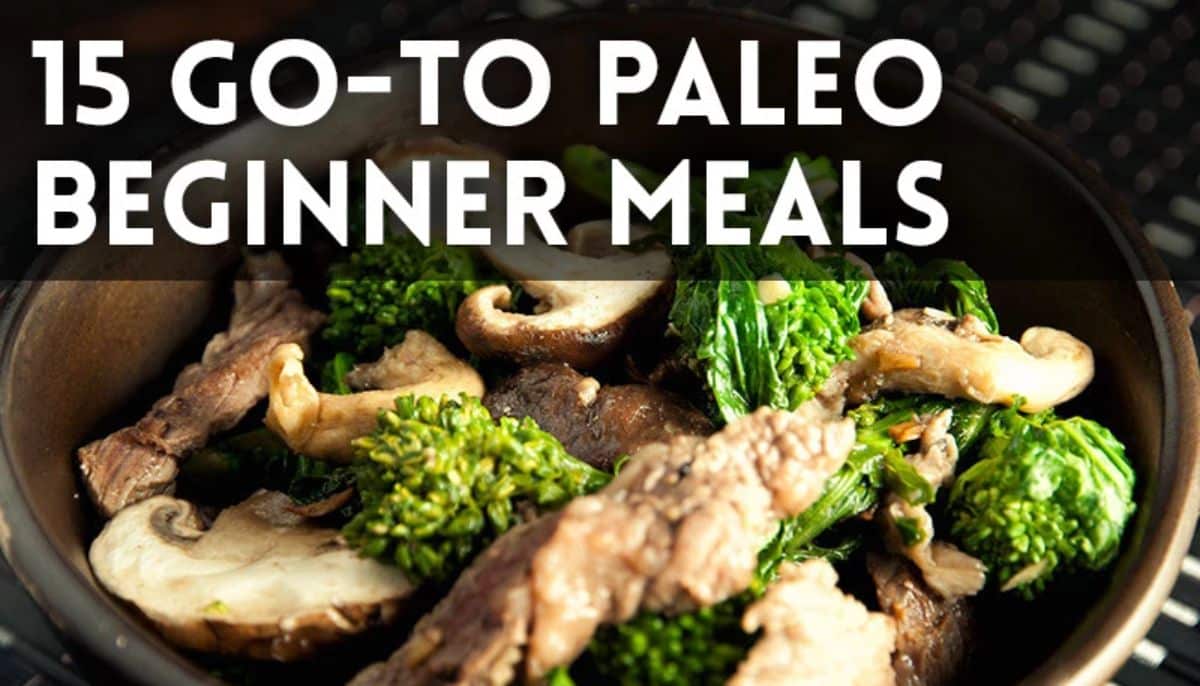
    15 Go-To Paleo Beginner Meals

    January 28, 2016 by Paleo Leaper Leave a Comment

    go to meals

    The New Year always brings about various resolutions, many of which involve health, dieting and fitness. This is an exciting time for us because we get to meet a lot of new people interested in Paleo and we really love to hear everyone's stories. One of the biggest challenges for many new-comers to Paleo is dealing with the transition, letting-go of what they've been used to for so long to try something new, and many times, completely different. We want to make that transition as smooth as possible and here's one of the many ways we can do that - by providing you with a list of easy and tasty recipes that require minimal effort from you in the kitchen, while still providing you with all the Paleo benefits.

    Roasted Herbs De Provence Chicken - by Taste Love and Nourish

    You've most likely made a close variation of this recipe a dozen plus times. It's a great one to have on-hand because you most likely will always have all the ingredients, aside from the whole chicken, and it can easily be paired up with a simple salad or veggie side.

    BLTA Pesto Chicken Salad – by Peace Love and Low-Carb
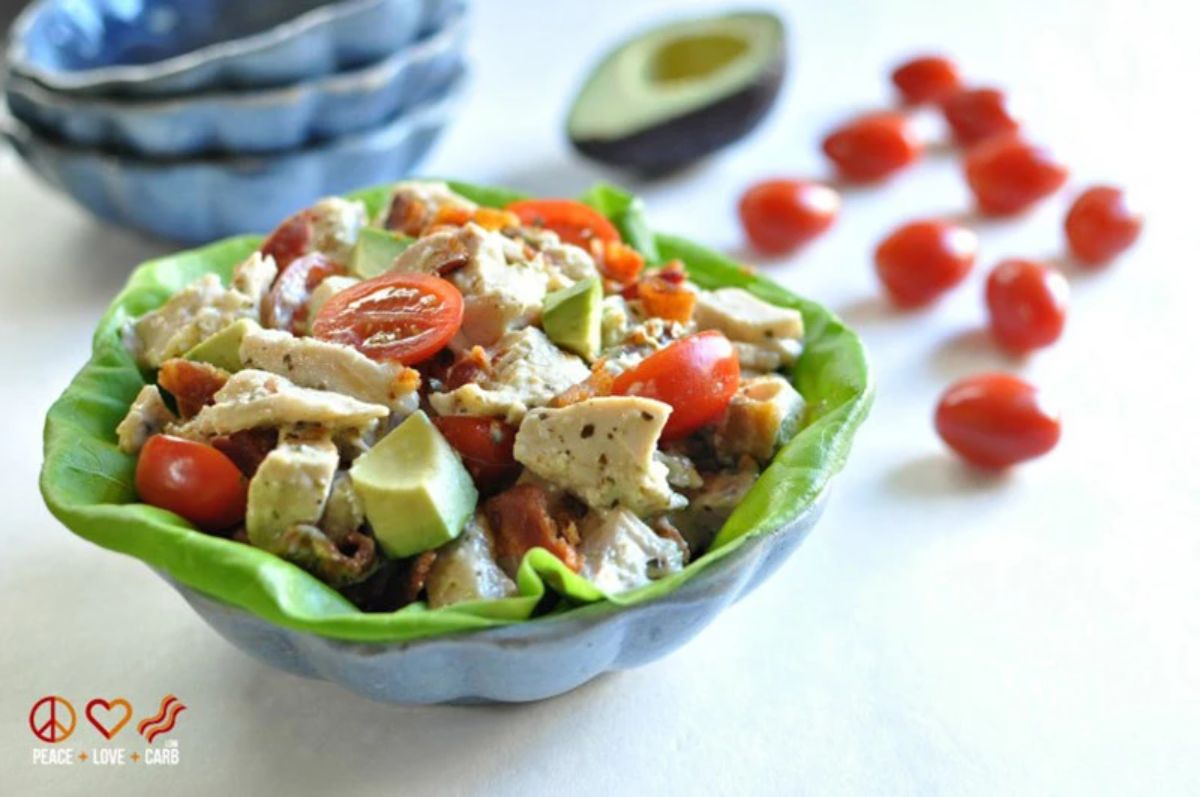
    BLTA

    If you're a fan of the classic BLT combo, than this salad may just become your “go-to meal.” It's super simple to throw together and hearty enough to be a meal on it's own.

    Sweet Potato Buffalo Chicken Casserole - by Paleo Leap
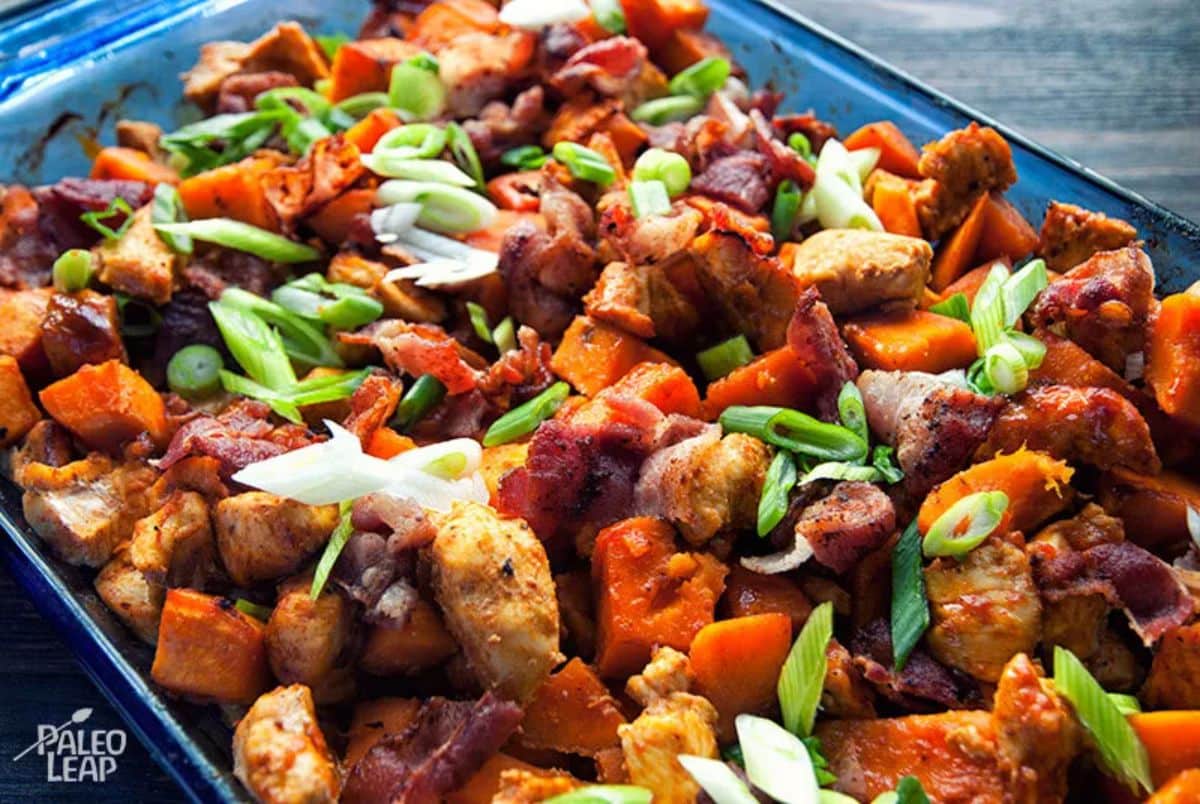
    chicken buffalo caserole main

    This recipe is definitely up there when it comes to our most popular recipes overall. I guess it's no wonder...who doesn't love buffalo chicken? Not to mention it's a one-pot meal and super simple to throw together. Everybody wins with this one!

    Paleo Slow-Cooker Ground Beef-Sweet Potato Chili – by Emeals
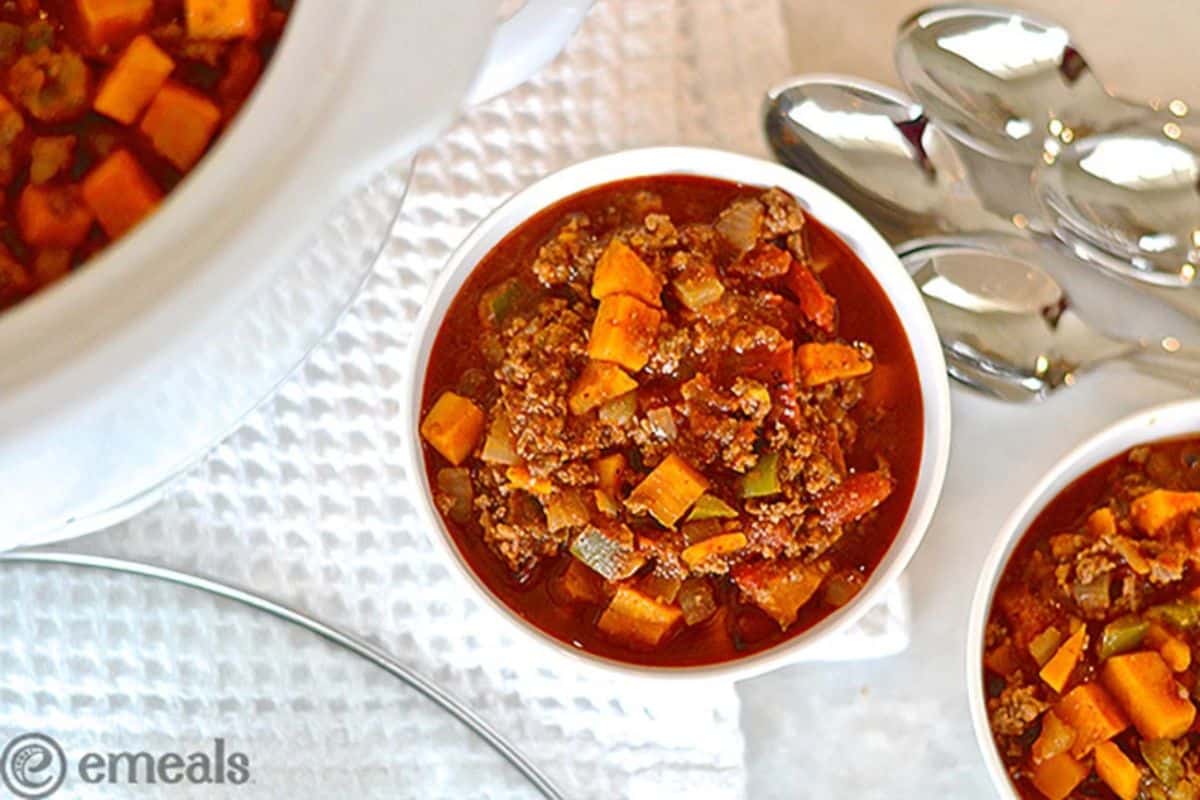
    beef sweetpotato chili

    A comfort food classic without all the beans. It's also a slow-cooker dish, which makes life so much easier.

    Lemon Garlic Herb Salmon - by My Natural Family

    This recipe just goes to prove that it takes very little to make salmon taste great. The fact that it's on your table in less than 30 minutes is also a huge plus.

    Fluffy Paleo Pancakes – by Lexi's Kitchen

    Paleo Pancakes

    These easy-peasy pancakes are so delicious! Eat them as is, or add your favorite berries for a twist. Either way, you won't be disappointed.

    Skirt Steak Fajitas – by Delicious Obsessions 

    Original recipe by Jenny Castaneda, author of One-Pot Paleo 
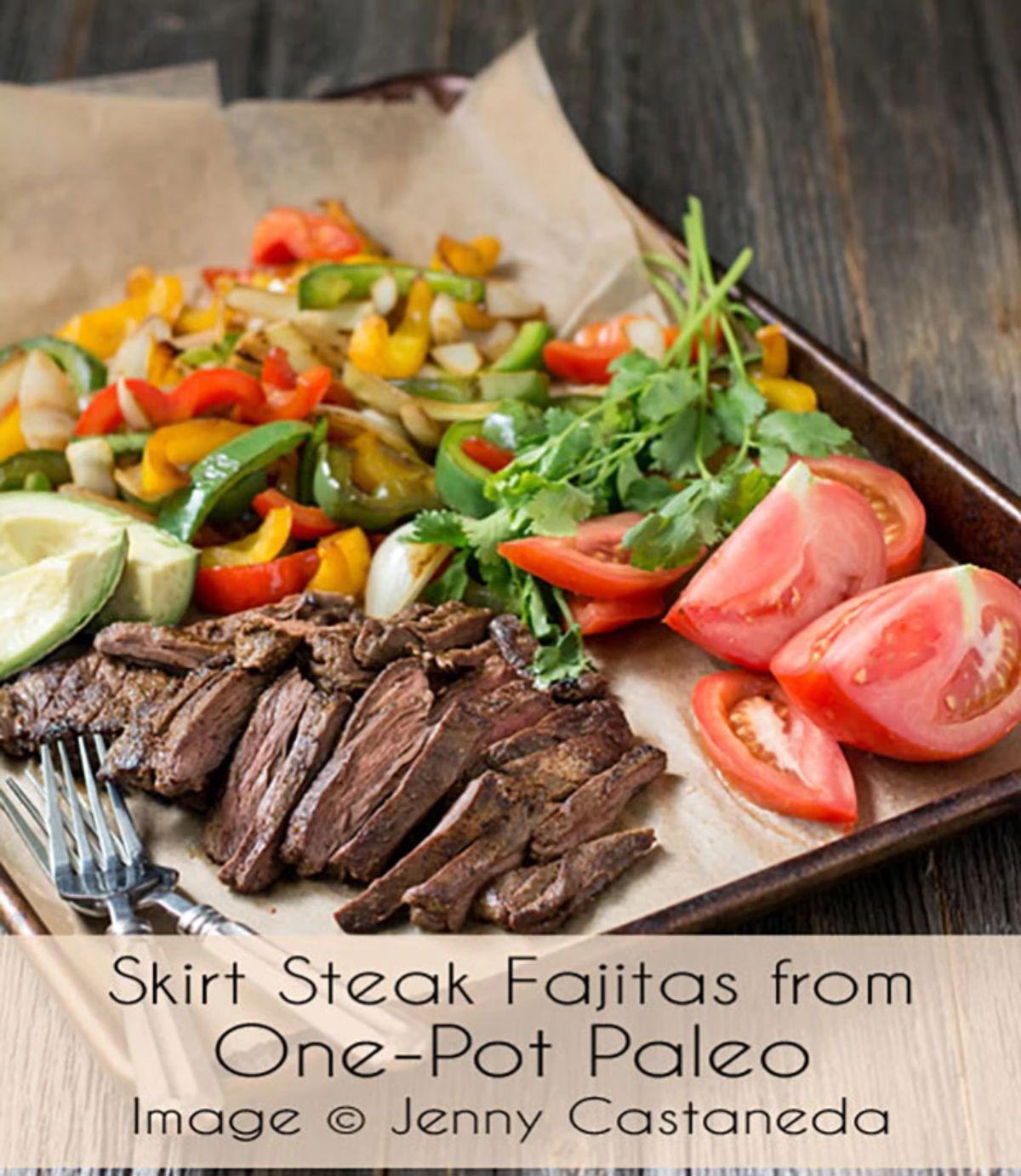
    One Pot Paleo Review

    Don't let the ingredient list overwhelm you, as each and everyone is essential to making this dish so tasty. It's one-pot cooking at it's finest.

    Ginger Beef and Mushroom Stir-Fry – by Paleo Leap

    It's just like the ginger beef you used to get from the take-out menu, but so much tastier and, most importantly, healthier.

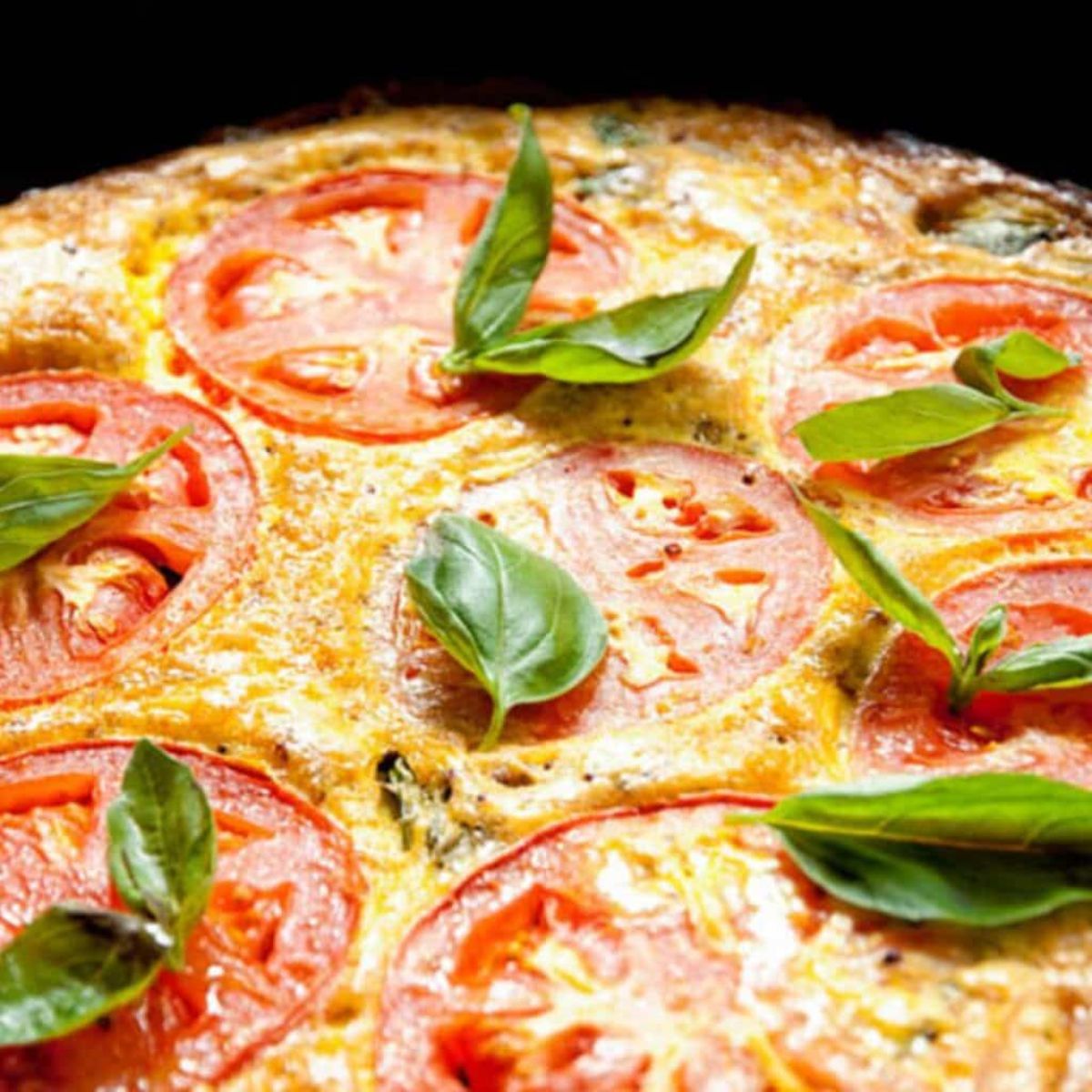
    Sausage Basil Tomato Frittata – by The Paleo Running Momma
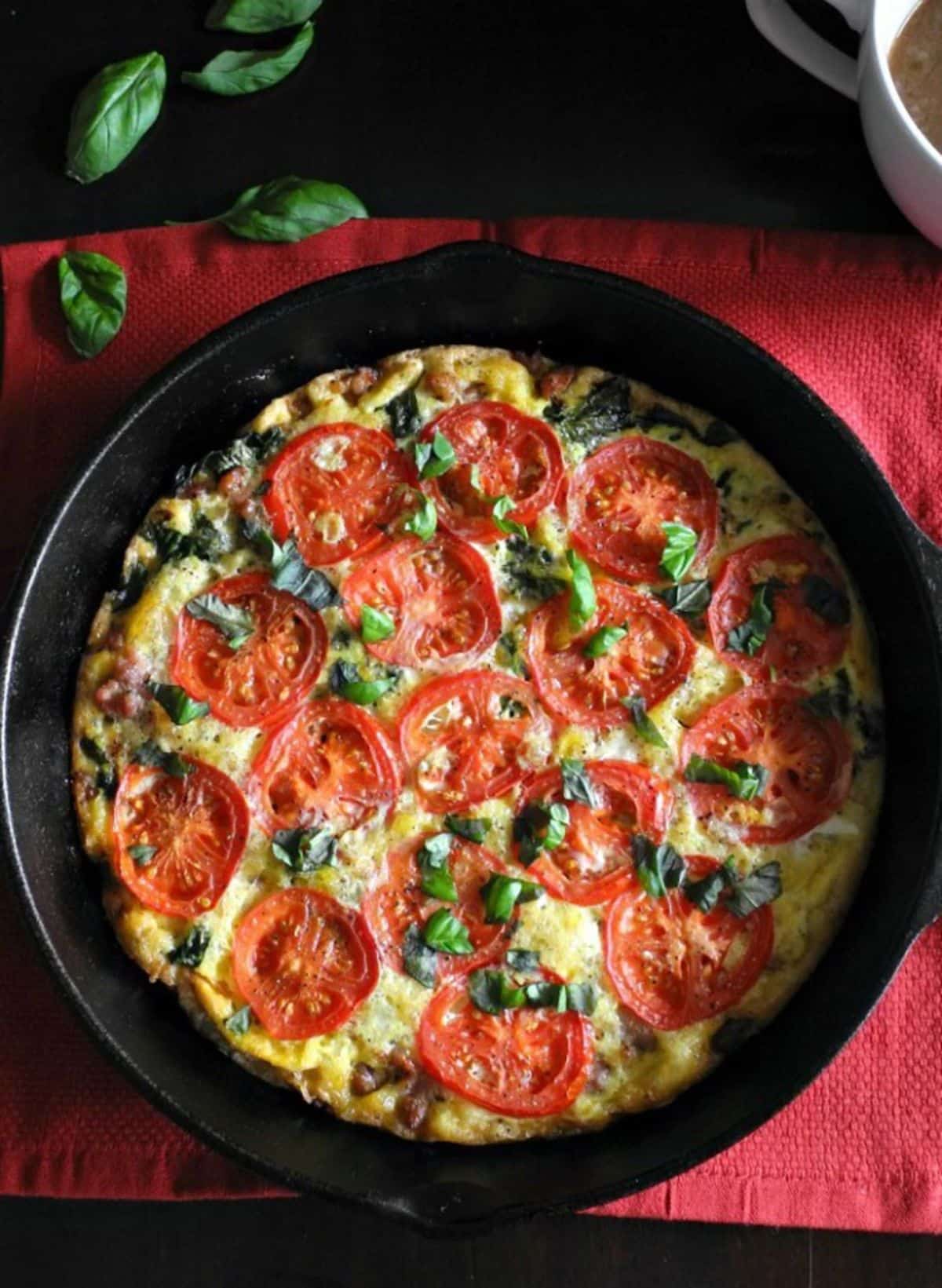
    Tomato basil sausage frittata paleo dairyfree whole

    We really can't get enough of these one-pot dishes. This one is a great breakfast option and it comes with many perks aside from being Paleo – it's both Whole30 approved and low-FODMAP.

    Pan-Fried Halibut with Prosciutto and Green Olive Mash - by Healing Family Eats
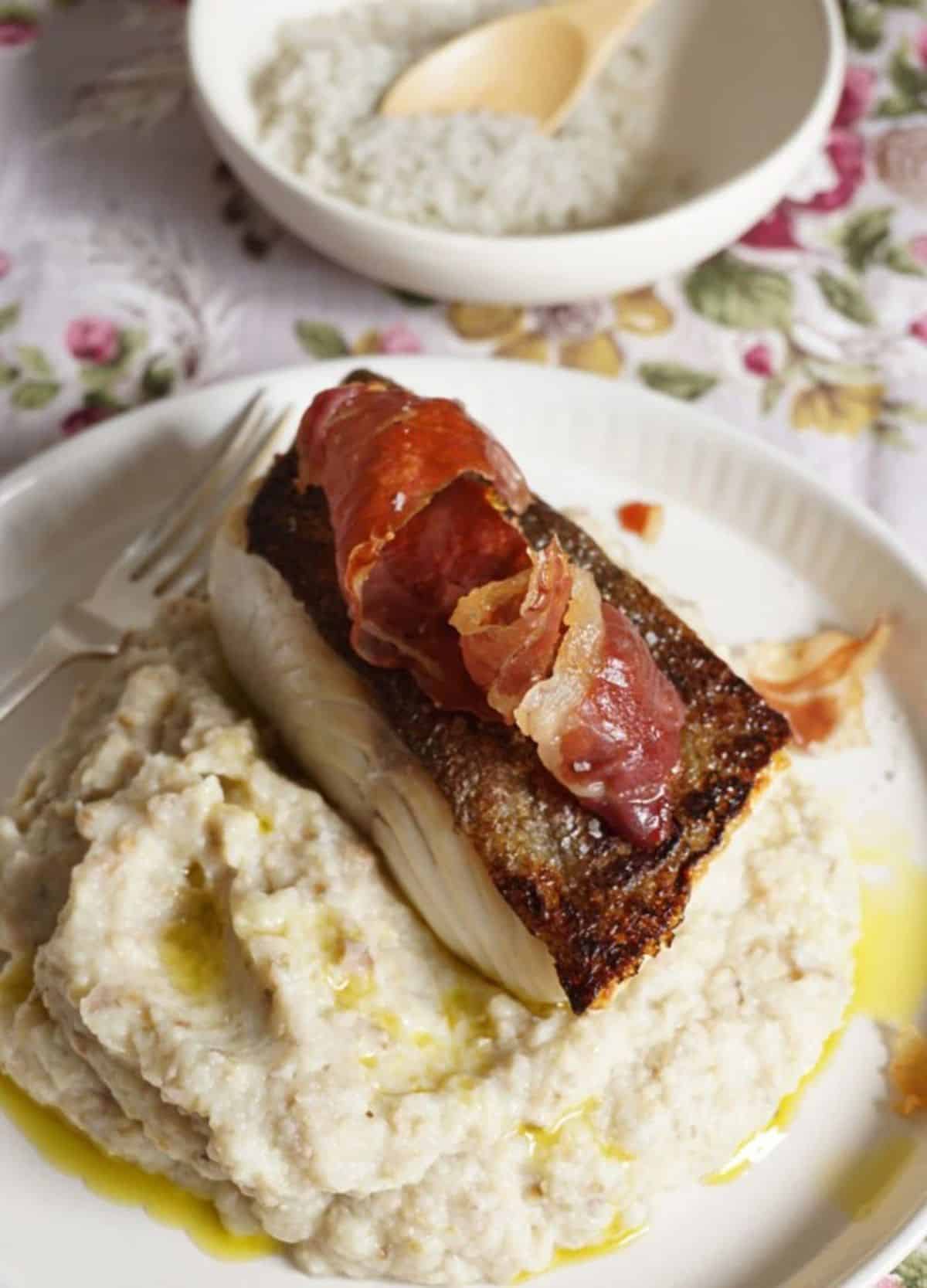
    Pan Fried Halibut with Prosciutton and Green Olive Mash Healing Family Eats

    This dish is great for those on a protocol like AIP, GAPS or SCD, and also a very affordable meal to put on the table. It's a sure family favorite!

    Paleo Chop & Drop Roasted Veggies and Sausage - by Paleo Newbie
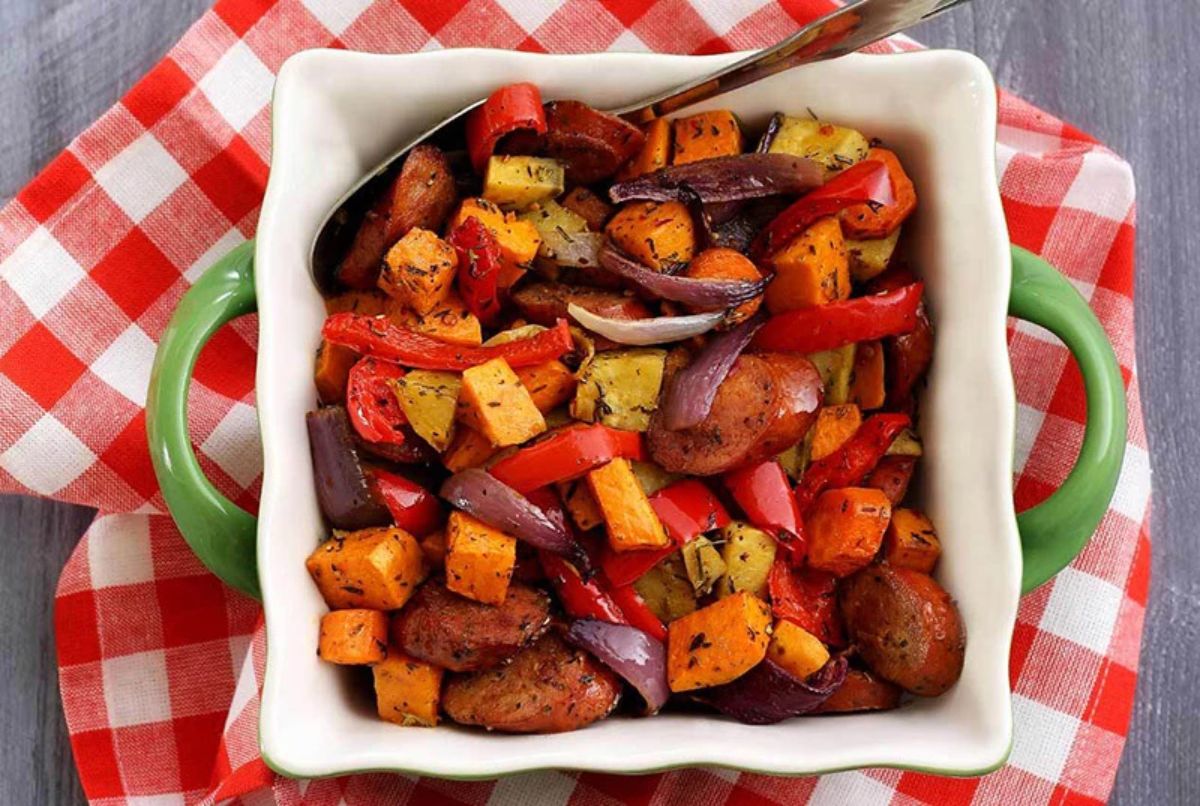
    Paleonewbie Paleo Chop Drop Veggies

    This is a great recipe to throw together when you're looking to use up any lingering veggies you may have in your refrigerator. Although the original recipe is amazing, you can switch it up quite easily and even make seasonal variations of it.

    Spring Breakfast Chicken Soup - by A Squirrel in the Kitchen
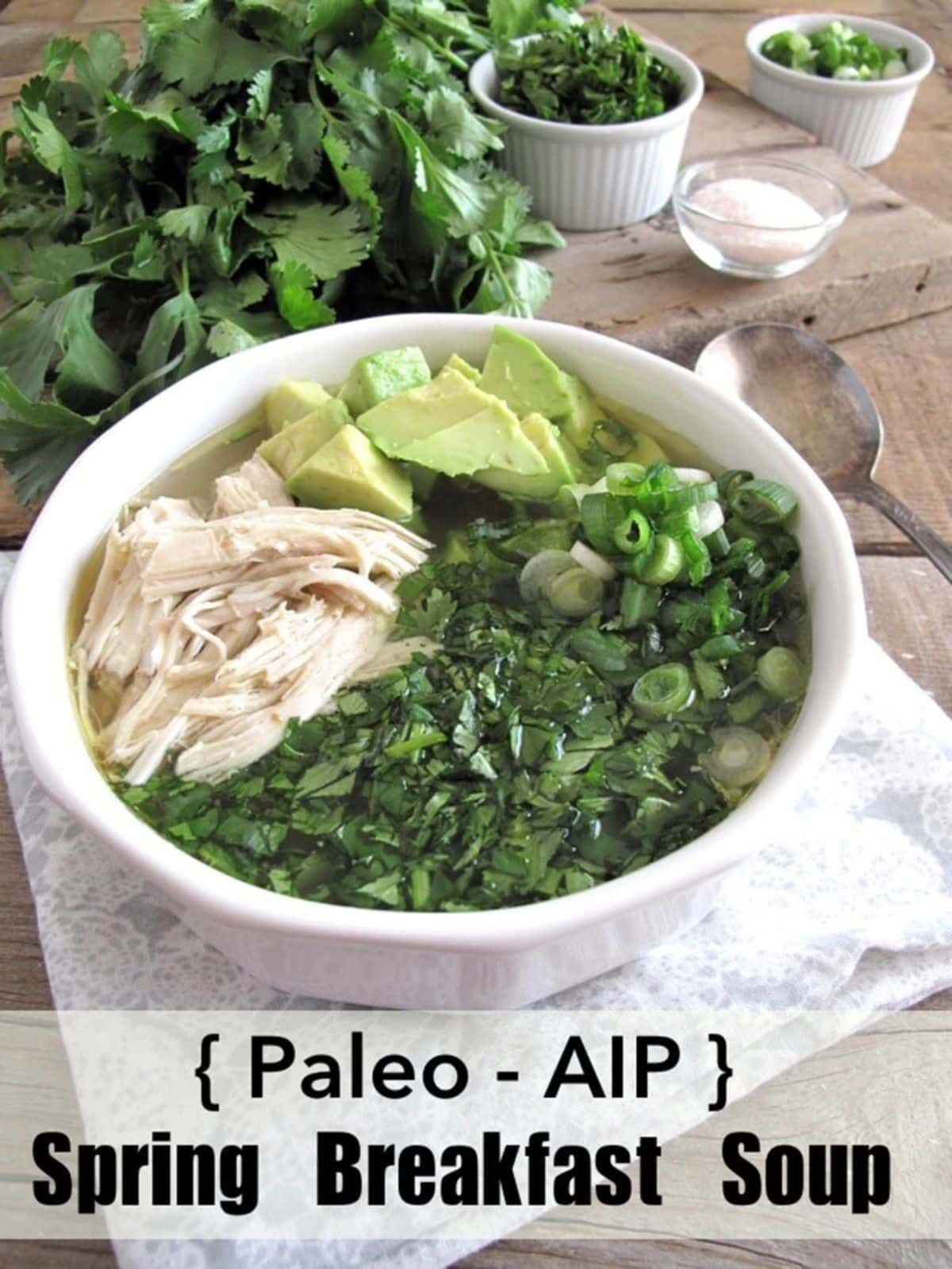
    breakfast soup

    Soup for breakfast? Who would've thought? You can certainly have this one for any meal, but it's definitely a great way to start your day. It's also a slow-cooker recipe, which is always a bonus and it's AIP-friendly too.

    Chicken Broccoli Casserole - by A Grass Fed Girl

    Easy Paleo Chicken Casserole Recipe

    Casseroles don't have to be full of pasta, cheese and canned soup. They can be just as tasty, if not more. Here's a perfect example of one that has become a staple around our home and we're sure will be the same for you.

    Creamy Cauliflower Soup with Crispy Bacon - by Eat Drink Paleo
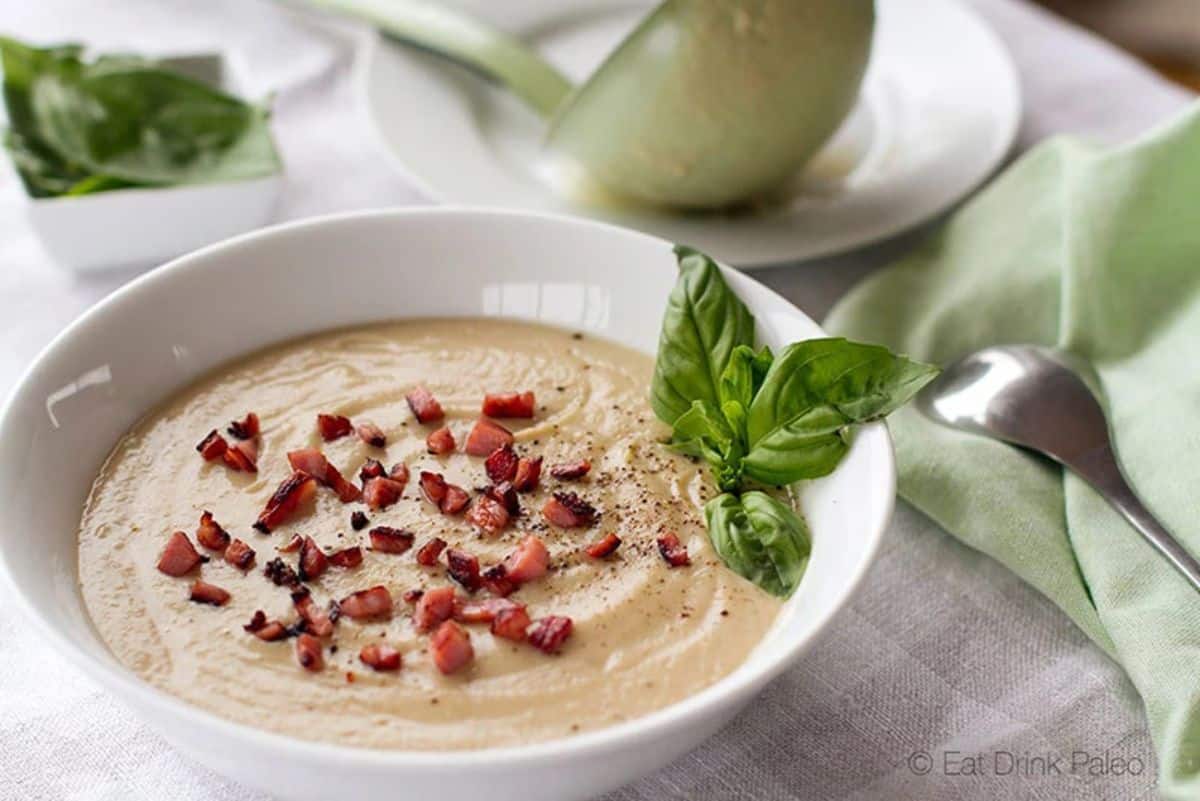
    paleo cauliflower soup recipe

    We've got a lot of love for a good soup like this one. It's so delicious and so easy to throw together. Another one of those recipes that you'll most likely already have all the ingredients for, aside from the cauliflower.

    Breakfast Burrito - by Paleo Leap

    breakfast burrito main

    Burritos for breakfast are great - they're super versatile, easy to throw together, and a perfect option for an on-the-go breakfast. This simple recipe is wonderful as is, but don't be afraid to jazz it up.
    Filed Under: Paleo Recipe Compilations

    Paleo Foods: Kale

    January 4, 2016 by Paleo Leaper Leave a Comment

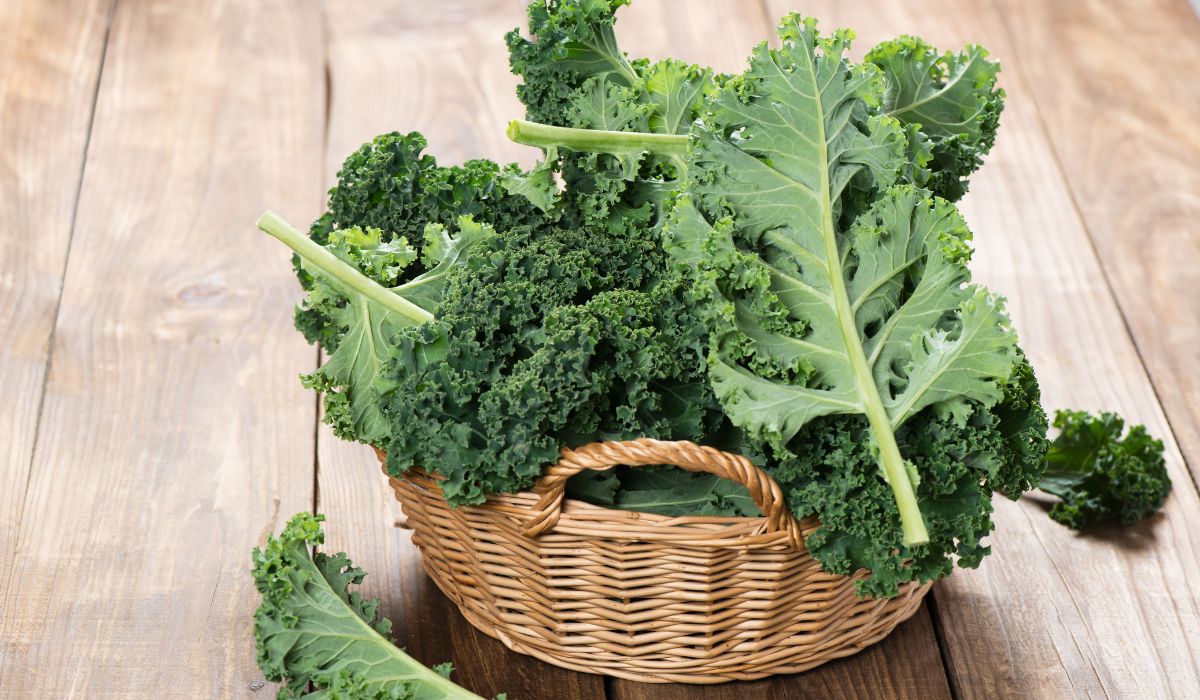
    Kale

    Kale is apparently old news at this point. Cauliflower is the new kale. Or maybe it’s collards. Or kelp. But the news that kale has been bumped off the throne of trendiness should actually be welcome to those of us who eat based on what’s nutritious, not what’s on the runway at the food version of Paris Fashion Week. Because guess what happens when a food loses some of its popularity? It gets cheaper. If you wanted kale-infused gluten-free flax-enhanced Paleo granola, you might be out of luck, but if you just want a big bunch of kale, now’s a great time to buy one.

    Of all the brassica vegetables, kale is one of the most primitive and least modified by selective breeding. It’s not exactly what people would have been eating in the Paleolithic, but it definitely dates back at least to the invention of agriculture. It was originally native to the area around the Mediterranean Sea, and a common garden vegetable in ancient Greece. It’s been an important source of nutrition for poor farmers ever since, and as far as we can tell, it hasn’t significantly changed in at least the past couple thousand years.

    It might have started in the Mediterranean, but kale is hardy enough to grow almost anywhere, and it’s a favorite winter vegetable in temperate climates because it’s tough enough to handle the cold. In some parts of the US and Europe, it’s one of the few things that does grow at the very end and the very beginning of the season. Historically, it was an important source of Vitamin C for farmers before we had grocery stores with year-round availability of vegetables.

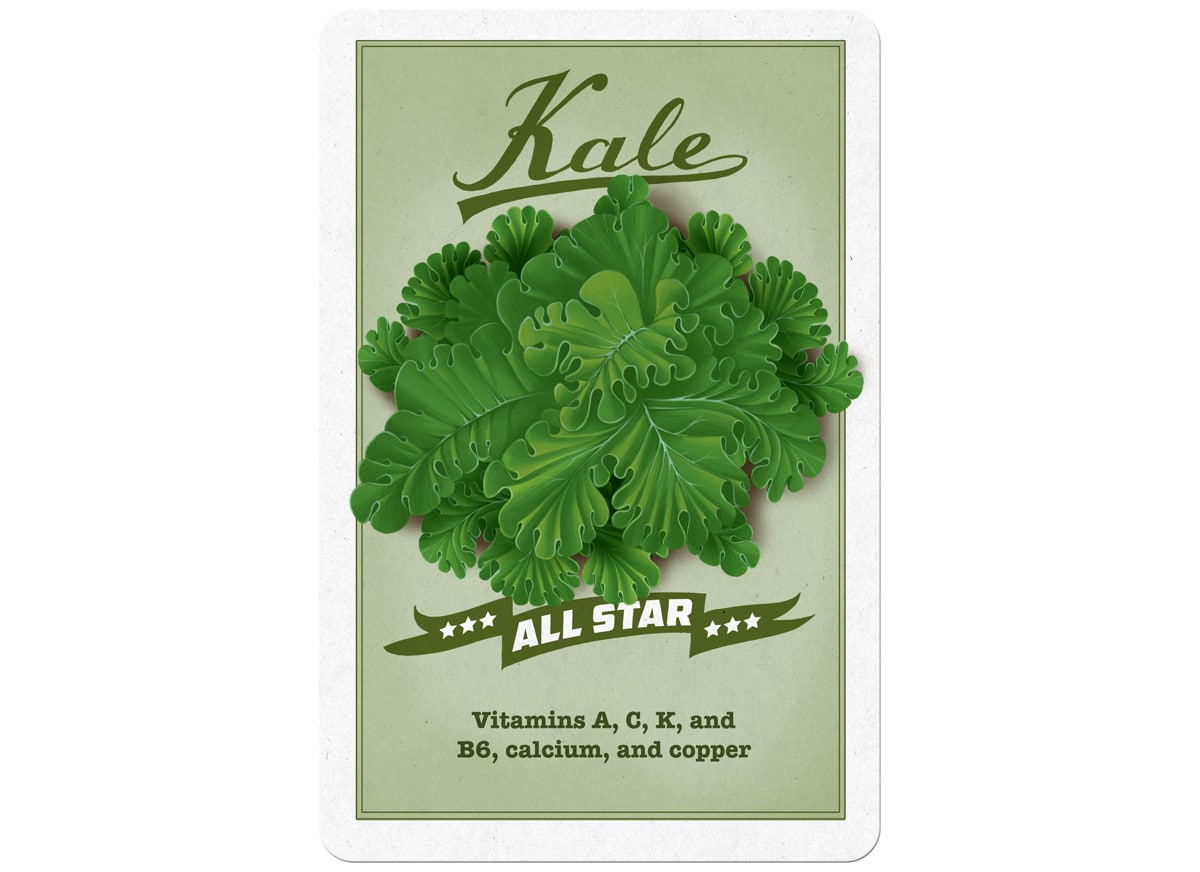
    Nutritional Bragging Rights, or Why This Thing was Called a “Superfood” in the First Place

    There’s a reason why everyone started getting excited about kale in the first place.

    KaleCard Paleo

    *These nutrients are plant forms of the particular nutrient. The “Vitamin A” is actually several different carotenoids and other forms of pro-vitamin A that your body has to convert to Vitamin A before using, so it’s impossible to overdose on Vitamin A from kale. The Vitamin K is K1, not K2 in the grass-fed butter/bone health sense. The iron is non-heme iron, so it’s poorly absorbed.

    Still, not too shabby. Cooked kale has more of some nutrients because it’s more dense when it’s cooked, so 1 cup of cooked kale might contain more than 1 cup of raw kale. But on the other hand, some nutrients also get destroyed by heat, so Vitamin C, for example, is lower in the cooked kale.

    Like other vegetables in the brassica family, kale is also rich in antioxidants of various kinds, including some with interesting chemoprotective qualities. Claiming that any food “cures cancer” is pretty silly, but there is still a role for diet and exercise in reducing cancer risk, and kale is definitely one of the good guys here.

    Just like any other food, kale isn't the perfect food for everyone. It's reasonably high in FODMAP carbohydrates, so it's not always great for people with IBS or other gastrointestinal issues. It is very rich in fiber, which doesn't play nicely with everyone's digestion. But that doesn't mean it's bad for everyone, and it certainly isn't a reason to avoid it if you do just fine with it.

    Cooking with Kale

    Kale has a few different varieties, but if you mix them up or just don’t want to deal with it, the important part is that they’re all delicious with bacon. All the varieties have big leaves (up to the length of your forearm) with a central stem.

    • Curly kale: medium to bright green, with the edges curled in tightly.
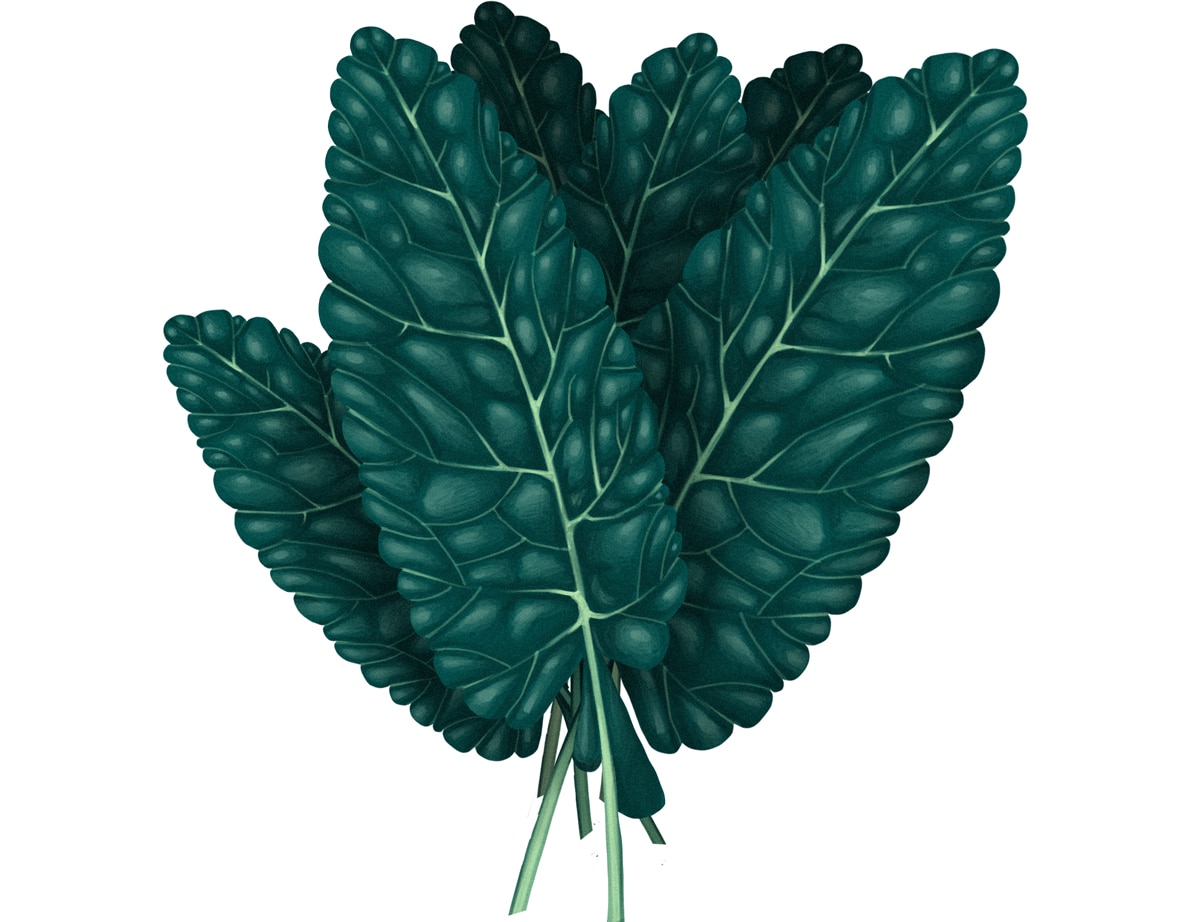
    • Lacinato kale (aka dino kale or Tuscan kale): darker green, blade-shaped leaves that aren’t curly. Lacinato kale is a traditional ingredient in Italian cooking.
    • Red kale: dark to bright reddish-purple stems, with some of the red-purple color spreading up into the leaf, and moderately curly.

    All of them have a slightly different taste, and the taste and texture also vary depending on the region and the age of the kale, so experiment a little to see what you like.

    Each leaf of kale has a rib down the center. The rib is perfectly tasty, but it’s very fibrous and chewy (and not in a good way). Most people cut that out, but don’t throw it away: you can toss it into a pot of soup for extra flavor and nutrition.

    Kale Paleo
    Lacinato kale is darker green and the leaves don't curl up at the edges.

    As for what to do with the leaves once they're cut off...

    Eating Kale in Salads

    Raw kale can be very tasty, but not everyone likes the very fibrous texture of the leaves. The solution is to massage it. No, really.

    The key to making great kale salads is to give your kale a massage with the dressing. Mix up whatever combination of oil and vinegar (and/or citrus, and/or spices…) you want to use, and rub it into the chopped kale with your hands. This breaks down the tough fibers in the leaves and makes them softer. And it also distributes the flavor of the dressing more evenly among the salad. If you’re using a dressing that isn’t a vinaigrette, you could just massage them with plain olive oil first and then add the dressing.

    Try it:

    • Raw kale salad
    • Cranberry and Clementine Salad (half-and-half kale/spinach base, so it’s not quite so kale-centric)
    • Chopped Salad with Shrimp and Curry Dressing (use purple kale for an intense visual effect)

    Quick and Easy Dinner Sides

    If raw kale still isn’t your thing, you can always fry it up in bacon fat with some garlic for a quick and very tasty side dish (it’s so easy it doesn’t even need a recipe; just don’t overthink it). Kale is also great for adding some texture and heartiness to winter soups - once you know how to cook it, it really can be a good comfort food.

    Try it:

    • Turkey, Kale, and Cauliflower soup
    • Ginger, Beef, and Mushroom Stir-Fry

    Summing it Up

    Kale might be past its trendiest glory days, but that’s pretty great for the rest of us, because it means we can all enjoy it in peace without having to pay the trendy prices. It’s just as nutritious as it ever was, and once you know a few quick cooking tricks, like massaging it before eating it raw, it really does taste great.

    Related Posts
    • Eat This: Brassicas (and Not Just the Ones you Know)
    • The Problem with Foods that "Cause Cancer"
    • All About Goitrogens
     

    Filed Under: Paleo Diet Foods

    6 Quick Tips for Minimizing Cooking Stress

    October 17, 2015 by Paleo Leaper Leave a Comment

    Cooking Stress

    Paleo cooking does take time and effort - cooking every meal from scratch is a big deal, and if you're anywhere close to that, you owe yourself a huge pat on the back for making it work. But even if it's not effortless, it shouldn't be overwhelmingly stressful. Here are 6 ways to cut down on stress in the kitchen, whether the problem is a time crunch, disorganization, or just trying to do too much.

    1. Prep Ahead Even if you Don’t Need it Immediately.

    Sometimes, food stress comes from trying to cook when you really, seriously do not have time to cook right now. Then the whole process of cooking is rushed and unpleasant, and it’s one more thing on an impossibly long to-do list. Even if you enjoy cooking normally, it’s hard to enjoy it like that.

    If you know in advance when you won’t have time to cook, you can use bulk prepping to avoid the problem before it starts. But life is unpredictable. You don’t always know when you’re going to need a grab-and-go meal…or three in a row.

    Deal with that by prepping a few extra meals and sticking them in the freezer just in case. Then they can do you a favor as…

    • Breakfasts when the morning turns hectic.
    • Dinner when you get home late and you’re too exhausted to cook.
    • Any meal when you’re just too darn busy.

    And if you don't end up needing them, take a night off cooking just because.

    2. Learn to Modify Recipes (Or Cook Without Them).

    Cooking can also be stressful if you’re scared to deviate from a recipe even the slightest bit. Cooking like that makes it hard to find a recipe on short notice (by the universal laws of Things Going Wrong, you'll always be missing at least one ingredient), and it requires extremely rigid meal planning if you don’t want to be running off to the store every other day.

    If you’re comfortable modifying recipes on the fly, cooking is much more relaxed. No garlic powder? OK, just throw in a couple cloves of actual garlic. No olive oil? Fine; use coconut and don’t sweat it. Accidentally missed a step? There’s almost always something you can do to make it work.

    Better yet, learn the basic process of making some common meals and skip the recipe completely. Onions, green peppers, and chicken breast? Stir-fry. Eggs, leftover roasted broccoli, half a can of olives, and elephant garlic? Frittata. Here are 10 super-simple recipes for beginners that you could learn the concepts for so you don’t need a recipe to make them.

    3. Relax About Paleo Imitations.

    There’s also the unnecessary stress of trying to re-create grain-based foods at every meal. Paleo is not about imitating the typical American diet with almond flour and honey in place of wheat flour and sugar. If you’re not sure how to make a meal without bread, here’s a basic Paleo template for complete meals with no grains and no imitation grains.

    If you’re trying to please a Paleo skeptic by making Paleo look like basically the same thing they’re used to – stop. Paleo imitation foods very rarely taste exactly like what you’re imitating. It’s not the same, and it’s not going to be, and pretending that it is the same just makes a lot more work for you.

    Instead stressing out about trying to re-create pizza or bread or muffins every night for dinner, try just cooking Paleo foods and enjoying the flavors of things that aren’t pizza and bread but are still delicious. (And when you have time and energy, you can still make Paleo treats for special occasions)

    If you have a spouse or kids who object to that – they should be so lucky to have someone who loves them and cooks them nutritious meals from scratch. If they want a say in the final product, then they can help with the cooking.

    4. Use Variations on a Simple Theme for Variety Without the Stress.

    paleo containers

    One of the most obvious solutions to cooking stress is to just make simpler meals. But how do you simplify without getting bored?

    The key is to do variations on a simple theme, not totally new recipes every time. For example, you can get a lot of flavor variety out of [roasted vegetable] + [spice] but you’re basically making the same easy recipe every time, just with slightly different ingredients.

    Also, “leftovers” is not a dirty word, and the same batch of chili or stew can easily be the theme that you do variations on. Here are some tips.

    5. Scope Out Local Restaurants in Advance.

    A lot of Paleo food stress comes from restaurants – what to order, where to go, what to ask the server, and is it even possible to eat out if you’re on a very restrictive diet?

    To minimize that stress, sit down ahead of time and look up at least 2 or 3 local restaurants where can you go for a reasonably Paleo-ish meal if you’re caught working late without dinner, or if you have company and want to take them out to eat. In the process, you’ll learn what to look for on the menu, so you can make fast choices if you’re heading for a meal at a strange place.

    By the same token, it’s helpful to look up any Paleo meal delivery services in your area just to see what’s there. Even if you never use them, having the option can be reassuring.

    6. Plan More…Or Less.

    Some people are planners. They feel happiest when everything is on schedule and they know exactly what’s coming up and when. Those people are the planners, and if you’re one of them, planning out your meals can be shockingly helpful. Here’s how to get started meal planning. It can also be helpful to pencil your cooking time into your schedule, so you can stop worrying about when you're going to find time to do it, and feel relaxed and confident that you've planned enough time to get everything else done even with half an hour of cooking time in the evening.

    On the other hand, some people find that level of planning to be stressful and unnecessary. If you’re in that tribe, this might not be such a great solution for you. Maybe an overly rigid meal plan is actually causing your stress, and you’d feel a lot better without it.

    How do you avoid getting stressed out in the kitchen? Let us know on Facebook or Twitter!

    Filed Under: Learn About Paleo & Keto Diets

    The Complete Beginner's Guide to Giblets (AKA those weird bits you get inside your chicken)

    June 11, 2015 by Paleo Leaper 1 Comment

    Giblets

    If you don’t already know what giblets are, they’re all the things that come inside the body cavity of a whole chicken. If you’ve bought a whole bird and fished out a bag of little bloody lumps that you kind of looked at sideways before throwing it in the garbage, then you’ve found the giblets (if you’ve bought a whole chicken and don’t remember anything being inside of it, don’t worry: some brands of chicken don’t include them with the bird).

    To a traditional cook, the giblets were an essential part of the chicken, and the base for all kinds of tasty little treats that added flavor and nutrition to the family diet. But nowadays, they’re more likely to get thrown in the trash – if they even accompany the chicken at all! Too many modern kitchens are missing out on all the ways to use these odd little morsels: here’s how to do it.

    But What Are They?

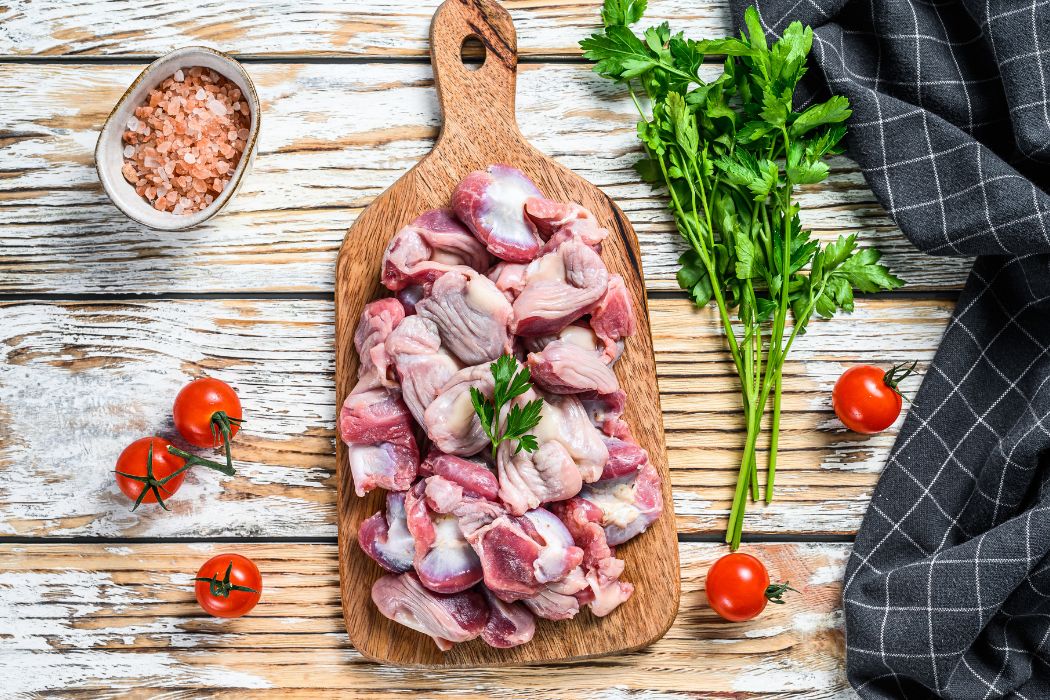
    A “giblet” is not actually an organ that chickens possess (if you thought it was, you may be thinking of the gizzard). “Giblets” is a collective term for the assortment of odd bits that come with your bird. Depending on the chicken and the company that processed it, the giblets may include…

    • The heart
    • The liver
    • One or both kidneys
    • The gizzard (this is an organ that only birds have; it helps them grind up tough food since they don’t have teeth)

    The giblets may also come packaged with the neck of the bird, again, depending on your bird. Sometimes they’re in a mesh or plastic bag; sometimes they’re just kind of hanging out inside the chicken.

    Giblets aren’t restricted just to chickens: you’ll also get giblets with the turkey if you buy a whole turkey for Thanksgiving. But most people are more familiar with chicken giblets since it’s rare to buy a whole turkey more than once a year.

    Because so many cooks just don’t know what to do with them, a lot of factory-farmed chickens don’t even include the giblets any longer, so if none of this sounds at all familiar, you’re not going crazy; you’ve probably just been buying a brand that doesn’t package the giblets with the bird. But if you’re getting your birds from a farmer – or even from most organic or higher-welfare brands – then you should be pretty familiar with “strange little bits of meat inside the body,” even if you didn’t know what they were.

    What do they taste like? Well, each one tastes a little different. Heart and gizzards taste like dark meat, but a little chewy. Liver and kidneys each have their own distinctive, slightly metallic taste (if you’ve never tasted them, it’s impossible to describe; just try them out for yourself and see). Chicken organs are generally milder-tasting than cow or pig organs.

    Why Would I Eat That?

    Well, for one thing, it’s free protein. Protein is expensive; why would you waste any of it?

    And even better, it’s free organ meat. Giblets are a great way to get some organs into your diet without actually having to track them down in the store. And organs are so nutrient-dense that you can get a huge amount of nutrition even in such a tiny package. Here’s the run-down:

     1 ounce chicken heart1 ounce chicken liver1 ounce chicken gizzard
    Vitamin A-75%-
    Vitamin C1%13%-
    Riboflavin12%33%3%
    Niacin4%15%4%
    Vitamin B64%11%1%
    Vitamin B1234%79%5%
    Pantothenic Acid7%19%-
    Iron14%18%-
    Phosphorus6%11%5%
    Zinc14%7%8%
    Selenium3%33%16%

    (The USDA nutrient database has no information on chicken kidneys, but to judge by beef and pork kidney, they’re nutritious).

    If you eat roast chicken with the giblets once a week, that’s not a bad addition to your weekly nutrient intake!

    So What do I Do With Them?

    paleo Oven

    The traditional uses of giblets are gravy and stock. Giblets make a delicious, savory gravy with a flavor it’s hard to replicate from anywhere else

    • For giblet gravy: here’s a recipe; just replace the flour with almond or coconut flour. You can pour your gravy over mashed potatoes (yes, potatoes are fine to eat, but you could always substitute mashed cauliflower if you don’t eat white potatoes), or eat it with the bird, or both.
    • For giblet stock: just toss the giblets into the stock pot together with the neck, back, wingtips, and other bones or parts of the carcass. You’ll get all the additional nutrition from the organs in your stock along with all the good stuff that’s already there!

    You don’t have to limit yourself to gravy and stock, though. What about…

    • Pureeing the giblets and mixing the puree into your next batch of meatballs, meatloaf, burgers, stew, or chili? They add a rich flavor without being overpoweringly organ-y.
    • Frying them quickly in hot butter as a snack for the cook after going to all the trouble of cooking the chicken? For anyone who remembers fried gizzards as a childhood treat (they’re very common in the Midwest and South), here’s a Paleo variation.
    • Chopping them small and adding them to an omelet or another egg dish? They’re pretty small, so they add some flavor and interest without being overwhelming.
    • Tossing them into a stir-fry with some vegetables and maybe some extra chicken meat? Even a big batch of giblets isn’t enough protein for a full meal, but if you tossed in an egg or a few rashers of bacon or some other protein, you’d have a quick lunch all set.
    • Freezing them until you’ve accumulated a reasonable collection, and then making them into pâté or some other organ-centric dish?

    There are all kinds of ways to work them into your cooking, whether you’re excited about enjoying them as a special treat, or more interested in getting all that nutrition without actually tasting them.

    So…are you ready to cook up some giblets? It’s a simple way to start cooking with the “odd bits,” without even having to buy anything extra: why not go for it? Or if you’re a giblet pro, share your favorite recipe tips on Facebook or Twitter!

    Filed Under: Learn About Paleo & Keto Diets

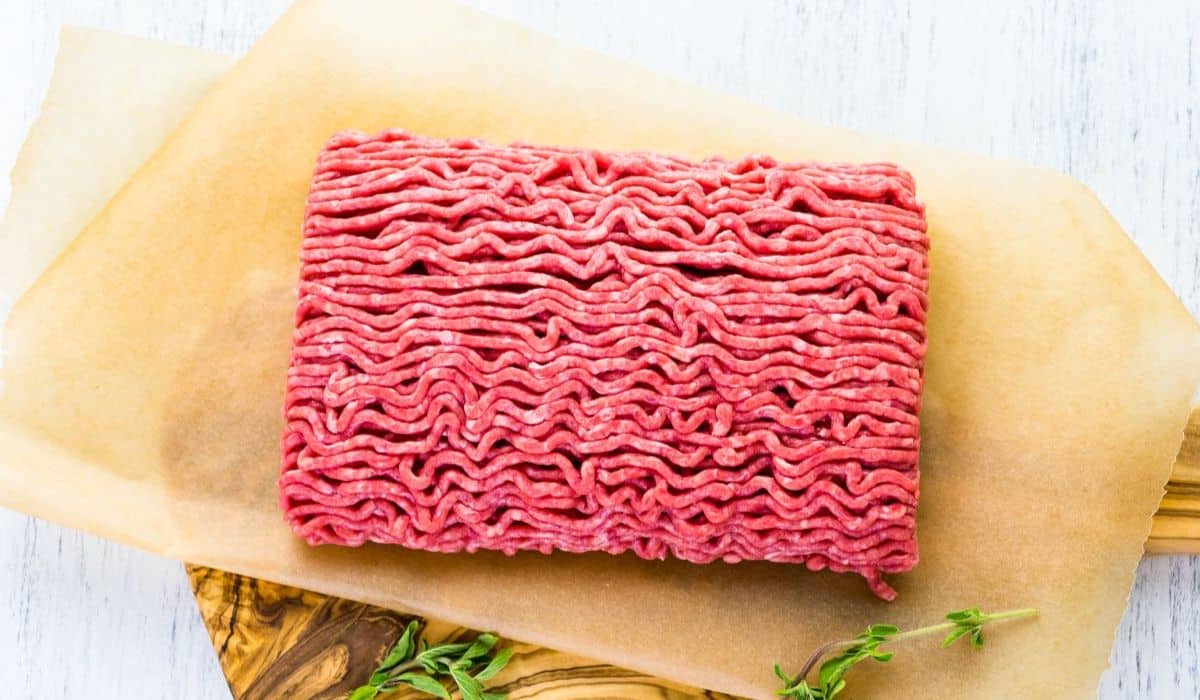
    10 Recipes to Keep Ground Beef Interesting

    March 13, 2015 by Paleo Leaper Leave a Comment

    paleo groundbeef main

    It’s a kitchen workhorse. It’s often the cheapest cut of beef available, so most of us end up buying a lot of it. But making the same chili, meatball, meatloaf, and burger recipes gets old after a while – and there’s no reason you need to keep doing the same old things with such a versatile food! So here are 10 interesting recipes to keep ground beef from getting dull.

    1. Karniyarik (Turkish stuffed eggplant) (The Domestic Man). Sure, you’ve had stuffed peppers (if you’ve been on the ground beef train for a while, you’ve probably had every conceivable variety of stuffed pepper in existence). But have you tried stuffing anything else?

    If you liked that, try some other recipes for stuffed vegetables...

    • Paleo stuffed eggplant (Everyday Maven).
    • Giant stuffed mushrooms (Everyday Paleo).
    • Stuffed acorn squash (Yaya Recommended).

    2. Indian ground beef curry (My Heart Beets). It’s a little bit like chili, if chili got an Indian-themed makeover. Adding potatoes makes for a hearty meal, and don’t forget some cauliflower rice to soak up the sauce!

    If you liked that, try some other Indian-inspired recipes...

    • Indian Kheema Matar (Buttoni)
    • Deconstructed Samosa (Nom Nom Paleo)

    3. Ground Beef and Baba Ghanouj Breakfast Bowl (The Healthy Foodie). Ground beef gets a Middle Eastern makeover with a smoky eggplant dip and fresh tomatoes. And eating it for breakfast is a nice change of pace from eggs.

    If you liked that, try some other Mediterranean and Middle Eastern-themed ideas...

    • Paleo Ground Beef Kebabs with Tzatziki Sauce (Jackson and Laguna). The sauce contains dairy, but the kebabs are dairy-free.
    • Spicy Beef and Cucumber Salad with Cashew Raita (Eat Drink Paleo).

    4. Moroccan Beef and Fig Stew (Things My Belly Likes). Get some sweetness in your ground beef with a big bowl of stew full of North African flavors.

    If you liked that, try another African dish...

    • Sukuma Wiki (Kenyan Braised Collard Greens and Ground Beef) (The Domestic Man)

    5. Bakso (Indonesian Beef Balls) (The Clothes Make the Girl). These have a different texture from typical ground beef recipes, so if you’re suffering from texture fatigue, they’re a great alternative.

    If you liked that, try some other Asian flavors...

    • Vietnamese Beef Meatballs (Three Beans on a String)
    • Asian Ground Beef and Veggie Lettuce Wraps (Paleo Plan)

    6. Chili, Coriander, and Sweet Potato Biohacker Beef Sausage (Biohackers Recipes). Whether or not you’re into biohacking, you have to admire their dedication to spices. From a biohacker perspective, the spices all have special antioxidant, anti-inflammatory benefits; to the rest of us, they’re just plain tasty.

    If you liked that, try some other homemade sausages...

    • Garlic Beef Sausage (The Paleo Mom)
    • Paleo Beef Breakfast Sausage (Hollywood Homestead)

    7. Pumpkin and Beef Sautee (Keto Diet).

    If you liked that, try another recipe pairing ground beef with sweet-starchy vegetables...

    • Keto Taco Salad (Paleo Leap)
    • Afghani Pumpkin and Beef (Kaddo Bourani) (Stuff I Make My Husband)

    8. Boston Baked Beef (TGI Paleo). Yes, like Boston baked beans. Except hold the beans. If you’re missing pork’n’beans or any other legume-based comfort food, this one is a must-try.

    If you liked that, try some other savory-spicy recipes...

    • Smoky Beef and Lamb Stew (Paleo in PDX)
    • Sweet Potato Beef Paprikash (Life Made Full)

    9. Salted Mocha Burgers (Popular Paleo). Burgers: they don’t all have to taste the same! There are endless ways to get creative with the flavors - if you've never considered putting coffee in a hamburger before, you might be surprised by how much you like it!

    If you liked that, try some other interesting burgers...

    • Cinnamon Chipotle Sliders (PaleOMG)
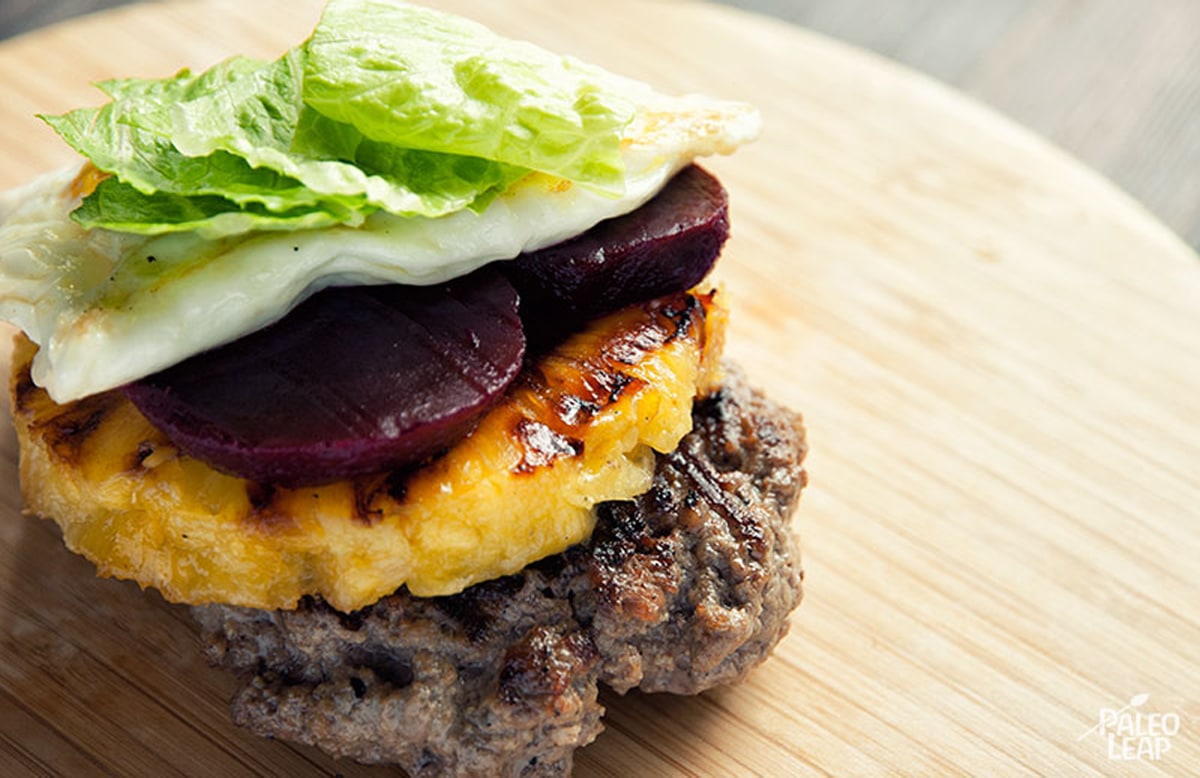
    • Aussie Burger (Paleo Leap)
    aussie burger main

    10. Cashew Beef Stir-Fry (Paleo Foodie Kitchen). Adding nuts to your stir-fry mixes up the texture with a little bit of crunch and takes it beyond the typical rotation of meat and vegetables.

    If you liked that, try some other stir-fries...

    • Stir-Fried Kelp Noodles with Ground Beef, Broccoli Slaw, and Spinach (Nom Nom Paleo)
    • Taco Beef Cabbage Stir-Fry (Unrefined Kitchen)

    Filed Under: Learn About Paleo & Keto Diets

    Paleo Foods: Heart

    March 9, 2015 by Paleo Leaper Leave a Comment

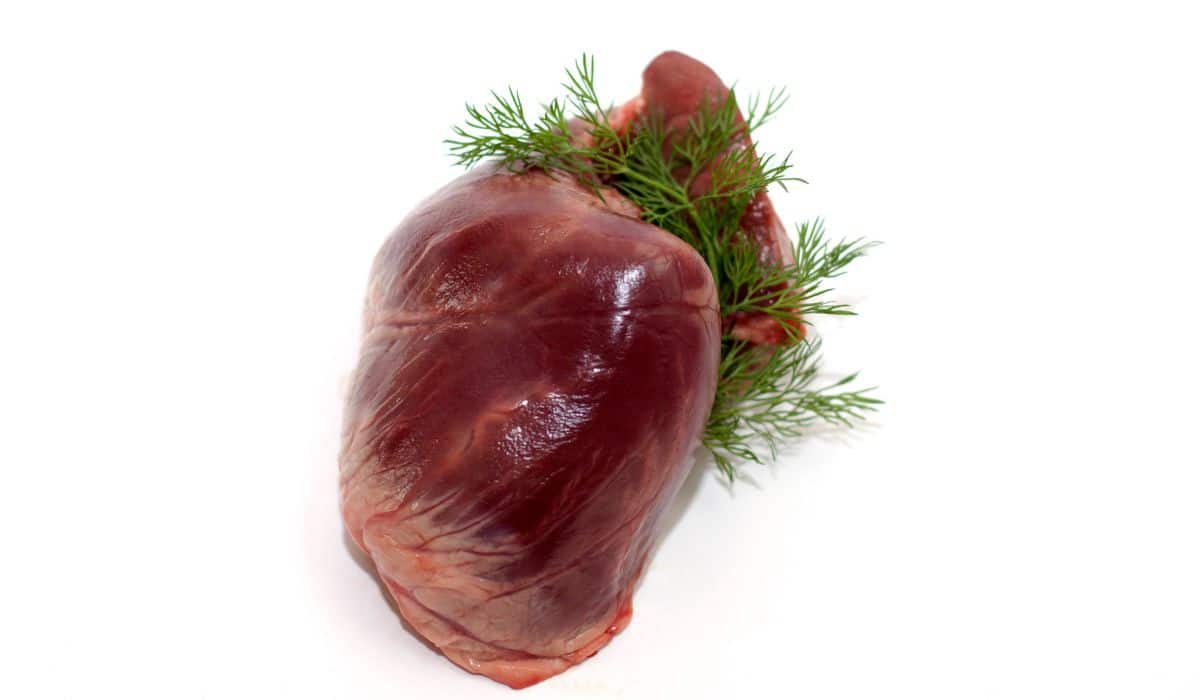
    Heart

    Game of Thrones might be great TV, but watching Daenerys choke down a raw stallion heart with blood dripping down her face and ominous chanting in the background really didn’t do much for the public image of organ meats. The show's writers do a great job of making the scene viscerally disgusting, but in reality, heart isn't "gross" at all; it's a perfectly tasty cut of beef. Without all the fake blood and stage lighting, it’s just like any other cut of beef. The taste is beefy. The texture is beefy. If you cooked it into a casserole instead of tearing it out of an animal with your bare hands and chowing down, you’d never know it was heart at all. And it's extremely nutritious, too; it's kind of funny that the food portrayed as so "gross" and "weird" is probably one of the best things that a pregnant woman could be eating to support herself and her baby.

    Heart is also very beginner-friendly, if you’re looking to start cooking with organ meats but don’t know where to start. So here’s a look at the nutritional benefits and a few recipes for cooking pork, beef, and chicken hearts.

    It Really Tastes Like Normal Meat?

    Yes! If you’re turned off by the metallic taste of liver or kidney, then rest assured: heart does not taste like that. In fact, it tastes just like muscle meat (steaks, chops, and all the other cuts you’re used to seeing at the grocery store) because that’s exactly what it is. The heart is just another muscle, and heart is just another variety of muscle meat.

    Hear from any particular animal tastes basically like any other lean meat from that animal. So chicken heart is similar in taste to chicken breast, and beef heart tastes like a very lean roast.

    Heart and Nutrition

    Beef, pork, and poultry hearts all have a different taste, but they’re all high in the same important nutrients:

    • B vitamins, especially B12.
    • Iron
    • Phosphorus
    • Zinc
    • Copper
    • Selenium

    Heart (from any animal) is also high in an important antioxidant, CoQ10. Your cells need CoQ10 to generate energy, so it’s particularly important for supporting organs that take a lot of energy (e.g. your liver or your heart), and it may have special nutritional benefits for people in middle age or older.

    Cooking with Heart

    OK, but how do you cook with it? Here’s a step-by-step guide.

    First, you’ll have to find a heart. The best place to get heart – or any other meat – is straight from a farmer; if you ask, most of them will have hearts available even if they aren’t out on display.

    You can also get them in many grocery stores now; if you can’t find anything in the refrigerated meat, check the freezer section. Beef hearts are usually sold whole (anywhere from 1.5-5 pounds, depending on the cow) or in halves. For pork hearts, you might get 2-3 to a package, and for smaller hearts like chicken or turkey, you’ll usually get a pound at a time.

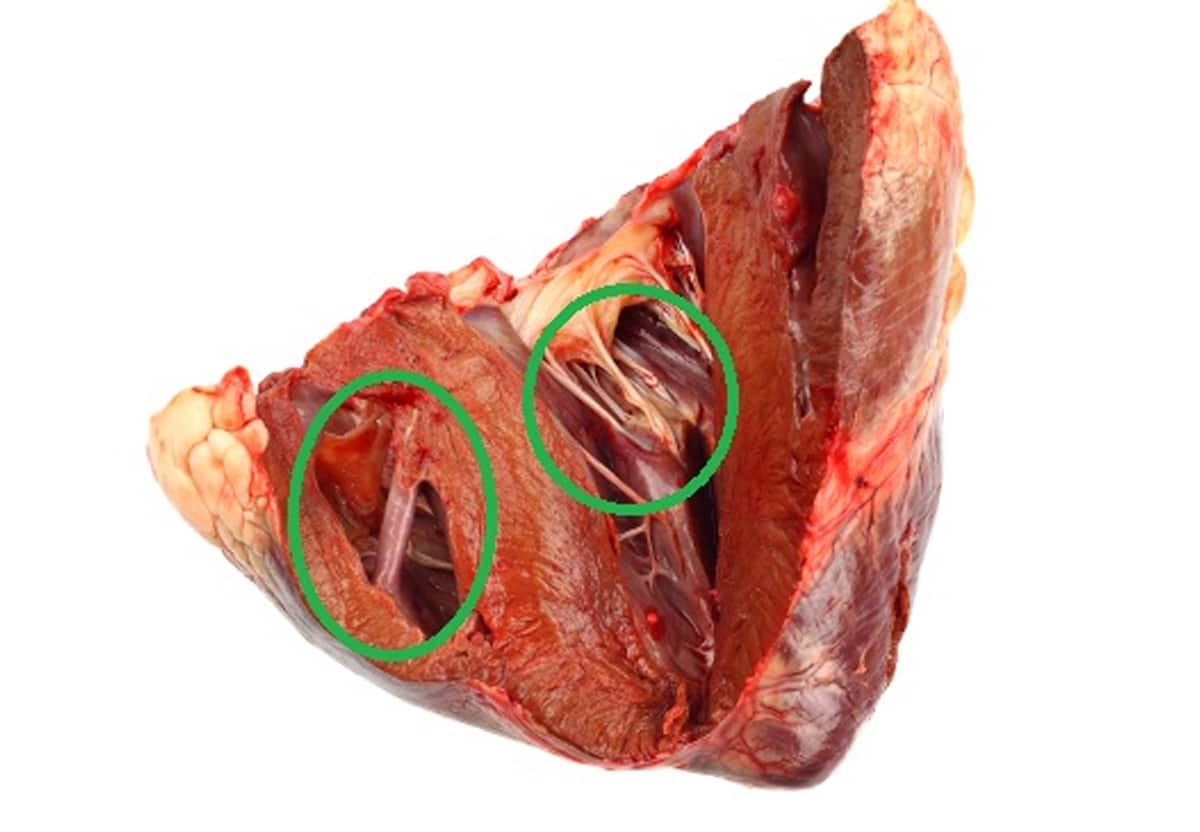
    For beef and pork hearts, when you get the heart home, you’ll have to trim it before using it. You might remember drawing heart diagrams in middle school where you dutifully labeled the left aorta, right aorta, and other arteries and blood vessels: all of that “plumbing” is stringy and unpleasant to eat, so you’ll want to take it out.

    To do this, simply cut the heart in half and cut out any tough, skin-like parts on the inside. If the heart has already been cut in half and you don’t see anything that feels leathery or looks like skin or membranes, you’re in luck: the butcher already trimmed it for you. Otherwise, just cut them off with a scissors or a small paring knife and throw them away or save them for broth.

    This is an untrimmed heart. If you see anything like the stringy parts circled in green, cut it off.

    Your heart may also have a “cap” of white or pale yellow fat around the top. You can leave this on or take it off, as you like.

    Next, it’s time to cook the heart! Aside from the fat cap, heart is quite a lean meat, so it’s great on the grill or in stir-fries that reduce the risk of overcooking it. Alternately, you can go completely the other direction with a low, slow simmer to bring out the tenderness and flavor.

    To start you off, here are some recipes for beef, pork, and poultry hearts (if you want stallion, you’re on your own).

    Beef hearts:

    • Fast and Easy: Beef Heart, Bacon, and Kale One Pot Wonder (Forever Fit) or Beef Heart Kabobs (Paleo Porn)
    • Completely hidden: I Heart Meatballs Diane (Three Diets One Dinner)
    • Dressed to Impress: Mushroom and Spinach Stuffed Beef Heart (The Healthy Foodie)
    • Comfort food: Mediterranean Beef Heart Stew (Bare Root Girl) or Sweet Beef Heart Curry (Almost Bananas)

    Pork hearts:

    • Fast and Easy: Grilled and Chilled Marinated Pig Heart (Star Chefs)
    • Completely hidden: Chop into bite-sized pieces and substitute for half the meat in any stir-fry or stew.
    • Dressed to Impress: Pork Sorpotel (Goan Pork Offal Stew) (Serious Eats) – just replace vegetable oil with a Paleo-friendly cooking fat. Or try Bopis (Diced Pork Hearts) (Clove Garden)
    • Comfort food: Barigoule of Pork Heart Stew (Great British Chefs) or Slow-Cooked “Heart on Fire” with Creamed Kale (Mark’s Daily Apple)

    Chicken/turkey hearts:

    • Fast and Easy: Chicken Hearts Pan-Fried with Hearts of Palm and Garlic (Of Goats and Greens) or Simple Marinated Chicken Hearts (Phoenix Helix)
    • Completely hidden: Make a delicious pâté with hidden heart (and/or liver)
    • Dressed to Impress: Brazilian-style Chicken Hearts (Fuel Nutrition)
    • Comfort food: Chicken Heart Stroganoff (South Beach Primal)

    Summing it Up

    Heart is a great stepping stone into the wonderful world of organ meats: it’s easy to prepare, it tastes basically like any other lean meat, and it’s extremely nutritious without having such a high mineral content that you get the “metallic” taste of liver or kidney. Yes, it looks a little anatomical when you first bring it home, but that’s part and parcel of eating something that used to be alive. Try it marinated and grilled in strips, or sliced in a stir-fry, and you’ll wonder why you ever thought it was “gross”!

    Related Posts
    • Eat This: Duck Eggs
    • Eat This: Brassicas
    • Eat This: Animal Fat
    • Eat This: Sweet Potatoes
     

    Filed Under: Paleo Diet Foods

    The Art of the Weekly Make-Ahead

    January 8, 2015 by Paleo Leaper Leave a Comment

    Prepping a big batch of something (chili, soup, pulled pork…) and then eating off it all week is a great way to save time, save money, and plan ahead for all the little emergencies that inevitably pop up during the week. You can make a week of breakfasts on the run and then just grab something from the fridge instead of worrying about cooking in the morning. Even if you don’t need to bring breakfast or lunch to work, it’s nice to have pre-cooked meat to quickly throw in a soup or stir-fry for an easy dinner.

    But bulk food prep isn’t something everyone can just do intuitively. So here’s a guide to mastering the art of once-a-week batch cooking.

    • What kinds of things can/should I make in batches? What about fragile things like salads?
    • How can I avoid getting bored of eating the same thing all week?
    • What kinds of tools and equipment do I need to do this?

    What to Prep in Batches and How to Do It

    If you think of a Paleo meal, it really has four parts:

    • Required: meat or other animal protein (e.g. eggs)
    • Required: fat (this might be provided by your protein source, e.g. bacon, but if you’re cooking lean protein you need to add some).
    • Required: non-starchy vegetables.
    • Optional: starchy vegetables, fruit, and/or nuts.

    Typically, when you batch cook, you’ll be cooking one of these three parts. Many people only batch-cook protein – this doesn’t completely eliminate meal prep, but it makes everything a lot faster. Protein is typically the longest part of the meal to cook, so you’ll get the biggest time savings here.

    You can eat the batch-cooked protein on its own, or throw it into soups, stir-fries, salads, and all kinds of other meals.

    Other people batch prep vegetables as well. This can get tricky because you do have to make sure to use up all the vegetables before they go bad, but it’s definitely possible, especially if you choose wisely.

    For a good batch-cooking recipe, you want something that’s easy to make in large quantities, keeps well for several days, and ideally tasty with a variety of different sides so you can mix it up.

    Protein

    paleo-SlowCooker main
    Using a slow-cooker makes it easy to prep a lot of meat at once.

    If you only prep one thing ahead, make it your protein. Cooking a big batch of meat or eggs at the beginning of the week can save you incredible amounts of meal prep time. Here are some ideas:

    • Eggs: hard-boiled eggs or mini frittatas.
    • Meat: chili (pork or beef), shredded pork or beef, chicken breast, steak, any kind of roast, meatballs, or meatloaf.

    Non-Starchy Vegetables

    Non-starchy vegetables can get a little tricky to prep ahead because they can easily get slimy or gross – especially salads.

    One great trick with salads is to keep the dressing separate. Wash your greens, chop them up, and mix all you like; just leave the dressing in a separate container until you’re ready to eat it. It also helps to layer your salads – put wetter things at the bottom so the juices don’t get all over the greens. Another tip is to prep salads for the beginning of the week and prep hardier vegetables for the end – or just have a second mini-prep day in the middle of the week where you make another batch of salads.

    • Vegetables that keep for 1-3 days: fresh vegetable salad, fruity coleslaw, most steamed or roasted vegetables (e.g. broccoli, cauliflower, squash, etc.), most leafy salads if you keep the dressing separate.
    • Vegetables that keep until the end of the week: roasted squash, cooked beets, chopped carrots or bell peppers. You may also have luck with coleslaw or other uncooked vegetables, depending on how fresh they were when you bought them.

    Starchy Vegetables

    If you’re batch-cooking breakfast, there’s a good chance that it’s because you need something to eat between the gym and the office – and in that case, you’ll want some starch with that. Here are some ideas for batch-cooking starchier foods:

    • Mashed or roasted white or sweet potatoes (yes, white potatoes are Paleo).
    • Sweet potato salads: one, two.

    Or just add some starch to your protein, like these twice-baked sweet potatoes.

    How to Keep it Interesting

    You’ve cooked up enough pulled pork to feed the army with leftovers to spare. If the apocalypse happened tomorrow, you could subsist on pulled pork until you died of natural causes. But halfway through your week of pulled pork bounty, you realize that you’re so incredibly bored of it you don’t want to take another bite.

    Oops.

    Here are some strategies for preventing that in the first place or fixing it if you’re stuck there:

    • Batch cook two main proteins and freeze half of each. Basically this puts you on a two-week batch cooking schedule instead of 1 week. So for example, instead of cooking just pulled pork, cook pulled pork and beef chili. Freeze half of each dish for next week. That way you’ll be able to rotate between them and you won’t feel like you’re eating the same thing every day.
    • Use the protein as a base, not the final product. Put your batch-cooked protein in salads, stews, curries, or stuffed potatoes. Dress it up with different spices and seasonings. Chop it up and stir-fry it. Put an interesting sauce on it to add a new flavor. Here are 17 ideas to keep it interesting, and here are three soups that put a different twist on leftover meat: coconut lime chicken soup, ham and pumpkin soup, and winter vegetable soup.
    • Rotate different proteins and side dishes together so you can get some variety on your plate even if you’re eating the same meat.

    Useful Tools and Equipment

    You don’t need a lot of special tools to get started with batch cooking. But it does help to have…

    • Containers and a label system for storing the food once you make it. If you’re prepping grab-and-go meals, just put everything into meal-sized containers as soon as it’s done cooking for maximum convenience.
    • A slow-cooker for cooking big cuts of meat painlessly while you do other things.

    You can absolutely do batch cooking without a slow-cooker, though; you’ll just have to find a time when the oven is free.

    Summing it Up

    Batch cooking is an easy way to save yourself some time and make Paleo cooking possible for busy families. Some people cook all their breakfasts or lunches in advance for the whole week and just grab them out of the fridge as they go. Other people just cook their proteins and then use the cooked meat to make quick weeknight dinners like stir-fries and salads.

    Either way, batch prep is a very useful shield against the lure of takeout and vending machines: find a recipe that looks tasty and give it a try!

    Filed Under: Learn About Paleo & Keto Diets

    5 Paleo Ideas to Cure Leftover Turkey Boredom

    November 29, 2014 by Paleo Leaper Leave a Comment

    Leftover turkey is great…for the first day or two. Then it starts getting a little blah, and re-creating the flavor profile of a Thanksgiving feast in different forms doesn’t help! So here are 5 ideas for jazzing up your leftovers, with a few recipes for each just to get you started.

    1. Transform it into Curry

    The generous amount of spices in most curry recipes gives the meat a completely different flavor and reduces the distinctive taste of the turkey itself.

    Some recipes to help you spice it up:

    • Leftover turkey yellow curry (Stupid Easy Paleo)
    • Apple turkey curry on cauliflower rice (Fast Paleo)
    • Taj Mahal turkey curry (The Clothes Make the Girl)
    • Curried chicken (or turkey) salad (Chris Kresser)

    2. Add Different Vegetables

    Turkey can taste completely different if you pair it with vegetables that don’t typically make an appearance on the Thanksgiving table. Make it spicy, savory, or even sweet – just use the plants to add some interest to the same old turkey breast.

    Chili Paleo

    Some recipe ideas:

    • Turkey chili (Paleo Leap) – tomatoes and bell peppers aren’t typical “Thanksgiving” vegetables, and adding a hint of the Southwest gives your taste buds a break from the flavors of all the foods that go with gravy.
    • Turkey zucchini hash (Fluffy Chix Cook) – zucchini and mushrooms are also unlikely to be on the Thanksgiving menu, and who doesn't love a savory breakfast hash?
    • Turkey Thai basil (Paleo Parents) – bok choy! Fish sauce! Okay, fish sauce isn’t technically a vegetable, but this recipe still perks up leftover turkey with a healthy dose of delicious greens, including the eponymous Thai basil.

    3. Freeze it Properly

    You don’t have to eat everything now. It’s perfectly fine to either freeze the turkey as-is, or to make something with it and then freeze it - then you can pull it out later when you're ready for turkey again. But if you’re going to go the freezer route, here are some quick tips:

    • Do any carving before freezing. Who wants to try to carve a half-frozen breast off the bone? Nobody. Do your future self a favor and get the knife out now.
    • Divide the meat into portions you’ll want to use. Cooking for one? Separate it into single servings before freezing. Then you can just take out however much you need at once, and more easily spread the meat out, instead of just delaying the problem of “half a bird to eat.”
    • Use the proper containers, and seal them tightly (for plastic wrap, make sure it’s airtight). Freezer burn is nobody’s friend.

    4. Add Another Meat

    There’s no rule that once you’ve put turkey in a meal, your protein quota is filled and all other animals are barred from the plate! Why not mix it up by adding sausages to your leftover turkey soup. Or what about bacon? Everything’s better with bacon!

    Some recipe ideas…

    • Creole shrimp and turkey stir-fry (Paleo Periodical)
    • Turkey sausage soup (On Sable Hill)
    • Paleo turkey sweet potato hash (with bacon) (Conscious Eatery)

    5. Switch up the Soup

    Leftover turkey soup with turkey, celery, carrots, and onion? It’s good, but if you’re tired of turkey, it doesn’t really help, and just throwing in a bunch of kale doesn't always do the trick either. So here are some ways to make that soup pop:

    • Thai coconut turkey soup (The Endless Meal) – just replace the soy sauce with coconut aminos.
    • shrimp soup
    • Turkey-butternut squash soup with celery root (Everyone Eats Right)
    • Spanish garlic soup with saffron and cumin (Eating the Scenery)

    So…what’s your favorite way to make turkey leftovers interesting? Let us know on Facebook or Google+!

    Filed Under: Learn About Paleo & Keto Diets

    Going Paleo with a Meat Restriction

    November 18, 2014 by Paleo Leaper Leave a Comment

    For some people, it's religious: restricting certain animal foods is part of their faith. For other people, it's a taste or texture issue. And then there are meat allergies: they're rare, but they do happen. Some people are allergic to red meat in general; other people can’t eat chicken or poultry (this can happen whether or not you have an egg allergy to go with it), and some very unlucky folks are allergic to all meat regardless of the source.

    Often, red meat allergies are childhood problems that just disappear on their own as the child grows up, but other times they persist as life-long problems. And in a few bizarre cases, a tick bite can actually induce an allergy to beef, lamb, and pork in people who didn’t have it before.

    (note: fish allergies are so much more common than meat allergies that they actually got their own post; it’s here if you want to look at it. The same goes for problems with eggs, which you can read about here.)

    Whatever the reason, if you can't eat red meat, pork, poultry, eggs, and fish, then Paleo probably isn’t the diet for you. But the vast majority of people with meat restrictions can enjoy at least one of the above, and typically more. If that’s you, it’s absolutely possible to go Paleo. Here’s how:

    Nutrition and Meat Restrictions

    Meat is one of the most nutritious foods around, but there's no one "perfect" meat. As long as you’re eating at least some type of animal protein and plenty of different vegetables, you’re probably not at risk for any nutrient deficiencies. If you aren't eating any red meat and you aren't eating any dairy, and you aren't eating any eggs, you might be deficient in conjugated linoleic acid, but that's a fairly extreme case to begin with. It might be worth plugging everything into a nutrition calculator for a week just to see how it all turns out, but you shouldn’t be having any major issues.

    Keeping it Interesting

    One major challenge of going Paleo with meat restrictions is just keeping your diet interesting so you don’t feel like you’re only eating the same thing all the time at every meal.

    Branch Out

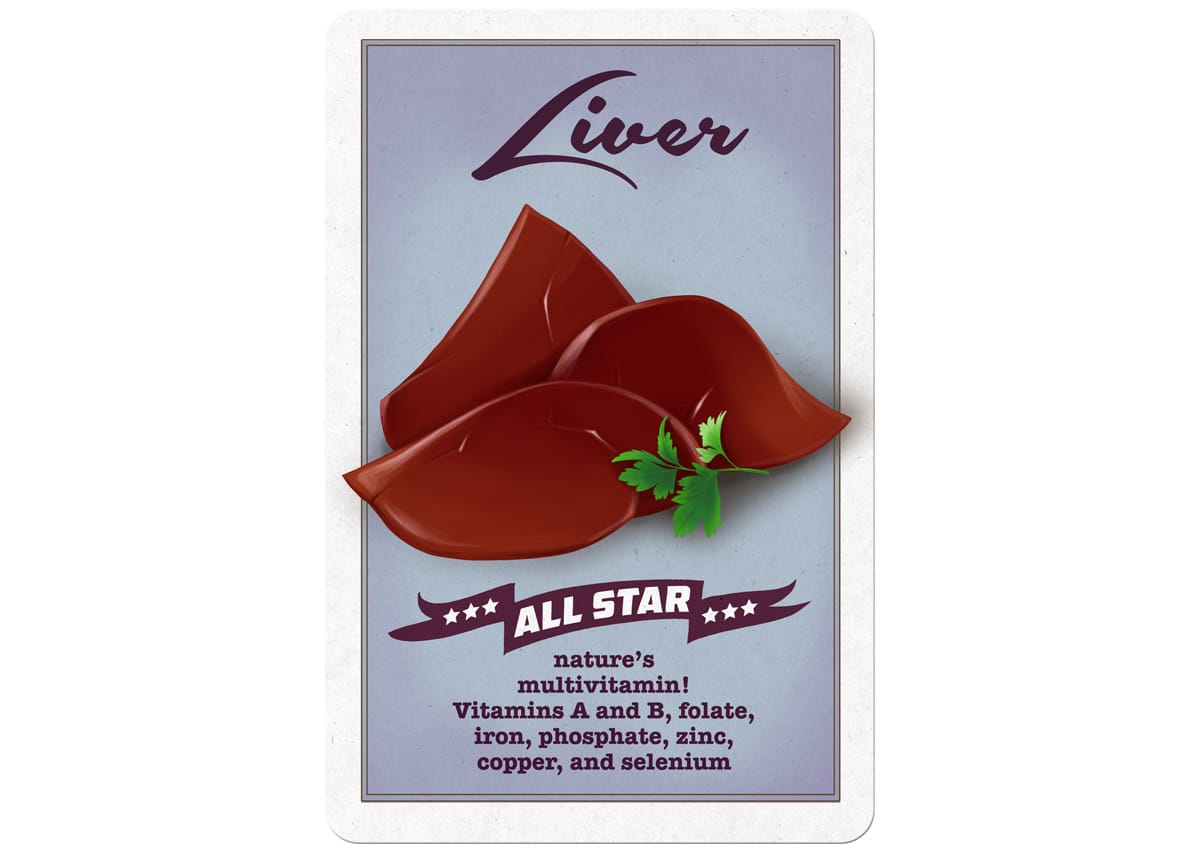
    LiverCard Paleo

    The most popular types of meat in the United States are beef, pork, and chicken, but that doesn’t even begin to cover all your options. If you go just a few steps beyond the easy options, your “allergy diet” might well be more varied and diverse than most people’s “unrestricted” diets.

    Make a list of all the types of meat you can eat, and look for the less-common varieties you might not really be thinking about. For example…

    • If you have a red meat restriction, have you tried pheasant, Cornish game hens, or other wild birds?
    • If you can't or won't eat chicken and poultry, have you tried lamb, goat, rabbit, bison, venison, and other wild game meats?
    • If you can't have any kind of land animal, what about all the fish and shellfish in the sea? There's more down there than salmon and tuna!

    You can often find these meats in the freezer section of the grocery store, even if they aren't out in the butcher's counter. Another strategy is to eat different parts of the animal. Liver tastes very different from muscle meat; kidney is completely different from both. And what about other organ meats?

    Eggs also deserve special mention – even a poultry allergy doesn’t necessarily mean you’ll be allergic to eggs as well (although of course, check this with your doctor first!). And if you tolerate it well (not everyone does), dairy can be an excellent supplemental source of protein and healthy fats. If your meat options are severely restricted, one meal per day with dairy serving as the only animal food can really liven things up.
    Use Vegetables, Seasonings and Spices

    In general, (although there are exceptions)  the people who get over-the-moon excited about steak and bacon are people who aren't Paleo. The Paleo veterans like their meat, but they tend to get more enthused about the vegetables: huge piles of broccoli roasted in olive oil, tender braised cabbage, bowls of crisp fresh lettuce. The steak is good, but the vegetables are better. Use that to your advantage: cook soups, curries, and chilis where you can add variety to the dish with vegetables and spices, even if the main protein is the same.

    Another technique is to switch up the sauces that you use. Try…

    • Mayonnaise
    • Guacamole
    • Sriracha
    • Salsa or relish

    If you’re stuck for ideas, look into discovering different cuisines. Have you tried eastern European food? Scandinavian? South American? North African? Also try substituting ground chicken or turkey for beef in a burger, or swapping out pork chops for a steak if there’s a new sauce you want to try.

    Different preparation methods can also completely change the experience of eating the same thing. The more limited your choice of foods is, the more you can benefit from hunting down different methods of preparing what you can eat. Just for example, take steak. You can pan-fry it, grill it, chop it up for a stir-fry, stuff it with something tasty, or slice it into thin strips to use as wraps. And that’s just the steak, without even going into all the other parts of the cow. There’s no reason why every dinner should be the same “pan-fried steak with a side of asparagus.”

    Relax on the Protein

    Not every meal has to be based around a huge amount of animal protein – it’s important to get enough protein, but “enough” is not actually all that much. If you’re feeling bored of the meats that are safe for you to eat, it’s perfectly fine to eat a little less of them. Protein doesn’t have to be the “main event” at every meal!

    Just for example, try serving pâté as a dip or spread for vegetables, alongside a baked potato with butter and maybe some soup. You’ll still get some protein (and plenty of nutrition, thanks to the liver!), but you won’t have to feel like you’re eating a bunch of meat again. Alternately, you could mix your meat up in a soup or salad with all kinds of different vegetables going on. (As a side note, if you’re going to do this, it can be really helpful to eat a little more fat and/or carbs at that meal than you normally would.)

    Summing it Up

    An allergy to one type of meat or another isn’t actually a Paleo death sentence – you can eat a varied, delicious, and nutritionally complete diet without having to eat anything you react badly to. Just think of it this way: instead of eating all the foods you’re not technically allergic to, you’re picking out only the nutrient-dense ones and eating those instead!

    It doesn’t have to be boring or repetitive either. With some clever use of different seasonings and cooking methods, even a more restricted diet doesn’t have to drive you up the wall. Try it; you might be surprised at how much you like it!

    Filed Under: Learn About Paleo & Keto Diets

    Paleo Foods: Brassicas (and not Just the Ones you Know)

    September 14, 2014 by Paleo Leaper Leave a Comment

    Brassicas

    What if you could get a giant dose of vitamins, minerals, and anticancer phyotchemicals, in any one of several different delicious packages? Well, actually you can: welcome to the brassica family!

    “Brassicas” or “cruciferous vegetables” refers to species in the genus Brassica, which is part of the mustard family. It’s a big group, including everything from canola to cauliflower to cabbage, plus lesser-known species like daikon and tatsoi (a lot of Asian cooking greens are actually in this family). If you eat them raw, most of these vegetables have slightly bitter undertones, but cooking them brings out a very pleasant mild sweetness – think roasted cauliflower or kale fried in bacon fat.

    Their taste isn’t their only selling point, though: these vegetables are packed with nutrition, including a few particularly significant cancer-fighting compounds. On the other hand, they also aren’t right for everyone: several are high in FODMAPs carbohydrates, and anyone with impaired thyroid function might want to be wary of eating too much at once (more on this below).

    Brassica vegetables include...

    • Broccoli
    • Cauliflower
    • Brussels sprouts
    • Cabbage
    • Turnips/turnip greens
    • Collards
    • Kale
    • Bok choy
    • Other, less familiar names (see below)

    Health Benefits of Brassicas

    It’s hard to generalize about an entire family of vegetables, but overall, brassica vegetables are particularly high in…

    • Vitamin C (this is great if you don’t eat a lot of fruit)
    • Folate (Vitamin B9), which is particularly important for women who are pregnant or trying to conceive.
    • Vitamin K1 (not the Vitamin K2 you get from pasture-raised beef and dairy, but valuable anyway).

    The dark-green-and-leafy members of the family (kale, collards, and friends) will also provide some calcium – in fact, collard greens are actually the richest source of bioavailable plant calcium around.

    Brassica vegetables also get good press for their cancer-fighting powers. Just to start with the obligatory disclaimer, there is no one food that can “prevent” or “cure” cancer (in fact, “cancer” isn’t even one single disease to “prevent” or “cure” in the first place). But with that said, brassica vegetables do contain potentially anti-cancer phytochemicals called glucosinolates (these are the same compounds that give them their slight bitterness).

    In test-tube and animal trials, glucosinolates have been found to break down into various other compounds that help prevent cancer in different ways. In humans, the evidence is mixed: some studies show that people who eat more brassica vegetables get less cancer; other studies show that there’s no connection. It also probably depends on the specific type of cancer. But this review concluded that “a frequent intake of vegetables of the cruciferous family lowers the risk and may lead to a weaker metastasis of tumors in some persons.” A lower risk of cancer and weaker tumors if they do appear, all for the price of eating something that would be delicious anyway? Sounds pretty good!

    Downsides of Brassicas

    Even with all their benefits, brassicas still have some downsides. Specifically…

    They can be hard to digest if you have trouble with vegetables.

    GreenLeafyVegetable Paleo

    Many brassicas are high in FODMAPs carbohydrates, which can cause a whole slew of digestive symptoms like gas, bloating, and constipation or diarrhea (this is where all the off-key jokes about the cabbage soup diet come from). If you’re having gut trouble, it might be wise to get rid of them temporarily, and then reintroduce in slowly increasing quantities, to see how much you can tolerate at once.

    They can be goitrogenic, especially when raw.

    This one is tricky because in most people with healthy thyroid function, there’s absolutely nothing to worry about unless you’re actually eating a dump truck’s worth of cabbage every day. But in people who already have thyroid problems, goitrogenic foods can sometimes make it worse. Essentially, goitrogenic foods are foods with the potential to impair thyroid function. By far the biggest offender here is soy, which isn’t Paleo anyway, but you might also have trouble from huge quantities of raw brassicas (e.g. kale juice).

    Cooking food makes it much less goitrogenic – here’s a good discussion of this if you want to know more. But again most people shouldn’t have issues with this; it’s only really a concern for anyone with pre-existing thyroid issues, or anyone who isn’t getting enough iodine.

    Cooking and Eating Brassicas

    Now for the good part: how to get all that nutrition-packed, anti-cancer goodness on your plate.

    Brassicas: Everyday Edition

    First up are the brassicas everyone knows about – in your mental stock photo of “vegetables,” these are probably in there. You’ll find them at every grocery store, usually in several options (raw, pre-cut, and frozen, at least). Vegetables like broccoli, cauliflower, and kale fall into this category.

    Some recipe inspiration to get them on the plate:

    • Cabbage: oven-roasted garlic cabbage or coleslaw with apples and poppy seeds.
    • Brussels sprouts: Asian stir-fried Brussels sprouts
    • Cauliflower: cauliflower with lime and cilantro, fresh vegetable salad with black olives, or try these cauliflower substitutes for unhealthy foods.
    • Kale: kale chips or raw kale salad
    • Broccoli: broccoli and apple salad with walnuts or beef and broccoli stir-fry (also has Brussels sprouts)

    Brassicas: New and Different

    Now it’s time to shine the spotlight on some vegetables that might not be regular guests on your table. If you’re feeling like mixing something up, try one of these on for size.

    Kohlrabi

    • Looks like: a bumpy green or purple knob with leaves sprouting up from the top – like a green or maroon-colored turnip.
    • Tastes like: broccoli, but mild and sweeter.
    • Recipe inspiration: Moroccan Carrot and Kohlrabi Salad (Paleo Fondue)

    Rapini (Broccoli Rabe)

    • Looks like: broccoli, but with longer stems and smaller florets.
    • Tastes like: broccoli.
    • Recipe inspiration: Broccoli Rabe with Garlic (There’s a Cook in My Kitchen)

    Napa cabbage (Chinese cabbage)

    • Looks like: regular cabbage, but a little bit elongated, wrinklier, and paler green.
    • Tastes like: very mild cabbage.
    • Recipe inspiration: Paleo won-ton soup (Christian Jax)

    Tatsoi (“spoon mustard”)

    • Looks like: bite-sized, dark green leaves shaped like little spoons.
    • Tastes like: very mildly mustard-flavored; much less “peppery” than arugula.
    • Recipe inspiration: Quick Beef Pho (Everyday Maven)

    Mizuna

    • Looks like: feathery, bright-green leaves – a little like dandelion leaves.
    • Tastes like: a little milder than arugula, but with a slight mustard-y edge.
    • Recipe inspiration: Bacon Mizuna Frittata (Paleo Periodical)

    Daikon

    • Looks like: a giant, white carrot (or alternately, like a turnip that got stretched way out).
    • Tastes like: a very mild radish.
    • Recipe inspiration: Cherry-Braised Chicken Salad (Grazed and Enthused)

    Wasabi

    • Looks like: the actual wasabi plant looks like a dirty, bumpy root, but the wasabi you buy in stores is already ground into a paste or powder. Look for it in the Asian food aisle.
    • Tastes like: a kick to the back of your nose – wasabi is powerful, so if you’re not into spicy food, beware.
    • Recipe inspiration: Seared Ahi with Wasabi Slaw (Paleo Girl’s Kitchen)

    Pick with a tried-and-true favorite, or branch out into something new – either way, you’ll get the health benefits of brassicas in a delicious plate full of nutrient-dense food.

    Filed Under: Paleo Diet Foods

    8 Tips for Easier Meal Planning

    July 26, 2014 by Paleo Leaper Leave a Comment

    Meal planning is one of the simplest ways you can cut your grocery bill, your time in the kitchen, and your gas expenses in one fell swoop. Here you’ll find some tips for getting started meal planning. Now it’s time for Meal Planning 201: tips and tricks to help you make the most of your planning efforts.

    1. Use Theme Nights

    If Friday is always taco night, then you always know what you’re making on Friday, and you don’t have to give it any more thought. It’ll get almost automatic to put the ingredients on your shopping list, and you’ll have one less meal to worry about.

    Not big on tacos? Here are some other suggestions for classic dinners that you could serve once a week:

    • Spaghetti
    • Chili
    • Breakfast for dinner
    • Asian food

    You can make a family tradition out of any meal that everyone likes: it doesn’t really matter what the recipe is.

    2. Cook in Bulk (and Use the Leftovers)

    paleo containers

    There’s no reason why leftovers can’t be part of your meal plan! If you cook in bulk and plan to work the leftovers into your rotation (maybe as breakfasts or lunches), you’ll save a lot of time in the kitchen.

    3. Plan Around your Schedule

    Always busy on Thursdays? Then don’t plan a gourmet feast! Pencil in your fastest recipes for the nights when everyone is zooming from one activity to the next, and save anything time-consuming or experimental for the less hectic evenings.

    4. Enlist Some Help

    Even if it’s just washing the dishes or setting the table, almost anyone who can eat a meal can also help make it. That goes double if they want anything special made just for them. And if you have any picky eaters in the house, it’s also a good idea to have them come up with some recipes that they’ll eat, find the ingredients, and add it all to the list: this saves you time trying to hunt down meals that fit everyone’s taste.

    5. Have a Backup Plan

    paleo mealCover

    No matter how perfect your shopping lists are, no matter how meticulous your spreadsheets look, no matter how nutritionally perfect your meals are…you will mess up at some point.

    Maybe you’ll forget to buy something you need, or maybe you’ll buy something but it’ll turn out to be bad (rotten coconut, moldy carton of strawberries…). Maybe you’ll make something but end up hating it. Maybe your plans to go out for dinner will fall through and you’ll need a substitute meal in a hurry.

    Whatever it is, eventually you will need a backup plan. So have one! Always have ingredients for at least one more meal than you plan to make – the easiest way to do this is to stash some extra frozen vegetables and canned or frozen meat. Then you can whip up a quick chili or stir-fry without too much fuss.

    6. Make a List of Favorite Meals

    This is especially true if you’re cooking for kids (or anyone who acts like a kid when it comes to food). If you have a master list of recipes everyone likes, you’ll have a great start when it comes to planning your meals for each week.

    7. Set Aside Time to Plan

    It’s part of human nature to prioritize the short term. Even though we know that half an hour of planning now will save hours of pain later, we still put it off or find excuses not to make time for it.

    Avoid this by penciling in “meal planning” with everything else you have to do. Set aside a few minutes to sit down and get it done (preferably the day before you shop, so you have time for all those “oh no, I forgot about the ___________” moments to happen before you’re home with the groceries).

    8. Make your Shopping List at the Same Time

    You can’t cook all those meals if you don’t have the ingredients for them. The easiest way to make sure everything gets onto your shopping list is to write it all down as you put the meals on your calendar. Alternately, you could use an app or an online list – there are plenty out there, and some of them come with neat features like sharing (so anyone in the family can edit them).

    Got any more tips that work for you? Let us know on Facebook or Google+!

    Filed Under: Learn About Paleo & Keto Diets

    10 Leafy Greens you Might Not Know

    June 28, 2014 by Paleo Leaper Leave a Comment

    You’ve heard of spinach. And at this point we’re all aware that kale is going to make us immortal. But there’s a whole world of leafy greens out there beyond the usual suspects, and if you’re looking to switch up your salads, one of the less-popular choices might be the perfect option for you!

    Adding different greens to your vegetable rotation ensures that you constantly have a good supply of calcium and other important nutrients: variety is one of the best ways to make sure your diet is nutritionally sound. So here are 10 tasty (and extremely nutritious) leafy greens you might be walking past every time you go grocery shopping, without even realizing what you’re missing.

    1. Turnip Greens

    TurnipGreens Paleo
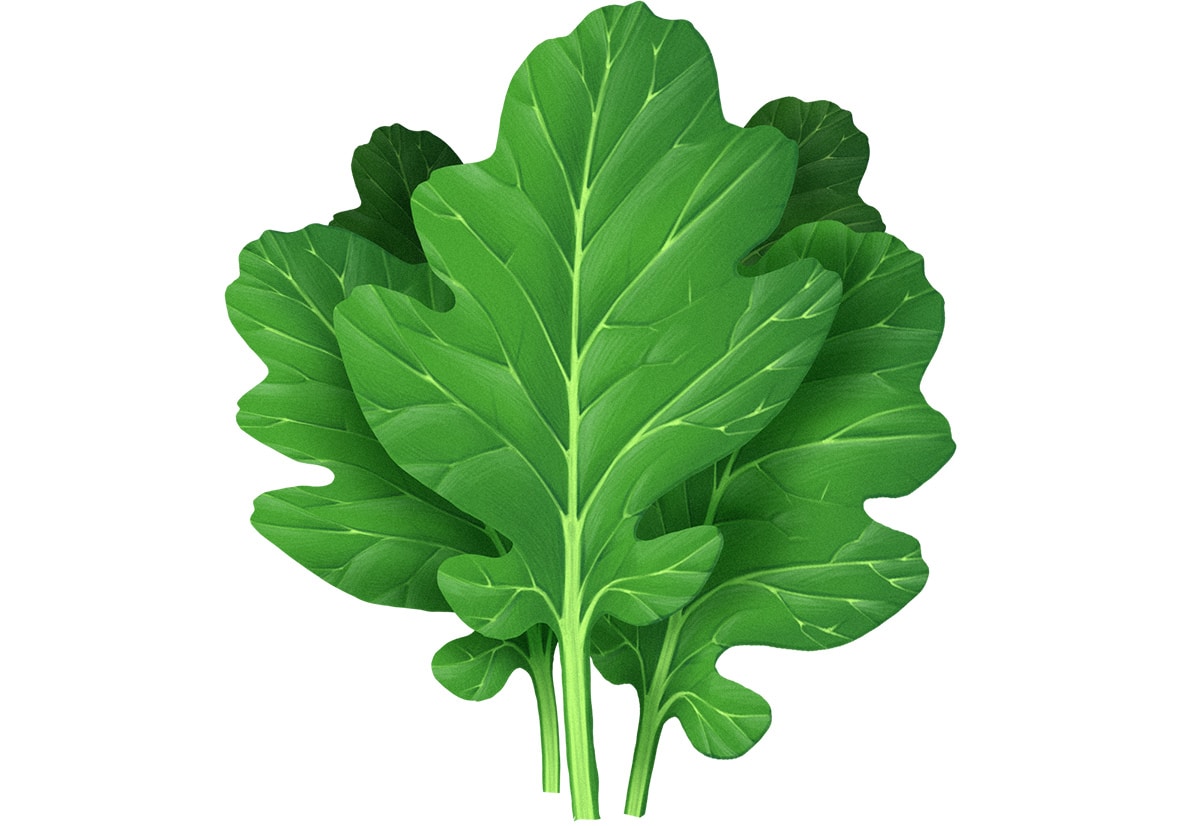
    These are turnip greens. Mustard greens look very similar.

    How to find them: Turnip greens are large (a bunch is typically around the size of a bunch of kale) and bright green. They'll be either attached to the turnips, or sold in big bunches with the collards and other cooking greens.

    Taste: like a very, very mild version of turnips; it’s really just a hint of turnip flavor. They’re great if you think the turnips themselves are a little too strong. Turnip greens bought at a farmers’ market tend to have a sharper flavor than greens bought at the grocery store, which are more watery.

    Cooking tips: turnip greens are best cooked; stir-fry or sauté them in fat. Cook them just until they turn a brighter green; this removes any bitterness without making them bland and mushy.

    Recipe inspiration: Stir-fried turnip greens.

    2. Mustard Greens

    How to find them: Mustard greens are bright and bushy (a bunch is about as tall as your forearm from elbow to hand). They should be with the collards and other cooking greens.

    Taste: a little spicier and more assertive than lettuce.

    Cooking tips: quickly pan-fry them with your favorite fat. Like turnip greens, mustard greens should be cooked just until they brighten up.

    Recipe inspiration: Sarson ka Saag.

    3. Dandelion Greens

    How to find them: walk out into your backyard and pick some, or check in the leafy greens section of the supermarket.

    Taste: they’re pretty bitter raw (although perfectly safe to eat, and great in a salad mix where you can balance out the bitterness with a milder leaf). If you’re not a fan of the sharp taste, cooking them tones it down a lot.

    Cooking tips: Dandelion greens are definitely candidates for boiling or another more demanding cooking method, depending on how much bitterness you like in your leaves.

    Recipe inspiration: Eggs in a nest.

    4. Mesclun

    How to find it: check the bagged or boxed salad mixes.

    Taste: Mesclun varies in taste from one batch to the next, because it’s not a specific plant. Instead, it’s the name for a mix of young salad greens, typically including some new and exciting candidates like radicchio, oak leaf, and mizuma. As a rule, the taste will be more assertive than a pile of romaine or iceberg, but it might be slightly bitter, peppery, sharp, or bright – or all of the above!

    Cooking tips: Don’t cook mesclun; it’s best used as a salad mix.

    Recipe inspiration: Duck confit with fried potatoes, mushrooms, and mesclun.

    5. Arugula

    How to find it: arugula will be with the lettuce and the other salad greens. It looks a little like dandelion leaves.

    Taste: arugula is typically described as “peppery:” this is definitely a green that knows its own mind! It’s sharp, and even a little stingy.

    Cooking tips: arugula goes really well in omelets or paired with something else that’s rich and creamy, to balance out the sharpness. In a salad, it’s best as one leaf in a mix, not as the only green involved.

    Recipe inspiration: Arugula salad with beets.

    6. Beet greens

    SwissСhard Paleo

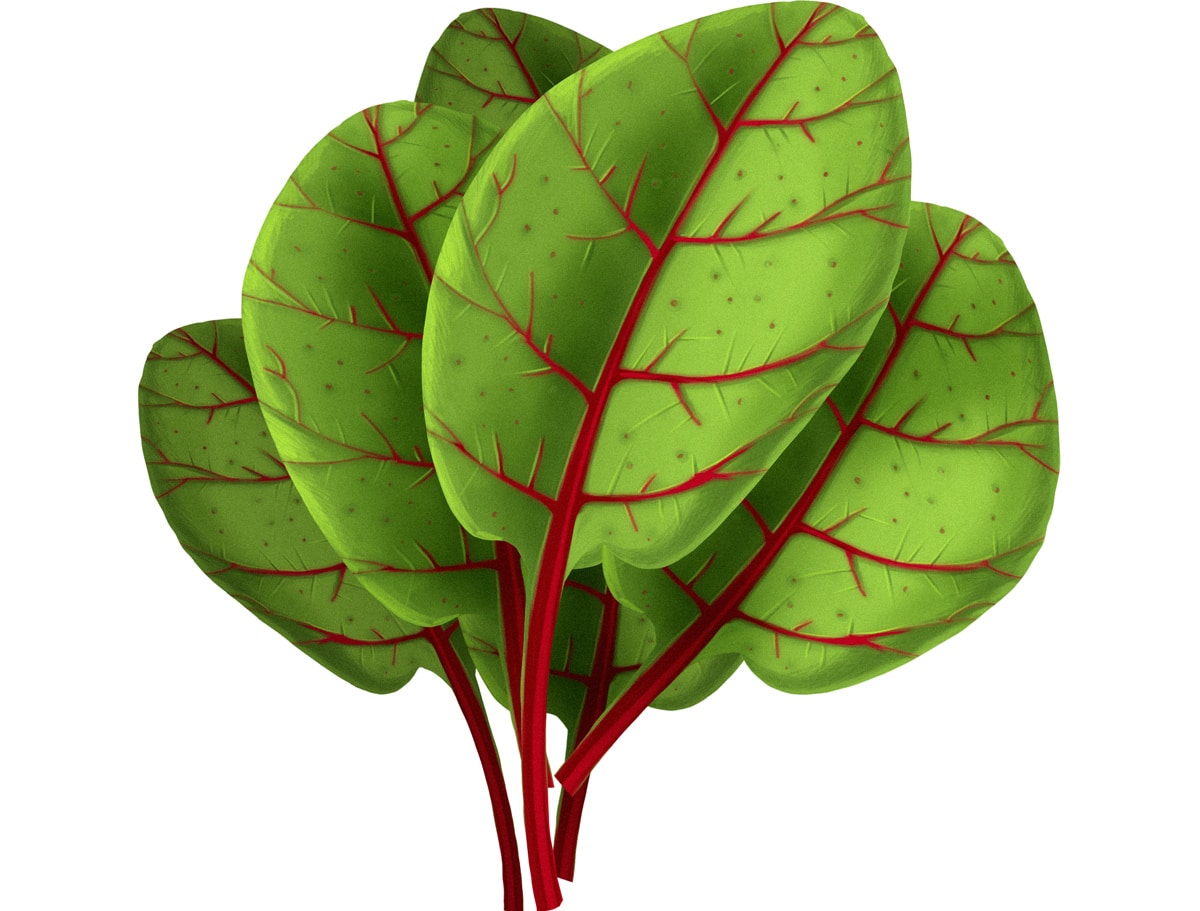
    How to find them: either attached to a bunch of beets, or on their own with the cooking greens. Beet greens have dark red-purple stems and deep green leaves.

    Taste: beet greens taste a lot like Swiss chard, if you can imagine Swiss chard with a slightly beety twist. They have a rich, full, and almost  sweet flavor.

    Cooking tips: use them any time you would otherwise use chard: they’re particularly good pan-fried with a pinch of salt and some onions for crunch. Be aware that beet greens will turn everything else in the pan pink, just like beetroots would.

    Recipe inspiration: Roasted beets and carrots with grapefruit glaze.

    7. Kohlrabi

    How to find it: this one’s easy: kohlrabi looks like Sputnik, if Sputnik decided to go organic. The bottom is a big globe, with leafy offshoots sprouting up from it. Look for it with the other green vegetables.

    Taste: kohlrabi tastes very similar to broccoli; it has the same hardy, rooty taste when it’s raw, and the same mild sweetness when it’s cooked (especially if you roast it).

    Cooking tips: Roast or bake kohlrabi to bring out its milder side.

    Recipe inspiration: Beet and kohlrabi greens chips.

    8. Curly Endive/Frisee

    (sometimes incorrectly called chicory)

    How to find it: Curly endive, also called frisee, should be with the salad greens. It’s white at the roots and medium-green at the tips, and looks distinctly frizzy.

    Taste: sharp, with a crunchy, feathery texture.

    Cooking tips: frisee is a love-it-or-hate-it green; it goes well as a counterpoint for sweeter toppings (like apples and raisins) or rich and savory choices like bacon.

    Recipe inspiration: Orange endive salad.

    9. Belgian endive

    How to find it: this is the lumpy, white plant you’ll see stocked with the radishes and turnips. Despite the similar name, it’s actually a different species from endive.

    Taste: Slightly bitter, and often described as “tangy.” The versions with the red-purple tips and green-yellow tips both taste about the same.

    Cooking tips: Belgian endive is great raw as a “scoop” for dips or appetizers, but it’s also good braised low and slow to reduce any bitterness and mellow out the taste.

    Recipe inspiration: Caraway chicken with Belgian endive.

    10. Watercress

    How to find it: watercress has small, round leaves: a bunch of watercress looks like a bunch of very tiny water lilies. Look with the baby salad greens or fresh herbs.

    Taste: Watercress, like arugula, is sharp and assertive; it mellows out a lot when it’s cooked.

    Cooking tips: Watercress is great for adding a bit more punch to soups and other milder foods that could otherwise be boring.

    Recipe inspiration: Warm watercress and pine nut salad.

    What's your favorite less-common leafy green? Let us know on Facebook or Google+!

    Filed Under: Learn About Paleo & Keto Diets

    7 Delicious Options for Paleo Pasta and Noodles

    May 4, 2014 by Paleo Leaper Leave a Comment

    Sure, you could eat your meatballs plain if you really wanted to, but if you want Paleo noodles, you’ve got options! From linguini to lasagna, here’s a run-down of 7 reasonably easy options for Paleo-friendly noodles.

    For many of these options, it really helps to have a spiralizer or a julienne peeler – or both. These gadgets help you create perfectly-shaped, even noodles out of all kinds of vegetables without having to spend all day in the kitchen. A julienne peeler is a little cheaper ($5-10 each), but it’ll require more elbow grease on your part, and if you find yourself reaching for the Paleo pasta every other night, a real spiralizer can be a great investment.

    On the other hand, if you have no equipment, all is not lost. You can cut your noodles by hand, or just go for the options that don’t require it (these are marked in the list).

    Zoodles

    Raw or cooked? Either
    Tools required: spiralizer or julienne peeler.
    Pasta shapes: noodles (spaghetti-style) and ribbons (fettuccine-style)

    They sound like something out of a Nickelodeon cartoon, but zoodles are zucchini noodles: they’re what you get when you take a spiralizer or a julienne peeler to a pile of zucchini.

    Zoodles can be eaten raw, or gently warmed to go with a warm topping (like meatballs). They have a very mild, slightly sweet flavor that goes well with anything you’d otherwise put on top of pasta.

    barbecue meatballs main

    Recipes and cooking tips:

    • If your zoodles are watery, try pressing them gently between two paper towels, or into the bottom of a colander; this will help them release the extra water.
    • If you’re going to cook them, make it gentle. Don’t boil the life out of your zoodles; they’ll just fall apart. A very quick blanch or stir-fry is all they need.
    • Here’s a recipe for kale pesto with zoodles.

    Spaghetti squash

    Raw or cooked? Cooked
    Tools required: none.
    Pasta shapes: noodles (spaghetti-style)

    The classic gluten-free, low-carb “noodle” is the spaghetti squash. You’d never know from the outside, but the flesh of this particular squash breaks apart easily into long, thin threads once it’s been cooked.

    Almost any grocery store will carry spaghetti squash. A good spaghetti squash is pale yellow, oval-shaped, and somewhere between the size of a grapefruit and a football. To make a basic “pasta,” all you have to do is poke a few holes in the flesh of the squash, and stick the entire squash in the oven for 45 minutes to 1 hour 30 minutes (depending on size). It’s done when the outer skin is soft to the touch. Then cut it open, discard the seeds, and scrape out the strands of flesh with a fork.

    paleo pastaSauce


    Recipes and cooking tips:

    • For an al dente texture, undercook the squash slightly; if you like your pasta very soft, overcook it a little.
    • Before serving, it helps to leave your spaghetti squash in a colander and gently press it with a towel or paper towel; this gets rid of extra moisture and prevents a puddle in the bottom of your bowl.
    • Here's a recipe for Paleo spaghetti to get you started.

    Sweet potatoes

    Raw or cooked? Cooked
    Tools required: varies
    Pasta shapes: noodles (spaghetti-style), ribbons (fettuccine-style), or sheets (lasagna-style)

    If you get a big enough sweet potato, you can cut it into pretty much any shape you want, and the resulting noodles will be sturdy enough to hold up under a lot of heavy cooking. Take advantage of the versatility: try spiralizing them into tiny noodles, or slicing them into wider sheets to make dishes like lasagna. Or if you’re missing mac’n’cheese, why not cut sweet potatoes into chunkier, macaroni-like segments?

    Recipes and cooking tips:

    • Here’s a recipe for sweet potato noodles with bacon and pecans.
    • Slicing up sweet potatoes into noodles isn’t the same thing as buying “sweet potato noodles” from an Asian market, but if you’ve got a package of those, here’s a recipe to play with

    Other hardy vegetables

    Raw or cooked? depends
    Tools required: depends
    Pasta shapes: noodles (spaghetti-style), ribbons (fettuccine-style), or sheets (lasagna-style)

    Sweet potatoes aren’t the only root vegetables that make a mean noodle. You can go crazy with turnips, parsnips, carrots, squashes of all kinds…even try out apples or other fruits if you’re making something sweet. Here are a few recipes to get you excited:

    • Garlic-ginger parsnip noodles.
    • Butternut squash lasagna.
    • Carrot "peanut" noodles (no actual peanuts involved).

    Cucumbers

    Raw or cooked? raw
    Tools required: spiralizer/julienne peeler
    Pasta shapes: noodles (spaghetti-style) or ribbons (fettuccine-style)

    For those dishes where you want a cool, crunchy noodle instead of something pasta-like, cucumbers definitely deliver. They're ideal for salads, especially anything with an Asian flavor.

    Recipes and cooking tips:

    • Cucumber noodles are fairly delicate; sometimes it helps to seed the cucumber first.
    • Here's a recipe to start you off: cucumber noodles with salmon.

    Kelp

    Raw or cooked? either
    Tools required: none
    Pasta shapes: noodles (spaghetti-style)

    Before you skip this one: kelp noodles do not taste like seaweed! In fact, they don’t really taste like much of anything. They’ll very conveniently take on the flavor of whatever you cook them with.

    With that said, the texture of kelp noodles does tend to go better with Asian-inspired dishes: they’re not great with a huge pile of tomato sauce and meatballs.

    Recipes and cooking tips:

    • Most kelp noodles come packaged in salty water to preserve them. Rinse this off when you take them out of the bag, and then just add salt to your own taste later.
    • Here’s a recipe for Asian noodle salad to get you started.

    Eggplant

    Raw or cooked? cooked
    Tools required: depends
    Pasta shapes: sheets (lasagna-style)

    Spaghetti squash will do you for the long, thin noodles – but what about the flatter, sheet-style noodles that you’d use to make lasagna? Eggplant to the rescue! Slice it from top to bottom into long, thin sheets, and eggplant is perfect for layering, wrapping, or any other noodle-centric job you can think of.

    Cooking tips:

    • Before cooking with them, lay out your eggplant slices on a paper towel or clean dishtowel, and sprinkle them with salt. Let them sit for 10-15 minutes; then brush off the salt and go on with your recipe. This helps draw out some of the moisture, so you won’t end up with a puddle in the bottom of your finished meal.
    • Here’s a recipe for eggplant cannelloni; here’s one for eggplant lasagna

    ...And Yours!

    Got a better idea? Something we missed? Let us know on Facebook or Twitter!

    Filed Under: Learn About Paleo & Keto Diets

    Escape the Grocery Jail: Tips for Time-Saving Paleo Shopping

    February 21, 2014 by Paleo Leaper Leave a Comment

    You go to the store on Saturday to stock up on groceries.

    On Monday evening, you’re about to make some bone broth, but, you realize you forgot the celery and you have to go back for it. (When you return with your hard-won prize, you discover that you did have it after all; it was just hiding behind a big Tupperware of leftover potatoes. So now you have two bunches of celery, one of which you don’t need.)

    On Tuesday just before bed, you remember that you don’t have the coconut aminos you’ll need for dinner tomorrow. You have to wake up 45 minutes early to run to the store before work.

    On Wednesday afternoon, you’re all ready to head home from work – when you realize you have nothing for dinner, so you stop by the store in a post-work haze and take twice as long as usual to get ingredients just for one meal.

    On Friday, you take inventory of your fridge and discover that the Tupperware of potatoes is now wasted food: it’s moldered into a disgusting, stale clump, and you have to throw it out.

    Does this sound like you?

    If that's what your week is like, then you are certifiably an inmate of the Grocery Jail. It's a very common problem for newbies, but anyone can fall into this trap - and it's definitely not fun. And worse, it's completely unsustainable: anyone in their right mind would eventually give up and resort to takeout. It's not because you're lazy or unmotivated; it's because spending hour after hour on grocery shopping really, really stinks!

    The good news is that Paleo does not require being a prisoner of the grocery store. Here are some tips and tricks to help you shop once during the week, and then save your time for more important things. They're mostly aimed at newcomers to the Paleo lifestyle, but even experienced shoppers might learn a thing or two!

    Revamp your grocery list.

    There are two kinds of people in the world: people who know how to make good grocery lists, and people who waste way too much of their lives buying groceries. Don’t be in the second group! Here are two methods for making a time-saving grocery list:

    Method 1: Weekly variations.

    Use this list if you tend to eat a lot of different things every week.

    • Step 1: plan your meals. Write down what you want to eat for breakfast, lunch, and dinner every day. It does not have to be long or detailed. Here’s an example:
    MondayTuesdayWednesday
    Egg muffins (w/mushrooms) & bananaBacon & cantaloupeOmelet with ham & sweet potato.
    Salmon salad w/spinach; baked potatoSalad w/leftover chuck roast & roast beets.Chicken salad w/avocado (lettuce, onions)
    Chuck roast w/vegetables (carrots, onions, parsnips)Pork tenderloin, acorn squash, strawberries w/coconut milk.Roast broccoli, bacon-wrapped chicken breast.

    You may be able to skip this step once you get familiar with Paleo meal planning. Until then, it’s wise to include it; it will save you from forgetting a meal!

    • Step 2: break the list down into “meat,” “produce,” and “center aisles.” To take the list above, now it looks like this:
    MeatProduceCenter
    Salmon
    Chuck roast
    Bacon
    Tenderloin
    Chicken breasts
    Ham
    Bananas
    Strawberries
    Cantaloupe
    Avocado
    Beets
    Lettuce
    Broccoli
    Spinach
    Potatoes
    Sweet potatoes
    Carrots
    Onions
    Parsnips
    Mushrooms
    Eggs
    Coconut milk
    Salt
    Pepper
    Coconut oil
    Olive oil

    Now you can head into the grocery store, with all your items conveniently organized by area of the store. You won’t forget half your list, and won’t waste time running back and forth across the store. The time you spend writing out the list will save you double that time in efficiency at the store; just try it and see!

     Method 2: the master list.

    Use this method if you eat a lot of the same things every week.

    • Step 1: On the computer, type up a list of everything you typically need at the store, organized according to where you’ll find it (meat department, center aisles, or produce). Print out a bunch of copies.
    • Step 2: Every week, grab one copy, and just cross off what you don’t need or want for that trip. Voila: your grocery list is made!

    Cut down on the number of stores you visit.

    Even the most efficient grocery shopper can end up spending an entire morning “hunting and gathering” if she has to run to 5 different stores. Cutting down on the number of places you drive can make a major impact on your total grocery time. Here’s how to do it:

    • Try online. You can get the vast majority of your supplements, spices, coffee, tea, baking staples, and other nonperishable goods online, usually for less money than you’d spend at the store. Many bigger sites (like Amazon) will let you set a monthly delivery that arrives automatically at your door. You shouldn’t have to go to a special health-food store just to get these things.
    • Buy in bulk. Instead of going to the store every week to get a small amount of something, try buying it in bulk every two weeks or 1 month. It’s more expensive up front, but it saves time and money in the long run.
    • Simplify your recipes. If you love the thrill of the hunt, and you want to spend time searching out the strangest new ingredients you can find, that’s great. But if you just want dinner on the table, focus on recipes you can make with ordinary ingredients and don’t set your heart on crazy or complicated meals.

    Learn flexible meals.

    FridgeFreezer&Cupboards Paleo

    So, you forgot an ingredient. Bummer. But wait! Before you waste an hour going to the grocery store, think:

    • Can I modify this recipe using what I have on hand?
    • Can I cook something else for this meal without making a special grocery run?

    Your meal plan is not an immutable law of the universe. It can change. Unless there is some very specific reason why you absolutely have to make a particular dish on that particular day, sticking to your meal plan is not worth the wasted hour of extra shopping time.

    Instead, get comfortable improvising with flexible meals like stir-fries or omelets. These are easy to modify according to whatever you have in the fridge, and very few recipes cannot be converted into a stir-fry with minimal fuss. For example, say you planned on beef satay, but you don’t have any almond butter. Not a problem: just stir-fry the beef with the spices you do have and any vegetables you can scrounge up.

    Stock up on staples.

    You should always have these things in your pantry:

    • Salt and pepper
    • Olive oil and coconut oil
    • Balsamic vinegar
    • Basic spices: cinnamon, basil, thyme, ginger, garlic, and chili powder at the very least.
    • Cans of fish
    • Cans of coconut milk
    • 1 pound of ground beef per two people in your family (in the freezer)
    • 1 bag of frozen vegetables per two people in your family (in the freezer)

    With these staples always ready to hand, you’ll never have to make a last-minute grocery run because the fridge is totally empty and you have nothing to eat. You will always be able to improvise “something for dinner” – it might not be totally gourmet, but it will be hot and ready to eat.

    Also, you should probably keep most of these things in your kitchen all the time:

    • Lemons and/or limes
    • Coconut aminos
    • Cans of tomato paste
    • A bigger repertoire of spices (oregano, cumin, curry powder, paprika, and rosemary come to mind)
    • Eggs
    • Homemade bone broth (make a big batch once and freeze it in individual containers).

    These ingredients can make or break a recipe, but they’re very easy to forget until you reach for them and they aren’t there. Cut that off in its tracks by stocking up proactively. You can drastically cut down on last-minute grocery trips this way.

    Plan for leftovers.

    paleo containers

    Letting food rot in the fridge is just throwing time and money right down the garbage. That’s food that you spent your precious time finding in the store, hauling home, cooking, and storing – so get a return on your investment by making sure you eat it! Some tips for using your leftovers instead of just letting them sit there:

    • Build a few meals of leftovers into your week; this saves time cooking, and also ensures that you aren’t wasting any food.
    • When you put something in the fridge, label and date it, and stick it at the front; don’t let it hide away in a corner. Then you’ll actually eat it, instead of letting it rot.
    • Before you haul out fresh ingredients to cook something for a meal, check the fridge and see if you have any leftovers that need to be eaten. This is much easier if the leftovers are right there in front of the other food.

    But all this planning is so complicated/time-consuming! Can’t I just go to the store?

    If you could innately sense how much food your family would need every week, and if you could subconsciously fit it all into recipes for each day, and if you could just walk into the store and perfectly remember everything you need for all those recipes, then it would be easier to “just go to the store.”

    Most of us cannot do those things.

    For most of us, it’s actually faster to plan ahead. It only seems slower if you’re comparing it to some ideal of what you wish you could do. When you compare it to the reality of how most people actually operate, it’s a lot more efficient to make a list and plan meals in advance.

    Still not convinced?

    Why not just try it for two weeks. Give yourself one week to practice, and then take the second as a test run. What do you have to lose? If using these tips doesn’t save you any time, you won’t be any worse off. But if it does work, then you’ve gained a few hours of your life back, without sacrificing your health in the process.

    Filed Under: Learn About Paleo & Keto Diets

    Paleo Nutrition for Healthy Weight Gain

    November 14, 2013 by Paleo Leaper Leave a Comment

    Yes, gain. In the modern world, it’s much more common to be dangerously overweight than dangerously underweight, and so the vast majority of diet advice is dedicated to losing pounds, not putting them on. But there are still people – in fact, a surprisingly large number of them – who have exactly the opposite problem.

    People trying to gain rather than lose on Paleo usually fall into one of two categories. Some are unhealthy because they’re too far below a normal weight (suffering from Celiac disease or other malabsorptive problems, recovering from anorexia, or otherwise ill). They want to gain fat and muscle – any kind of additional weight will be good news. Others are perfectly healthy, but trying to gain muscle mass for athletic performance. They’re usually only interested in gaining muscle (not fat), and they also have a lot more options, since their health isn’t on the line.

    Adapting Paleo to address either of these problems can be tricky, because almost all the published books and research focus on weight loss. Some doctors will even tell you that you can’t gain a significant amount of weight on Paleo, because the food isn’t calorie-dense enough (too many vegetables; too hard to overeat – for most people, these are perks!).

    Those doctors have a point, but only to a certain extent. Extreme calorie surpluses are difficult using only Paleo foods. 4,000 calories or more would realistically require at least some kind of supplementation. Paleo simply won’t support the eye-popping calorie intake of a professional powerlifter: if you want to create an unnaturally muscular physique, you’ll need an unnatural diet to make it work. On the other hand, Paleo is an appropriate diet for all kinds of health-centric weight gain, including the natural muscle-building of a well-designed strength program or recovery from chronic diseases.

    Healthy Weight Gain: Heal your Gut

    Whether you’re medically underweight or looking to build more muscle, step 1 in either case is to make sure everything in your gut is humming along smoothly. You benefit from the calories and nutrients you absorb, not the ones that enter your mouth, so just eating more food won’t always help. Patients with Crohn’s Disease, for example, often have trouble absorbing not only macronutrients (fat, protein, and carbohydrates), but also micronutrients (for example, 35-90% of Crohn’s sufferers are iron-deficient). This explains why many struggle to maintain a healthy weight despite eating enough food.

    Gut healing can be a long, painful, and frustrating process, but unfortunately there are no workarounds. Just taking out gut-irritating foods like grains, legumes, and dairy (if you’re sensitive to dairy) is a great first step. If that still doesn’t help, take a look at this article for some suggestions for healing your gut. You’ll only get the benefit of eating high-calorie foods if your gut has healed enough to absorb them, so make sure you take care of this step first before you go on to anything else.

    Paleo Nutrition for Healthy Weight Gain: Fat

    Once you’ve healed your gut, it’s time to focus on the nuts and bolts: how to get enough calories down the hatch. Paleo food has a reputation for being calorie-poor, but this isn’t quite accurate. There are plenty of healthy calorie-dense foods. The problem is really that whole, natural foods are difficult to overeat, and if you want to gain weight, by definition you have to overeat relative to your body’s maintenance requirements.

    Starting off the “high-calorie healthy food” parade are the fats. One major reason why people still believe the “fat makes you fat” myth is that a gram of fat contains 9 calories, while a gram of protein or carbohydrate contains 4. Fat, in other words, is more than twice as calorie-dense as the other two macronutrients.

    The reason that this doesn’t actually make you fat is that when people eat according to hunger, they naturally eat smaller amounts of fatty foods. So everything evens out. Fat is not a one-way ticket to weight gain (whether you want it or not). But the calorie density does make it a useful tool for putting on healthy mass, because it doesn’t take up as much room in your stomach. You still won’t feel hungry for it, but at least you won’t feel quite so uncomfortably stuffed.

    Fatty, calorie-dense foods include fatty meats, oils, nuts and seeds, avocados, coconut, and coconut products. If you tolerate dairy well, full-fat dairy can also add a significant number of calories to your daily intake.

    Simply replacing less calorie-dense foods with fatty ones is one of the easiest way to increase caloric intake. Instead of broccoli as a side dish at lunch, have avocado. Instead of lean fish, have pork shoulder. Instead of steaming your vegetables, stir-fry them with coconut oil. It’s also fairly easy to “hide” a spoon full of oil in soups and stews. Once you set your mind to it, you can think up all kinds of ingenious tricks for sneaking in more calories from fat.

    A word about using nuts to up the fat content in your diet: it can be very tempting to just take a look at the high calorie count and joyfully start downing handfuls of almonds every day. They’re convenient to carry around, easy to prepare, and extremely tasty. Unfortunately, nuts are also quite high in Omega-6 polyunsaturated fats, so relying on them for any significant amount of your daily caloric intake isn’t advisable.

    The cutoff is really a personal decision. Maybe gaining weight is the most important thing for your health right now, and the increased O-6 isn’t as big of a problem. Or maybe you’re willing to compromise on health a little for the sake of athletic performance, convenience, or taste. For optimal health, though, nuts shouldn’t be a staple source of calories.

    avocados

    Paleo Nutrition for Healthy Weight Gain: Carbs

    The second key part of gaining healthy weight is to lose the fear of carbohydrates. Safe starches are a must for healthy weight gain. This goes double if you’re recovering from an illness or an eating disorder. During chronic stress, the body’s carbohydrate needs increase drastically – replenishing that store of carbs is a necessary first step to better health.

    Carbs aren’t just for sick people, though. Even healthy athletes looking to put on mass need carbs to fuel their workouts, prevent burnout, and maintain performance levels. When you exercise, you’re burning through your muscles’ stores of glycogen. Keep eating away at that reserve without replenishing it, and you’ll notice a slow but steady decline in speed, power, and even the desire to work out. Yes, it’s true that excess carbohydrates can lead to fat gain in sedentary people, but that simply isn’t an issue for active athletes.

    Carbs are also excellent for sustainable weight gain because they help keep the grocery bill down to reasonable levels. You can buy a 10-lb sack of potatoes for $2.50 – that’s $0.50/lb. One pound of potatoes is 300 calories. Compare that to, say, ground beef. 85% lean runs around $4 and 960 calories/lb. To get the same 300 calories from ground beef, you’d have to spend $1.25, 2.5 times the cost of the potato calories. When you’re trying to pack in 2,500 or 3,000 calories every day, that kind of savings is important.

    None of this is an argument that anyone needs to eat a carb-centric diet. The carbohydrates in a Paleo mass gain diet are really for athletic performance, immune system support, and overall health, not to mention adding more variety. They aren’t the magic ticket to weight gain; they’re one part of an overall diet for healthy weight gain.

    Healthy carb-dense Paleo foods include sweet potatoes, white potatoes, plantains, yams, and other root vegetables. For fruits, bananas are the best carb source because not only do they have a much higher calorie count than most fruits (120 calories in a large banana), but they also contain mostly glucose, which is better for athletic performance than fructose.

    Paleo Nutrition for Healthy Weight Gain: Micronutrients

    Eating piles of vegetables every day isn’t part of many mass-gaining plans, since vegetables take up precious stomach space without adding much in the way of calories. But micronutrients are crucial for anyone looking to gain healthy weight, both athletes and the underweight. After all, if you just wanted as many calories as possible, Oreos are a much faster way to get there than steak. So how can you get in all your vitamins and minerals, without overfilling your stomach?

    The obvious solution is to prioritize foods that are both nutrient-dense and calorie-dense. For fat sources, one average avocado contains around 220 calories and is packed with Vitamins C, E, and K, all the B vitamins (except B12, only found in animal foods), magnesium, phosphorus, potassium, copper, and manganese. An orange approximately the same size has fewer calories and much less to boast about in terms of nutrition.

    Other nutrient-dense foods that are also highly caloric include:

    • Liver pâté: (2 tablespoons serve up 60 calories, significant amounts of Vitamin A, B vitamins, iron, and selenium.)
    • Full-fat dairy: 1 cup of whole milk provides 146 calories, significant amounts of water-soluble vitamins, Vitamin D (if it’s fortified), calcium, phosphorus, and selenium.
    • Fatty fish: ½ a fillet of salmon is almost absurdly nutritious: 280 calories, all the B vitamins and at least some of almost every essential mineral, especially phosphorus, potassium, copper, and selenium. Seafood also provides Omega-3 fats, which are anabolic (cause muscle gain) overall.
    • Bone marrow: it’s delicious, cheap, and loaded with monounsaturated fat, not to mention all the nutrition that the animal would otherwise need to keep its bones and immune system functioning properly.

    This isn’t advice to eliminate vegetable intake altogether – far from it! But instead of eating nutrient-poor foods for your energy needs and calorie-poor foods for your micronutrients, try to make your food “multitask” as much as you can. Also, cook your vegetables in fat, rather than boiling or steaming them. It’s tastier, and it helps add calories.

    “I’m Sick of Food:” Overeating Strategies

    male

    Unfortunately, gaining weight eating junk food is pretty effortless, but gaining weight on real food is quite difficult. It usually involves pushing your body beyond what you’re hungry for, since real foods just aren’t designed to hit those overeating buttons. Many people really struggle with healthy weight gain on Paleo for this reason: they just don’t want to eat any more.

    This is one chance to put the food industry’s giant “how much can we get Americans to eat?” experiment to good use. Learn from the masters: these “food” corporations have persuaded huge swaths of the population to overeat to the point of morbid obesity. They know every trick in the book for overriding natural hunger and satiety mechanisms; skip the high-fructose corn syrup and refined grains, but borrow from their playbook to make overeating easier.

    Liquid Calories

    Several studies have demonstrated that liquid calories just don’t “fill you up” the way solid food does, so they’re easy ways to add a lot more calories without feeling full. In one study, subjects automatically adjusted their energy intake to compensate for 450 calories of jelly beans, but not for 450 calories of soft drinks. The biggest food industry culprits for this are the soft-drink manufacturers, but the makers of “healthy” fruit juice concoctions are arguably just as bad.

    Gulping down gallons of Coke or even fruit juice is not a healthy weight-gain strategy, but what about a smoothie? Semi-solid foods have a slightly bigger effect on satiety than pure liquids, but they still aren’t nearly as filling as solid food. Throw in some coconut milk, avocado, full-fat milk if you tolerate dairy, raw eggs, and whatever berries or fruits you like for flavor. A baked and cooled sweet potato or a ripe banana would add some starch to the mix. Check out these whole-foods shake recipes for more ideas.

    Another easy way to get liquid calories in is with sauces and dressings. If you have a can of sardines or tuna for a snack, have it with homemade mayonnaise (around 100 calories/tablespoon), not mustard (5 calories/tablespoon). Making chicken for dinner? Slather it with pesto. Eating some vegetables? Dip them in pâté.

    Also consider semi-solid foods like mashed potatoes – especially mashed potatoes made with lots and lots of butter. They’re not technically liquids, but anything you can mash, grate, or blend into a puree will be easier to eat a lot of. Any food that you don’t have to chew much, or at all, is easier to shovel down.

    Salt, Sugar, Fat

    It’s the title of the newest critique of the food industry, but also sums up a very viable strategy for packing in the calories. The book describes how food scientists tweak all three of these categories to achieve the perfect “bliss point.” So it’s not just about adding one or the other; it’s about combining them in the tastiest possible ways. Think of how roasted, salted nuts (fat + salt + crunch) are so much easier to overeat than plain raw nuts (fat alone, with just a little crunch). Add them to a pile of trail mix with some dried fruit (fat + salt + crunch + sugar), and the result is nearly irresistible. Combine the three highly palatable tastes (salt, sugar, and fat) with your favorite textures to make foods that you want to keep eating.

    One example: instead of eating a plain baked potato, chop the potato into cubes and pan-fry it in oil, to add fat and give it a crispy, crunchy texture. Or fry up some plantain slices in coconut oil and top with cinnamon (add sweetness, fat, and crispiness). If crispy isn’t your favorite thing, what about some ice cream (basically a frozen smoothie, made with just coconut milk, vanilla, and eggs, plus whatever flavorings you like) or chocolate pudding made with avocado and cocoa powder?

    Graze, and eat while distracted

    How can even small children routinely plow through a bucket of movie-theater popcorn as big as their torso? Because they’re distracted by the movie! That’s why every advice column ever written advices dieters to eat mindfully, because paying attention to your food means you’ll stop eating sooner.

    For mass gain, though, you want exactly the opposite effect. To re-create the “movie theater” environment at your desk, leave a dish of snacks in sight within easy reach. Nuts or dried fruit are easy because they don’t spoil – if you’re not relying on them for a huge caloric boost otherwise, keeping a couple handfuls at your desk to munch on is probably fine. A bag of jerky is another option, or keep some clementines or other easy-to-eat fruit close at hand. When you’re bored, you’ll find yourself reaching for a handful just because it’s there, which can easily add up to another 300 or 400 calories over the course of the day.

    Slow and Steady: Mass Gain for the Long Term

    Just jumping right into all these strategies at once isn’t necessarily the best idea. Building mass with Paleo means adding a lot of calories from fat, and adding a lot of fat can take some time to get used to. Dumping it all on your body at once is a great recipe for terrible indigestion. Work up to it in 250- or 500-calorie increments.

    This might seem irritatingly slow, but ultimately you’re just doing something known to bodybuilders as a “clean bulk.” In a “clean bulk” (eating a small calorie surplus from good food) you gain weight slowly, but a greater percentage of the total weight is muscle: you aren’t gaining a massive amount of fat as well. This contrasts with a “dirty bulk” (eating a massive calorie surplus from junk food), which packs on muscle faster, but at the cost of added fat as well. Clean bulking takes more patience, but you’re much more likely to look and feel the way you want.

    Less-Bad Strategies for Pushing the Extremes

    There’s a reason why so many bodybuilders and strength athletes rely on protein powders and energy bars. Pushing your body past a certain amount of muscle mass is not natural. The bodybuilder physique is not the way humans were designed to look; that’s not how humans normally develop given an evolutionarily appropriate diet and environment.

    This doesn’t necessarily make it bad. After all, in their natural state humans also have a high rate of parasitic infection. Freedom from head lice and tapeworms is a product of the modern environment, too. So “natural” isn’t automatically good, and “unnatural” isn’t automatically evil. But “unnatural” physiques are also very difficult to achieve with real, whole foods.

    If you want this kind of body anyway, protein powders are the most popular way to supplement calorie intake. Any kind of protein powder is far from the healthiest thing you could be putting in your body, but if you have to use one, make sure you get a high-quality kind. Whey is better than soy; grass-fed whey is better than conventional. Buying the cheapest bottle at Wal-Mart might save you money in the short term, but in the long run, it’s not worth it.

    Conclusion

    Gaining weight on Paleo isn’t a walk in the park. It does take some effort and dedication, and it can also feel lonely at times – after all, almost everyone else is trying to keep their weight down. But stick with it, and the rewards are impressive: a well-nourished body, slow but steady muscle gain, and no need to “give up” junk food when you’ve finally reached the weight you want.

    Filed Under: Learn About Paleo & Keto Diets

    All About Vitamin C

    October 10, 2013 by Paleo Leaper Leave a Comment

    It’s getting around to that time of year again: the season for stuffy noses, Kleenex stockpiles, and the eternal “call in sick” vs. “tough it out” debate. Most of us are dreading the approach of cold and flu season, but it’s not all bad: if you’ve bought any stock in Vitamin C supplements, the news this time of year is pretty good as everyone rushes into the drugstore for a quick “immune booster.” There are the regular pills, the gel caps, the chewables, the gummies…you can even get tablets that dissolve in water to make a citrus-flavored supplement drink.

    But does any of it actually help?

    Not really. Vitamin C is obviously important, and a deficiency is life-threatening, but there’s no evidence that taking more than you need will be beneficial, or that it will “boost” your immune system in any useful way. It’s a classic case of “too little is dangerous; enough is good; more is not better.” While it’s very possible that the RDA is too low, just by eating Paleo you get a lot more than the RDA almost by default, without even worrying about it. There’s no need to supplement, or to go out of your way in pursuit of Vitamin C-rich “superfoods:” eat a wide variety of fruits and vegetables, and you’ll be perfectly fine.

    Vitamin C and Human Evolution

    For a tiny group of hydrogen and oxygen molecules, Vitamin C actually has a fairly interesting story. Biologically, humans are one of the few animals that can’t make our own Vitamin C: we’re totally dependent on getting it from food. In that respect, we’re in a tiny group of apparently unrelated animals that includes a handful of our fellow primates, guinea pigs, bats, and a few species of birds.

    We don’t really understand why this seemingly random group of species lost the ability to synthesize Vitamin C, while most other animals maintained it. But one thing is clear: before we even knew what Vitamin C was, we knew that we needed it. And we were all too familiar with the consequence of deficiency, a deadly disease known as scurvy.

    A Brief History of Scurvy

    Given a reasonable choice of plant and animal foods, healthy humans will automatically select a diet with adequate Vitamin C. It’s not that difficult: fresh or raw meat, organ meats, or literally any kind of plant food will do. Even raw milk has a very tiny amount. But not everyone can always get a reasonable choice of plant and animal foods to pick from. In the days before refrigeration, soldiers and sailors were often deficient, because they had to live for long periods of time on preserved meat and grains, with no vegetables in sight.

    This diet was a perfect recipe for scurvy, the deficiency disease associated with inadequate Vitamin C intake. Starting with a brown skin rash, overall fatigue and weakness, and tender gums, scurvy progresses to open sores, bleeding from the mouth, tooth loss, depression, and eventually death.

    Scurvy was recognized as far back as the ancient Greek healer Hippocrates. It plagued the crusaders. But its real death toll came as European sailors started voyaging farther and farther from home, starting in the 1500s. Living for months on end without fresh fruits and vegetables, sailors died in droves from the disease – during some years in the British Navy, more men succumbed to scurvy than died in combat.

    Plant foods – almost any kind of plant foods – would solve this problem. In 1530, French explorers in Canada treated the disease with a tea made from spruce needles. Sometimes, just a day or two in port (where sailors had access to fresh food) was enough. More famously, the British Navy stocked up on lemons and limes, after a pioneering series of experiments by naval surgeon James Lind in the 1700s.

    In the 1920s, the explorer Vilhjalmur Stefansson threw a wrench in “fresh fruits and vegetables” theory when he reported that the Inuit, who rarely ate plant foods, also did not suffer from scurvy. As it turns out, their Vitamin C came from animal organs: liver, adrenal glands, roe, and tongue, to name a few. Traditional cooking methods also helped: Vitamin C is present in raw muscle meat, but harsh cooking destroys it. So by cooking their meat very lightly, the Inuit were preserving the Vitamin C in it. In a year-long experiment, Stefansson and a friend lived entirely on raw or lightly-cooked meat without showing any signs of scurvy.

    Vitamin C (ascorbic acid) was named in 1928, and its chemical structure was finally determined in 1932. Finally, we had a name for the fickle “anti-scurvy factor” that seemed to lurk in raw, but not boiled vegetables, and raw, but not cooked meat. Today, thanks to the widespread availability of fresh foods, even the standard American diet isn’t bad enough to cause widespread scurvy. The few exceptions tend to be people who have other reasons to be malnourished, like alcoholics, dialysis patients, and the elderly.

    Vitamin C in the Human Body

    So what is this wonderful scurvy-preventing nutrient? Like most other micronutrients, Vitamin C doesn’t just have one job. It’s a powerful antioxidant, and a cofactor for several important reactions. It’s crucial for the formation of collagen, the tissue that makes up much of our joints and skin. Because your body can’t repair itself without collagen, wound healing is dependent on adequate Vitamin C status – that’s why people with scurvy notice open sores that don’t seem to heal. It also helps the body absorb and use iron (this is why anemia can be a symptom of scurvy even in people whose dietary iron intake is adequate).

    On top of these benefits, Vitamin C is an antihistamine: it blocks the release of the neurotransmitter histamine, which causes the uncomfortable swelling and inflammation of an allergic reaction. That’s why scurvy usually comes with a rash, and also why adequate Vitamin C status helps make allergic reactions less severe.

    Today, Vitamin C is most famous for its role in the immune system. One major symptom of inadequate Vitamin C is impaired immunity. In response to the physical stress of an infection (whether acute or chronic), Vitamin C stores are rapidly depleted. And in study after study, people with more Vitamin C in their diets do better when they have to fight off just about any common disease.

    Vitamin C: How Much is Enough?

    RedVegetable Paleo

    Everyone agrees that Vitamin C is important. But the question of how much you actually need is a little thornier.

    Just preventing scurvy doesn’t take very much. In experimental studies done on conscientious objectors during World War II, a dose as small as 10mg a day (that’s 1/10 the amount in one orange) reversed symptoms completely, and giving the patients up to 70mg a day didn’t provide any additional benefit.

    Not everyone agrees that “preventing scurvy” is the relevant standard, though. Simply avoiding an obvious deficiency isn’t the goal here; we’re looking for optimal health. Even people who never get diagnosed with scurvy can still suffer from a low-level inadequacy of Vitamin C, marked by fatigue, weight loss, and inexplicable aches and pains (this is sometimes called “latent scurvy”). None of that sounds particularly fun, so the ideal diet and supplement routine should prevent low-level deficiency as well as outright scurvy.

    So how much Vitamin C do you need for this? The USDA’s recommended daily intake is 75mg/day for women and 90mg/day for men, with an upper limit of 2g (2,000mg). This is much higher than many other recommendations: the World Health Organization, for example, sets 45mg/day as the standard. But there’s also some evidence that even the USDA’s estimate is too conservative. Some research indicates that consumption of up to 200mg/day (about twice the RDA) is best.

    There really is no good evidence that healthy people will benefit from getting much more than this, unless they have a serious deficiency to start with. And 200mg/day is easily achievable from whole foods alone. For example, just one serving of beef and broccoli stir-fry contains roughly 248 mg* – and that’s just one meal! If you’re eating as many fruits and vegetables every day as you ought to be, getting enough Vitamin C comes easy even with the more ambitious target of 200mg/day.

    This might be the reason why so many epidemiological studies show a positive correlation between Vitamin C status and health: a high intake of Vitamin C means a high intake of fruits and vegetables, which means an overall healthy diet (and also a person who is more likely to exercise and less likely to smoke). All this really proves is that “healthy behaviors improve your health” (no kidding!), not that “the more Vitamin C you get, the better.”

    Supplements, on the other hand, aren’t necessarily that useful. Besides the fact that you don’t need them to get the optimal benefits from Vitamin C intake, just popping more pills doesn’t actually mean you’ll absorb any more vitamins. Vitamin C is water-soluble, so if you eat more than your body can use, you’ll just excrete it. So the only healthy people who would potentially benefit from a Vitamin C supplement are people who were deficient to start with. Overload is not good just because deficiency is bad.

    Vitamin C and Disease

    Healthy people are one thing. Maybe additional Vitamin C doesn’t do anything for healthy people. But what about sick people? Any kind of infection drastically depletes the body’s Vitamin C stores, so it seems relatively logical that taking more Vitamin C when you’re sick might be providing your body with something it desperately needs. And then there are the anecdotal reports – an interesting handful of case studies feature patients making improbably miraculous recoveries with the aid of Vitamin C at extremely high doses.

    So could Vitamin C supplements be valuable as a kind of medicine, even if they aren’t useful in healthy people?

    The best-known advocate of high-dose Vitamin C for the prevention and treatment of disease is Linus Pauling, who won two separate Nobel Prizes in unrelated areas before going on to become obsessed with the idea that Vitamin C can cure everything from the common cold to terminal cancer. During the 1970s and 80s, Pauling argued fiercely in defense of his theory. This approach, known as “orthomolecular medicine,” advocated extremely high doses of vitamins not only for therapeutic treatment, but also for everyday use.

    Unfortunately, research done by pretty much anyone except Pauling has so far failed to validate his results. Despite the case reports, we have no solid evidence from actually controlled trials to suggest that Pauling had a point.

    Vitamin C and Disease: The Common Cold

    With respect to colds, a 2009 review concluded that Vitamin C only slightly reduces the length of a cold, and that’s if you’ve been taking it all along as a preventative (starting a supplement when you first notice symptoms doesn’t help). The review also found that supplementation did nothing to make cold symptoms less severe, and that the overall benefit is minimal. (Interestingly, the exception was athletes training in extreme cold-weather conditions.)

    Vitamin C and Disease: Cancer

    The cancer connection is even more tenuous. Critics point out that Pauling’s original studies on Vitamin C and cancer were so poorly designed that they barely tell us anything. Most of the patients were trying several other “alternative medicine” therapies at the same time, so there’s no way to tell whether the effect (which was dubious in any case) was due to the Vitamin C or to something else. Other trials conducted with more scientific rigor have failed to show any benefit for cancer patients who take oral Vitamin C supplements, even at the doses Dr. Pauling suggested.

    A diet high in Vitamin C is associated with a lower risk of cancer in epidemiological studies, but this doesn’t mean much, since Vitamin C intake really means fruit and vegetable intake. This only proves that people who eat healthy are less prone to get cancer, which could be due to any number of factors besides the Vitamin C.

    More recent research has shown a very slight benefit from extremely high intravenous (as opposed to oral) doses of Vitamin C, but it’s still nothing like the miracle cure Pauling promoted it as. At best, it’s a mildly promising therapy to use alongside chemotherapy and other methods.

    Vitamin C and Disease: Heart Disease

    Pauling didn’t focus so much on heart disease, but Vitamin C has also been studied as a potential therapy for cardiovascular problems. If you’ve brushed up on the problems with demonizing cholesterol lately, you might remember that one of the reasons why cholesterol-fed rabbits are such a bad model for cholesterol-fed humans is that rabbits can synthesize their own Vitamin C, at much higher levels than humans get through diet. Because of the role Vitamin C plays in synthesizing collagen, the plaque in these rabbits’ arteries accumulates, but doesn’t rupture. So even when they get a lot of plaque buildup, they don’t get heart attacks from it.

    So could human heart attacks also be prevented by just consuming enough Vitamin C? This looks promising. But unfortunately, it doesn’t pan out any more than the cancer connection. A 2003 report on antioxidants found no particular benefit, and a 2006 meta-analysis of various vitamin and mineral supplements concurred: there just isn’t much evidence that Vitamin C per se (as opposed to Vitamin C-rich foods as whole foods) improves heart health.

    Vitamin C and Disease: Vision

    Finally, there’s the proposed protective effect of Vitamin C against age-related macular degeneration (AMD). In plain English, this refers to a specific type of vision loss that mostly affects the elderly. Because AMD is marked by very high levels of oxidative stress, it’s reasonably plausible that supplementing with antioxidants might help prevent the disease. Unfortunately, this is also a false start: a 2007 review found no evidence that Vitamin C (or any other antioxidant) can prevent AMD.

    In short, there’s just no strong evidence that Vitamin C is an effective treatment for anything but Vitamin C deficiency.

    So why the success stories? Many of these case studies and individual anecdotes (especially the less-dramatic cases involving minor diseases like colds and flus) may be simply due to the placebo effect. If you convince yourself that a pill will make you feel better, chances are very good that you will actually feel better regardless of whether the pill does anything or not.

    There’s also the fact that roughly 13% of the US population (as of 2004) is measurably deficient in Vitamin C, even according to the official standards. It’s easy to get enough Vitamin C if you eat plenty of fruits and vegetables, but not very many of us actually do that (unsurprisingly, deficiency was strongly correlated with poverty). In this 13% of the population, any additional Vitamin C would be beneficial. But that doesn’t necessarily mean that non-deficient people – which should include you, if you’re eating Paleo – will benefit from adding even more.

    Vitamin C: How Much is Too Much?

    Lemon Paleo

    In fairness to the advocates of high-dose supplements, many of the trials above don’t actually use the doses they would recommend. The cancer studies do, but many of the experiments on other diseases used a more moderate dose. So it’s theoretically possible that 10 grams of Vitamin C might succeed where 2 grams failed.

    On the other hand, Vitamin C isn’t a limitless good. It’s water-soluble, so it doesn’t build up like Vitamin A, but the process of getting rid of all that useless Vitamin C isn’t always painless. Extreme megadosing can have unpleasant or even dangerous side effects because your natural detoxification system (your liver and kidneys) then has to deal with it.

    Most commonly, very high doses of Vitamin C cause diarrhea. This isn’t terribly serious (unless you’re already sick and dehydrated from whatever you were trying to cure with the Vitamin C), but it is uncomfortable. More importantly, there’s some evidence that high Vitamin C intake might be a risk for kidney stones (although the studies here are conflicting).

    Supplemental Vitamin C, like any other supplemental antioxidant, also has the paradoxical effect of reducing the body’s own antioxidant defenses. It’s basically training your body to rely on the supplement, instead of forcing it to do its own homework.

    None of this is a case against getting Vitamin C from whole foods, or an argument that you should limit your fruit and vegetable intake. But all these potential drawbacks are points to consider if you’re looking for a safer alternative to conventional medicine and think Vitamin C might fit the bill. Just like any treatment, it’s important to consider both the pros and the cons. It may be natural, but that doesn’t mean it’s harmless!

    Vitamin C: Paleo Recommendations

    To make a long story very short, if you’re eating fresh fruits and vegetables at every meal, you don’t need to supplement. Excellent dietary sources of Vitamin C include common foods like red peppers, strawberries, and broccoli. If you’re looking to maximize your intake, a good precaution is to eat vegetables raw or very gently cooked: high heat destroys the vitamin. But most people should be getting plenty of Vitamin C on Paleo without any particular attention to it.

    In fact, Paleo will even help you absorb more Vitamin C from the foods you do eat. Glucose competes with Vitamin C for absorption, so if you have chronically high blood sugar from a grain-based, carb-heavy diet, your absorption rates will be low. Eating healthy amounts of “safe starches” without overloading on the carbs allows blood sugar levels to stabilize, and maximizes Vitamin C absorption.

    From an evolutionary perspective, this makes perfect sense: humans evolved our need for dietary Vitamin C long before the advent of vitamin supplement pills, so it hardly makes sense that we would be dependent on doses beyond what we could reasonably get from food. The research into high-dose Vitamin C therapy is interesting in an experimental sense, but it just doesn’t make a persuasive argument for healthy people to take high-dose supplements.

    *That’s before accounting for vitamin losses in cooking, which are hard to estimate because they’re so variable. If you make a fairly high estimate that 25% of the C is lost in the pan, you’re still getting 186mg per serving.

    Filed Under: Learn About Paleo & Keto Diets

    17 Ways to Use Your Leftovers

    August 30, 2013 by Paleo Leaper Leave a Comment

    For aspiring Paleo chefs, one big way to keep the cost of dinner down is to use all your leftovers, but reheating the same food again and again can get unappetizing pretty quickly, and it’s all too common to see a forest of Tupperware multiplying in the fridge, each half-full of a different leftover vegetable and none of them looking particularly appetizing. This is especially true for people who live alone and try to save money by cooking in bulk, only to realize that they don’t actually want to eat the same pork shoulder for five dinners in a row. Many people just end up throwing them all out in despair, which is a waste of good food and also good money!

    refrigerator

    To help save you from this trap, here are 17 quick and easy tips to save your leftovers from the trash can in easy, family-friendly, and appetizing ways.

    Freezer meals

    This is such a convenient way to use your leftovers that you might find yourself cooking extra on purpose so you can take advantage of it. If you have enough leftovers for an entire meal (or several) but don’t want to eat the same thing two days in a row, just freeze a meal-sized serving of everything in a separate container to take out later when you’re in a rush. It’s like a Paleo freezer dinner! You can also do this just with the meat portion of a meal, if you’ll have time to quickly throw together a salad but not enough time to cook the meat.

    For homemade condiments, this is also a useful way of preserving a large batch you made for a recipe but never used up. Freeze extra ketchup, mustard, or mayonnaise in an ice cube tray, so when you want some more, you can just pop out and defrost as many cubes as you need.

    Soup or broth

    Soup is one of the most incredibly versatile options in any chef’s recipe book, and it can take just about any kind of leftovers you like. Some ideas:

    • Leftover vegetables: just toss them all in, with or without meat. There are very few vegetables that don’t go well in soup (lettuce might not be the best choice), but it’s very hard to go wrong here. Another alternative is to puree harder vegetables (like squash or broccoli) for a creamier, richer soup on a cold winter afternoon.
    • Leftover bones: perfect for making a delicious and nourishing bone broth. Chicken carcasses are just the right size for a pot of broth, but also use the leftover bones from ribs, drumsticks, or any other bone-in meat.
    • Leftover meat: Save it in a separate container, and add it to a pot of soup at the very end of cooking to warm it up – if you cook it twice, it will get tough and unappetizing.

    Stuffed peppers

    Throw your leftover meat and vegetables inside a big bell pepper for an attractive fresh take on last night’s dinner. If you’re serving a crowd, get several different colors: peppers come in red, green, yellow, white, and even purple, so you can put together a whole rainbow on the table. They’re easy, too: just spoon in the filling, balance the peppers on a baking sheet, and bake in the oven until the flesh of the peppers is soft and the filling is warm all the way through. Some ideas:

    • Thanksgiving peppers: leftover turkey, cauliflower “mashed potatoes,” and cranberry sauce to surprise your family with a new twist on holiday leftovers.
    • Stuffed peppers, Italian-style: ground beef seasoned with basil and oregano, with tomato sauce and any leftover vegetables.
    • Hawaiian pizza pepper: the rest of your chicken pineapple stir-fry, stuffed into a pepper – add ham or tomato sauce if you like.
    • Breakfast in a pepper: your favorite pork or chicken sausage, with any leftover sweet potato or butternut squash.
    • Ham “sandwich:” Leftover ham (or Dijon pork roast) with any vegetables you have; top with a smear of mustard when you pull it out of the oven.

    Omelets or Frittatas

    If you only have a little bit of something, an easy way to use it up is to just throw it into an egg dish. Get creative here: below are just a few ideas for how to transform some lunch or dinner leftovers into a mouthwatering omelet the next morning:

    • Leftover meat from bulgogi: try an Asian-inspired omelet with the meat, some ginger, red pepper flakes, and green onions.
    • Leftover lamb cutlets: slice the meat very thin, and add some olives and extra thyme if you have those left over as well.
    • Leftover chicken masala or chicken curry: Southeast Asian flavors are perfect with eggs, especially if you beat the eggs for the omelet with a little leftover sauce.
    • Leftover cream of tomato soup, pesto, or salsa verde: beat it into the eggs before you cook them, and add whatever vegetables you like.

    Salad toppers

    Salads can stretch to accommodate almost any kind of addition, so don’t be shy about experimenting. Lettuce is traditional, but you could also use cucumbers or spinach as the base, and add whatever other vegetables you want to use up. Throw in some olive oil and vinegar, and call it lunch! This is the perfect “five-minute meal” for those busy days when you don’t have time to cook anything, and it’s so endlessly variable that it’s hard to get bored.

    Stir-Fries

    Stir-fries are the king of leftovers because they’re so incredibly easy. They’re traditionally Asian dishes, but can adapt just as well to almost anything. This post gives you some quick and easy recipes; just remember that if your meat is already cooked, you don’t want to cook it again. Just cook the vegetables and then add the meat at the end to warm up. Also take a look at the ideas below for some examples of how you could transform dinner into stir-fry at the drop of a hat:

    • Jerk Chicken: Caribbean-style stir-fry with peppers and onions. Add some pineapple if you have some, and serve with fried plantains.
    • Lemon chicken kebabs: Fry with sugar snap peas, thinly sliced carrots, and whatever else you have to hand, plus an extra squeeze of lemon juice.
    • Pork chops: Fry with onions and as many leafy green vegetables as you can cram into the pan – add in any extra sauce from the recipe for flavor.

    Meatloaf

    Most famous for hiding liver, meatloaf can be used to disguise almost anything you feel like putting into it. Vast amounts of spinach or other green leafy vegetables will disappear into a meatloaf as though they never existed (this is also perfect for getting picky eaters to finish their vegetables). Leftover roast vegetables of any kind will only add to the dish, and many sauces will add a surprisingly delicious twist – try some BBQ sauce in your meatloaf if you’re getting a little bored of the same old recipe.

    The traditional meatloaf is made with beef and pork, but don’t be shy about experimenting with turkey or chicken meatloaf if that’s what you have. The taste will be a little different, but you might just find yourself discovering a new family favorite.

    Salsa

    Have you ever bought a bunch of parsley, basil, or other herbs for a recipe, and then been stuck with most of the bunch still sitting in your fridge the next day, threatening to go bad? Chop up a quick batch of salsa to give this problem a delicious and useful solution. Salsa is endlessly flexible; you can make it hearty with avocados, fruity with pineapple, or lighter with citrus. Then eat it plain as a snack, or top a simple grilled meat dish with it for an elegant, colorful dinner centerpiece.

    Spaghetti squash pasta

    Spaghetti squash “pasta” tossed with olive oil makes a blank slate that you can dress up with any leftover cooked meat and vegetables You can find the recipe for cooking the squash here if you’re not already familiar with this delicious substitute for unhealthy wheat noodles. Sure, it’s easy to add any vegetables you like to a basic marinara sauce, but there’s no need to stop there. Some recipes that lend themselves perfectly to tossing with pasta include:

    • Spiced duck breast: this recipe has both meat and vegetables, so if you save a little of each, you’ll have a colorful and rich-flavored “pasta” recipe the next day for lunch.
    • Mussels in white wine sauce: pasta with seafood is a classic; make it even better by saving a little of the sauce to drizzle over the finished product (if you’re out of sauce, you can just use butter).
    • Roasted bell peppers with any meat you have handy: spaghetti squash can be a little bland on its own, but these peppers give it a very pleasant tang.
    • Ratatouille: give your “pasta” side some color with this vibrant and full-bodied stew tossed in.

    Chili

    Chili is essentially a thicker, heartier version of soup; it’s usually made with beans but doesn’t have to be. The main difference between chili and soup is all in the spices – the heart of any chili is the deep heat of peppers permeating the meat. Any kind of leftover beef is perfect for making a hearty Paleo chili – just add some tomatoes or cans of tomato paste, peppers, onions, and seasonings, and heat it all up. Some chili recipes also call for turkey or chicken, if that’s what you have.

    Of course, you can get more complicated than that if you like, and don’t be afraid to throw in whatever other vegetables you have to hand. Some adventurous cooks play around with ingredients as far out as pumpkin, shrimp, goat cheese, and eggplant in their chili, so do a quick search for whatever your ingredient is and you might be pleasantly surprised to find a recipe already waiting for you.

    Loaded Baked Potatoes

    Despite the entire article dedicated to explaining why white potatoes are nothing to fear, they’re still a controversial food, so if you’d rather use sweet potatoes for this recipe, they’ll do just as well. But there’s absolutely no reason to shun either type of potato from your diet, and they make a perfect vehicle for dressing up leftovers with this quick tip.

    Making loaded baked potatoes is simple – just bake the potatoes, then scoop out the flesh, mix it with whatever fillings you’re using, and pop the potatoes back into the oven until everything is warm. Some ideas to get you started:

    • Any meat seasoned with BBQ sauce would make for delicious Southwest-style sweet potatoes. Add Jalapeno peppers if you like it spicy.
    • Another Thanksgiving leftover trick is turkey and cranberry sauce inside a baked potato.
    • For a Polish twist, stuff your potatoes with bigos, and top them with more sauerkraut when you’re done.
    • Vegetable-stuffed potatoes or sweet potatoes without any meat at all make an interesting side dish for your next main meal.
    • Greek baked potatoes with tuna (or lamb) and olives would probably work best with white potatoes.

    Meatballs

    Got just a few bites of vegetables hanging around in the door of your fridge? Blend them up, and toss them into a batch of meatballs for a little extra nutrition. A few extra vitamins never hurt anyone’s meal, and like meatloaf, this is a fantastic vehicle for hiding vegetables in case you need to.

    If you like, you can also add the extra ingredient to change the flavor of the meatballs on purpose. Try adding leftover mayonnaise to turkey meatballs for a fantastic creamy flavor, or make beef or pork even richer with extra tomato sauce. Or use spicy chili or curry sauce to dress up the meatballs with some extra flavor.

    Appetizers

    Not all of us have a need for appetizers on a regular basis, but if you do, try transforming your leftovers into a quick and simple first course. The point of an appetizer is to look pretty and taste good, but not be filling, so you don’t need a lot of food. Some suggestions:

    • Spinach leaf mini-wraps with one slice of red pepper and one thin sliver of leftover steak inside each.
    • Your favorite Paleo-friendly crackers (or thinly-sliced cucumbers), topped with homemade mayo and a bite of leftover salmon or tuna.
    • Toothpick “skewers” with a cube of leftover chicken sandwiched between two olives.

    Deviled Eggs

    Dressed eggs, or deviled eggs, are as simple or as complicated as you want them to be. Since you only need a little of each ingredient, they’re perfect for that last little bit of food that won’t even make one serving. These BLT dressed eggs are one idea, but why stop there? What about using salad shrimp? Or spicy Cajun dressed eggs? Thai dressed eggs with coconut milk and leftover curry sauce? The possibilities are endless, and the results make for easy and popular snacks and appetizers anytime.

    Cottage Pie

    Cottage pie began as a way to use leftover meat, so using it this way is really just a return to tradition. This recipe gives you instructions for a cottage pie with lamb and sweet potatoes, but you can plug pretty much anything into the basic template of meat and spices covered with a crispy crust. You don’t even have to use potatoes – a puree of cauliflower, turnips, or another root vegetable would also be delicious. Some ideas to get the creative gears turning:

    • Got extra eggplant cannelloni? Try an Italian-style filling, maybe with a cauliflower crust.
    • Any kind of basic chicken and vegetable recipe (like this braised chicken with fennel) provides a perfect filling.
    • A pork roast is also easy to work in, and delicious with just about any crust you care to spread over it.

    Paleo Pizza

    While re-creating your old favorite foods with Paleo ingredients isn’t always the best strategy for long-term success, sometimes a pizza is just what you want for dinner, and the toppings provide endless opportunities to make use of the odds and ends hanging around the fridge. This recipe gives you the crust; after that, it’s up to you to add any toppings that sound good to you. Look past the pepperoni and try something new – maybe a Greek-themed pizza with lamb and olives, or a BBQ pizza with leftover ribs and fried onions.

    Curry

    If you have any relatively plain meat, you can make a quick curry by sautéing some vegetables, adding coconut milk and spices, and heating it all up, and then tossing in the leftover meat at the end. This won’t work with any kind of meat, but if the seasoning already there doesn’t clash with curry powder, this simple trick can give last a pork shoulder or a chuck roast some new life.

    For a double whammy, serve the curry over a “bed” of other vegetable leftovers (broccoli or cauliflower would be perfect for this). The spicy sauce will make the vegetables more interesting and help cover up any dry texture that may have developed from sitting in the fridge.

    Conclusion

    As you can see, there are almost infinite ways to use those leftovers, including any extra sauce you poured over the main event. So instead of just throwing them away or pouring them down the sink, see how you can use the extras to add something special to another meal further down the line. It doesn’t just save money and help keep your fridge cleaner; it might also help you discover a new favorite recipe that you never would have considered!

    Filed Under: Learn About Paleo & Keto Diets

    Paleo Foods: Seaweed

    June 26, 2013 by Paleo Leaper Leave a Comment

    Ask most people to start naming vegetables, and seaweed will come pretty far down the list, if it appears at all. But just like fish and other animals from the sea, seaweed has some health benefits that are hard to get from foods that grow on land – and don’t just assume that it’s going to be weird or gross. Simmered into a savory broth or baked into crispy snacking sheets, it actually tastes pretty delicious!

    To skip to the new addition about where to find good seaweed, click here.

    Know your Seaweed

    Seaweed

    Botanically, seaweed is divided up by color into three groups: red, green, and brown. (although confusingly enough, this classification doesn’t always match perfectly with the color of the vegetable on your plate). Within each of the three groups, there are quite a few different kinds of edible seaweed. Some of the most common are:

    • Dulse (red): Dulse is often eaten as a snack or used to flavor everything from soup to pizza in countries that border the Atlantic Ocean (especially Ireland). You can also buy a dried and powdered form that you can use just like a spice.
    • Kombu (brown): It’s pretty chewy and not very pleasant to eat by itself, but kombu is often used to add flavor to other foods, and it’s a common ingredient in Japanese soup stock and broths. Sometimes, it’s also made into a tea called kombucha (no relationship to the fermented beverage also called kombucha).
    • Nori, or Laver (botanically red, although it’s dark green on your plate): This is the kind of seaweed used to wrap sushi; it’s also packaged as flat, crispy sheets flavored with various spices.
    • Wakame (green):This is the seaweed in the “seaweed salad” you can find next to the sushi case; it’s also a main ingredient in miso soup.

    Of course, there are many more edible species of seaweed, but most of them are quite difficult to find outside specialized or ethnic grocery stores. The four listed above are a little easier to find, and represent a wide variety of potential ways to cook and eat sea vegetables.

    Seaweed and Calcium

    Asia (low dairy consumption but low rates of osteoporosis) vs. the United States (high dairy consumption but high rates of osteoporosis) is everyone’s favorite demographic comparison when they’re trying to explain how giving up dairy won’t actually make your bones disintegrate on the spot. It is a great illustration that we don’t necessarily need dairy to be healthy, but it doesn’t actually prove that we don’t need calcium, because the traditional Asian diet includes another fantastic source of calcium: seaweed.

    Compared to other green vegetables, seaweed is a clear winner, with the relative amount depending on the color. The most calcium-rich type of seaweed is hijiki (not one of the four most common varieties above), which contains 1,400 milligrams of calcium per 100 grams (3.5 ounces). Compare that to whole milk, at 113mg per 100 grams. For reference, the RDA for an adult is 1,000 mg. Hijiki, raises some health concerns because it often contains small amounts of inorganic arsenic, but this isn’t a major concern unless you eat a lot of it every day.

    If you can’t get hijiki seaweed or don’t feel comfortable with the arsenic risk, other types have plenty of calcium as well. Dried seaweed averages 4-7% calcium by weight, which means that one gram of dried seaweed would include 40-70 mg of calcium. To get the RDA of approximately 1,000mg, you’d only need 14-25 grams (around ½ to 1 ounce, or 1 to 2 tablespoons) of dried seaweed a day – easy enough to toss into a bowl of soup or sprinkle over any seafood dish for extra flavor.

    Since it contains much more water than dried seaweed, fresh seaweed will obviously have a lower calcium content by weight. Fresh seaweed contains approximately 170 mg of calcium per 100 grams, to get the RDA of calcium exclusively from fresh seaweed, you’d need around 588 grams (a little over 7 cups). Very few people are going to want that much seaweed salad, but then again, very few people need to meet their calcium requirements exclusively with fresh seaweed. Combined with other Paleo calcium sources, like bone-in fish and dark green vegetables, fresh seaweed is an interesting and healthy addition to your routine.

    Seaweed and Iodine

    Another health benefit of seaweed is its iodine content. Iodine is primarily important for thyroid health: without iodine, the thyroid can’t coordinate the body’s hormonal systems properly, which leads to all kinds of systemic hormonal issues, especially in the reproductive system. It’s also crucial during pregnancy – if the mother is iodine deficient, the baby can be born mentally retarded.

    Like all other seafood, sea vegetables are extremely high in iodine, one of the few nutrients that a Paleo diet sometimes lacks. Any fruits and vegetables grown in iodine-rich soil will contain this essential mineral, but soils throughout the world are becoming increasingly iodine-depleted, so depending on where your produce is from, it may not contain as much as it should. In most developed countries, table salt is fortified with iodine to prevent deficiency, but just quitting processed foods will take a lot of salt out of your diet, and if you switch to sea salt at the same time, your intake of iodine could dip dangerously low.

    Seaweed, by contrast, is such an excellent source of iodine that it’s hard not to go over the RDA if you eat any amount of it. Kelp is the highest in iodine, with nori being slightly lower. Iodine varies even within each species, depending on where and when the plant grew, but just one gram of dried seaweed usually provides 1-2 times the RDA of iodine.

    In fact, some seaweeds contain so much iodine that they can actually be dangerous, especially for people with pre-existing thyroid issues. Most healthy people’s bodies can adapt to a wide range of iodine intakes, but it’s definitely best to start low and work your way up, rather than diving right into a huge bowl of seaweed salad with every meal.

    Other Nutrients

    Seaweed Paleo

    On top of its calcium and iodine content, seaweed also has several other health benefits. It doesn’t have a lot of fat, but what it does have is mostly Omega-3s – wakame is especially high in omega-3 fats. It’s also a source of high-quality protein, although again, the protein content is fairly minimal so relying on seaweed as a staple source of protein would require eating a really ridiculous amount.

    Many seaweeds, especially dulse, are also excellent sources of iron. And recent research into seaweed has revealed yet another upside: a class of carbohydrates called fucoidans, which are anti-inflammatory and may have anti-cancer properties. While it’s too early in the game to claim any kind of seaweed as an anticarcinogenic superfood, the benefits of fucoidans are quite promising, especially against breast cancer and leukemia.

    How to Eat Seaweed

    No, it doesn’t have to be slimy! The texture is what really makes people reluctant to even try seaweed, but you don’t ever have to slurp down a bowl of seaweed noodles to enjoy the health benefits.

    Crisp and Crunchy: Dried Seaweed Sheets

    A favorite snack food in Asia is thin sheets of dried seaweed: they’re crispy like chips, but with a salty, seafood taste. You can find these at higher-end grocery stores and ethnic markets. The only real danger with the pre-prepared kind is the frying oil (often peanut or canola), but the SeaSnax brand is made exclusively with olive oil, and the ingredients are so pure it’s even Whole30 approved! Another alternative is to make your own with coconut oil, olive oil, or whatever other cooking fat you like (bacon-flavored seaweed, anyone?)

    Dry but Chewy: Seaweed Rolls

    Nori is usually the type of seaweed that’s used for the crispy snacks, but it can also function as a wrap for sushi or any other central ingredients. If you’re missing the convenience of a wrap to grab at lunchtime, try throwing some roasted cauliflower, shrimp, and broccoli into a nori wrap and enjoy!

    Warm and Savory: Seaweed Noodles

    Missing the satisfying slurp of chicken noodle soup on a cold day? Seaweed soup might be your answer – you can toss seaweed noodles into a big bowl of bone broth with some vegetables and spices for the perfect snack, or add a little meat for a rich and nutritious meal. It’s the best kind of comfort food for someone who’s been sick and vomiting, because not only is it easy on the stomach, but it’s also very hydrating, full of electrolytes, and rich in essential nutrients.

    You can also use some brands of kelp noodles as an alternative to regular noodles in pasta or stir-fry dishes, but be warned that they don’t exactly replicate the texture of pasta made with wheat – they’re a little chewier and springier.

    Cold seaweed salad is a less popular choice, maybe because most of us just aren’t used to eating our noodles refrigerated. But if you like it, seaweed salad can be a delicious side dish for any kind of Asian-inspired recipe; you can make it spicy or not, depending on your taste.

    Just the Flavor: Seaweed Broth or Dulse Flakes

    With kombu, you don’t even have to eat the seaweed itself; you can throw it into a pot of broth for flavor and nutrients, and then remove it when the broth is finished cooking. Try adding it to soup as well, especially any kind of Asian-inspired seafood soup.

    A different way to get the health benefits of seaweed without changing the texture of whatever you’re eating it with is to sprinkle your food with dulse flakes instead of salt. These flakes have a mild fish flavor (so they work best with seafood dishes) and work in the recipe just like any other kind of spice.

    Conclusion

    Seaweeds might not be the prettiest greens around, but they more than make up for it in nutrition. The only real danger is for people with any kind of thyroid problem – in that case, talk to your doctor before you start eating anything so high in iodine. Otherwise, head out to the nearest Chinatown, grab yourself a bag (or two) of those strangely addictive crunchy nori sheets, and enjoy snacking on chips that are actually good for you!

    New Addition: Where to Buy Seaweed

    After this article was posted, several readers on Facebook were lamenting their difficulties in finding a brand of seaweed that isn’t full of nasty additives like wheat and soy, or grown in contaminated waters off the coast of China. It’s definitely an adventure finding good food in the modern supermarket! Here are some specific brands and products to get you started on your search:

    • Eden Foods: available at Whole Foods, through their website, or on Amazon. Beware of the toasted nori sheets because they’re made with vegetable oils, but try  the dulse flakes (ingredients: organic dulse), kombu (ingredients: kombu), raw nori (ingredients: nori), or wakame (ingredients: wakame). The dulse flakes are from New Brunswick (Canada); the others are from Japan.
    • SeaSnax: available at Whole Foods, in various health stores, or online from their site or Amazon. Their most famous product is their crispy nori sheets (most roasted with olive oil, not soy or canola – watch out for the “SeaSprinkles,” though!), but they also carry hijiki (ingredients: hijiki), kombu (ingredients: kombu), wakame (ingredients: wakame), and seaweed salad mix. Product of Korea; see their information about water contamination here.
    • Maine Coast Sea Vegetables: Some of their seasonings are available at Whole Foods; their full product line is available on their website or through Amazon. They carry a wide range of sea vegetables harvested off the East Coast of the USA.
    • Spiral Foods: available in health food stores in Australia, or from various distributors online in the United States. Here’s their main seaweed page; take a look at the nori (ingredients: nori) and wakame (ingredients: wakame) from clean waters in Japan.

    Filed Under: Paleo Diet Foods

    Paleo for Vegetarians?

    April 3, 2013 by Paleo Leaper Leave a Comment

    The Paleo focus on meat and animal products as the core of a healthy diet isn’t very vegetarian-friendly. But after learning about the great health benefits their friends are seeing from a Paleo diet, many vegetarians start getting interested in evolutionary nutrition and want to know more. For people who avoid meat purely from health concerns, the science behind Paleo is often enough for them to start eating animal food again. But others are vegetarians for ethical reasons, so the nutrient content of the food itself is irrelevant. Even after reading the Paleo responses to vegetarian ethical and environmental arguments, some people are unconvinced – and also really sick of people trying to persuade them to eat meat. But faced with the scientific evidence supporting an evolutionary diet, they start to wonder: would it be possible to eat a meat-free Paleo diet?

    It’s important to take this kind of question seriously. Vegans and carnivores can both agree that modern food systems are unsustainable, and to develop a way of feeding everyone on the planet that doesn’t destroy our natural resources, we’re going to have to work together, not alienate each other. No, it’s not really possible to eat a vegetarian Paleo diet, but it is possible to improve a vegetarian diet with Paleo principles and evolutionary science. And it’s also possible for Paleo dieters to learn something from the vegetarian movement that might improve their health as well.

    Vegetarianism De-Junked

    Even without getting into the meat issue, there are several other ways that evolutionary principles can be useful to vegetarians or even vegans. After all, Paleo nutrition isn’t just about eating animals. It also emphasizes eliminating toxins and including nutrient-dense foods, some of which are completely vegetable-based.

    First and foremost, Paleo stresses eating whole foods, not processed food products. This is a goal that everyone can achieve, meat-eater or not. Added sugars, chemical additives, and toxic preservatives might be vegan, but that doesn’t make them healthy – just getting this kind of junk food out of your diet and eating real food instead is a huge step towards better health. In fact, it’s arguably more healthy from a Paleo perspective to eat real vegetarian foods like legumes and rice than to eat artificial meat-based foods like a Big Mac.

    Another modern toxin that’s fairly easy for vegetarians to avoid is vegetable oil, like soy oil, peanut oil, and canola oil. A Paleo diet rejects these oils because they’re artificial products of industrial monoculture farming, and full of polyunsaturated fatty acids (PUFA), which are structurally unstable and provoke an inflammatory response when they break down chemically in response to heat, light, or oxygen. (For more on PUFAs and why they’re unhealthy, take a look at this this article.)

    The standard Paleo substitutes for these seed oils are olive oil and coconut oil, both of which are completely vegan and much healthier because they’re richer in other kinds of fats (monounsaturated and saturated fat, respectively – see this article for an explanation of why saturated fat isn’t actually unhealthy). Other options include avocado oil, red palm oil, and macadamia nut oil. There’s no reason why a vegetarian or vegan wouldn’t be able to use these non-toxic oils. Butter is another delicious substitute for vegetarians who don’t have a problem with dairy products, and grass-fed butter is an especially delicious source of Vitamin K2, a micronutrient often lacking on a vegetarian diet.

    Gluten grains are slightly more difficult to cut out, since they provide such a large percentage of daily caloric intake for so many vegetarians and vegans, but gluten grains are also especially harmful, because gluten is a major gut irritant and a trigger for all kinds of digestive and autoimmune conditions. Eliminating gluten is another big step towards Paleo health principles, and there’s no reason a vegetarian or even a vegan diet can’t also be gluten free.

    Cutting out these three biggies (processed foods, seed oils, and gluten) will make a tremendous improvement to any diet, vegetarian or not. Beyond these changes, though, the waters start to get cloudier and combining Paleo nutrition with vegetarianism while staying completely true to both becomes impossible. Compromise is inevitable – to Paleo, or to vegetarianism, or to both.

    vegetable stir fry

    Vegetarian Paleo Protein

    The big problem with strict Paleo for most vegetarians is that it cuts out almost all of their protein sources. Yes, nuts have some protein, but they’re also full of inflammatory Omega-6 PUFA, so they shouldn’t be a major source of calories in the diet. If nuts are anywhere near the foundation of your food pyramid, it isn’t really Paleo. There are really only two main sources of vegetarian Paleo protein (and none that are strictly vegan): eggs and dairy.

    Eggs are a fantastic source not only of protein, but also for crucial micronutrients like B vitamins and choline that just aren’t found in plant foods. Eating only eggs for protein would get very boring very fast, so they aren’t enough for most people, but especially for vegetarians, at least one egg a day (including the yolk, which is where all the nutrients are) will help prevent nutrient deficiencies.

    Another Paleo-friendly source of protein and fat (if you tolerate it well) is dairy. Dairy is technically a Paleo “gray area” and many people react poorly to it, so it’s worth cutting it out at first for a 30-day trial, and then reintroducing it and watching for any symptoms. But since it’s one of the least toxic vegetarian protein sources, it’s better to make it work if you can.

    Even if just drinking milk gives you an upset stomach, it doesn’t necessarily mean that dairy is off the menu forever. When people react to dairy, it’s usually to one of two components: lactose or casein. Making homemade yogurt or kefir will destroy the lactose during the fermentation process, so fermented dairy is usually easier on the gut. If the problem is casein, you might be better off with goat or sheep dairy, which contain a different form of casein that fewer people react to. Fermented goat or sheep dairy takes care of both problems at once.

    Most people can’t get enough protein from eggs and dairy products alone though, and for strict vegans, even these options are out. That means that it’s time to look into non-Paleo protein sources: which ones are the least bad, and what’s the best way to prepare them to minimize the damage?

    Paleo-ish Vegetarian

    Legumes and pseudograins (which include vegetarian staples like buckwheat and quinoa) are both promising solutions to this puzzle – as long as they’re prepared correctly. There are three main Paleo arguments against these foods. First, they contain high levels of phytic acid, a chemical compound that binds to nutrients in the food and makes them unavailable for your own body. Second, they contain lectins. Lectins are a type of protein found in almost every kind of food (including Paleo staples like meat), but the lectins in pseudograins and legumes are very likely to cause irritation in the gut. Finally, pseudograins also have other gut-irritating compounds called saponins and protease inhibitors, which are designed to protect the seed from being broken down in the digestive system.

    In many respects, though, these criticisms are more about the modern preparations of these foods than the foods themselves. As vegetarians like to point out, traditional cultures have been eating these pseudograins and legumes for thousands of years. If they really were that unhealthy, why would we keep including them in our diet? In part, the answer to this is “because it’s better than starving,” but it’s also important to note that traditional methods of preparing these foods are designed to minimize the antinutrients and gut irritants and maximize the amount of nutrition. Just like meat, plant foods can be dangerous if they’re not cooked properly – the difference is that in the modern world we understand how to cook our meat, but not how to treat our grains and legumes.

    Soaking (especially in an acidic solution, like water with a splash of vinegar) and sprouting these foods reduces the phytic acid content significantly. Fermentation can almost entirely eliminate it. These preparations require some planning ahead, but they’re not particularly difficult, and have huge benefits in terms of the quality of the food. Cooking breaks down most of the lectins, although only pressure cooking can eliminate them completely. For a more complete guide to these methods, see this page from the Weston A. Price foundation on how well each of these methods works for specific foods.

    The context of these traditional preparation methods allows us to make another distinction between processed food products and whole foods. Making natto (a traditional fermented soybean dish) in your own kitchen is a world away eating isolated extracts of soy protein in meat replacement “hot dogs,” “hamburgers,” and “chicken nuggets” in the freezer aisle. Makers of these processed soy products certainly don’t soak or ferment their soybeans before mixing them up with a bunch of chemical additives to sell as a “healthy” choice. Even soy milk is usually full of sugar, and tofu is rarely prepared using traditional fermentation.

    Legume Paleo

    If at all possible, it’s actually best to avoid soy altogether, even with traditional cooking methods, because the phytic acid in soy is especially difficult to get rid of. The same story applies to corn. Peanuts are another special case, because the lectins in them are very resistant to cooking. But crossing off even more foods from the menu does make an already restrictive diet even harder to follow, so everyone has to make their own cost-benefit analysis here.

    This kind of traditional, whole-foods diet based on soaked and fermented legumes and pseudograins isn’t exactly Paleo, but it’s definitely in alignment with several key principles of ancestral nutrition, especially eating real food instead of processed food products. It’s basically an application of Paleo and evolutionary ideas as far as they can be applied to a vegetarian diet.

    Vegetarian-ish Paleo

    As an alternative to eating a Paleo-ish diet that’s strictly vegetarian, it’s also possible to eat a mostly vegetarian diet that’s strictly Paleo. This might be a better option, depending on the reasons why you avoid meat. For example, many people are fine with eating bivalves (oysters, mussels, and other members of the same family), because they don’t have a central nervous system and can’t feel pain.

    Some vegetarians also feel comfortable eating fish and shellfish, or even chicken. Others feel much better about animal products when they can buy grass-fed meat directly from the farmer, or even raise their own chickens. These are all options to look into, but this article isn’t about trying to persuade vegetarians to give up their principles. As discussed above, it’s definitely possible to benefit from Paleo ideas without eating any meat at all.

    Nutrients to Watch

    The reason why high-quality animal products are the core of a Paleo diet isn’t just because they’re non-toxic sources of protein. These foods also include several nutrients that aren’t always easy to get on a vegetarian or vegan diet. Non meat-eaters should pay careful attention to several important micronutrients, and consider supplements to make sure they don’t suffer from any deficiencies.

    To start with, vitamin B12 is necessary for energy, mood, and mental health (among other things), and very often deficient on a vegan diet. This is especially true of a Paleo-vegetarian or Paleo-vegan diet, since some of the few non-meat sources of B vitamins are fortified foods, which are almost all artificially processed and also full of dangerous additives. To address this deficiency, many vegans take nutritional yeast as a supplement – this is probably fine on a Paleo diet, although it still doesn’t contain B12. Some brands of nutritional yeast are also fortified with B12, making them a complete source of B vitamins. If the thought of eating yeast isn’t appealing, vegan B vitamin supplements are also available.

    Another micronutrient that vegetarians and vegans might need to supplement is iron. It’s true that many vegetables do contain iron, but it’s not how much iron you eat that matters. It’s how much iron your body actually absorbs, and the form of iron (called non-heme iron) found in vegetables, eggs, and dairy is much less bioavailable than the heme iron found in meat. Since there are no vegetarian sources of heme iron, the best solution is to get much more non-heme iron than recommended in the RDA, and to eat iron sources alongside foods rich in Vitamin C, which increases the absorption of iron. Another solution is to use cast-iron cookware – some of the iron in a cast-iron pan will leech into the food.

    Fats are another area of concern, especially the balance between Omega-3 and Omega-6 fats. The long story is here, but the short version is that O3 and O6 fats are both essential for health, but they need to be in balance with each other. Compared to traditional diets, the modern menu has far too much O6 (found in seed oils, factory farmed meat, and processed foods) and not nearly enough O3 fat. There are three kinds of O3 fats: ALA, EPA, and DHA. EPA and DHA are the forms your body can use; ALA has to be converted to one of the other two forms first, and this conversion is quite inefficient, especially in the case of DHA.

    Unfortunately for vegetarians, useful sources of O3 fats are mainly found in grass-fed meat and wild-caught fish. Just reducing your O6 intake by cutting out seed oils and processed foods will reduce your need for O3s, but you still do need some. For vegetarians, grass-fed dairy and pastured eggs do provide significant amounts of O3, especially “Omega-3 eggs” (from hens fed a diet rich in O3s, so the resulting eggs have more of them). Vegan sources of Omega-3s, like flax seeds and chia seeds, also exist, but they contain the less useful form ALA. A good compromise might be to eat a small amount of raw flax or chia seeds or another vegan source of Omega-3s for the EPA, and also taking a vegan DHA supplement.

    Omnivores often claim that the need to supplement these nutrients on a vegetarian diet proves that we’re designed to eat animals, so ethical vegetarianism is a logical fallacy. But it’s also fair to argue that we don’t have to eat animals to get these nutrients anymore. Maybe it was ethically acceptable to kill and eat animals when the alternative was dying from a nutritional deficiency, but now that we have the technology to prevent that suffering, it would be unethical to keep eating meat.

    It’s also important to note that supplementing is not restricted to vegetarians. Even an omnivorous Paleo diet should ideally include certain recommended supplements. That doesn’t indicate that there’s anything wrong with the diet itself – the supplemental nutrition (which hunter-gatherers didn’t need) is a response to modern diseases and toxins (which hunter-gatherers didn’t suffer from). It doesn’t prove that a Paleo diet is flawed. In any case, the point is not to debate whether vegetarianism is ethically or nutritionally ideal: from a pure Paleo perspective, it isn’t. The point is to figure out how to optimize a vegetarian diet through applying Paleo principles – and that includes some supplements.

    Resources

    Vegetarians interested in a Paleo diet might have some trouble finding resources to help them, since it’s not a very popular choice in the Paleo community.

    • The Whole9 guide to Paleo nutrition for vegetarians and vegans is a great page full of links to useful books and articles for Paleo-curious vegetarians (and their friends), as well as a printable shopping list. There’s also a vegetarian option for doing the Whole30 program (a 30-day strict Paleo challenge) and a forum on the site for vegetarians trying to make it work.
    • This vegetarian Paleo cookbook is available as a Kindle book, and gives you some idea of where to start. The Nourishing Traditions cookbook from the Weston A. Price Foundation is also a good start for traditional recipes featuring properly prepared grains and legumes.
    • One of the posters at No Meat Athlete (a vegetarian website) did an 8-week Paleo vegetarian challenge and wrote about it here and here.
    • The slides from this talk by Denise Minger explain some of the similarities between vegetarian/vegan and Paleo diets, and this post has some valuable supplement recommendations.
    • The Perfect Health Diet book includes an appendix discussing vegetarianism and recommended supplements in further depth.

    Conclusion

    Too much of the time, the question “Can I eat Paleo if ________” revolves around specific foods, as though the whole point of Paleo were restricting some foods and encouraging others. But the real value of Paleo is in a nourishing diet overall. What we should be focusing on isn’t “Is ______ Paleo?” but “will this overall way of eating nourish me as a human being, body and mind?” If Paleo is essentially about making a diet more nutrient-dense and less toxic, it’s much easier to see how a vegetarian can benefit from applying ancestral health principles to their diet, and also how a Paleo dieter can learn from a vegetarian friend or two.

    In fact, vegetarians and Paleo dieters might even find that they have more in common than they think. For example, we can all agree that school food needs to include more fruits and vegetables, and less sugar. Cooperation on at least the issues we have in common is much better than expending all our energy fighting with each other and ultimately accomplishing nothing.

    Keeping the dialogue open between vegetarians and Paleo dieters can also help improve Paleo nutritional science, by keeping the Paleo community constantly on its toes. One of the reasons why USDA nutritional guidelines can stay stuck in errors like the diet-heart hypothesis is that there’s no equally influential group around to challenge them. To keep the evolutionary health movement strong and vibrant, it’s important to keep accepting challenges and considering other points of view.

    So, can a vegetarian truly follow a Paleo diet? No. But that doesn’t mean the idea of Paleo is useless to vegetarians, or that there’s nothing the two groups can learn from each other.

    Filed Under: Learn About Paleo & Keto Diets

    14-day Paleo Meal Plan

    November 4, 2010 by Paleo Leaper 3 Comments

    quick paleo dinners

    Planning Paleo meals can be hard, especially if you're used to grains or beans as staple foods. The basic concept looks like this:

    • A huge pile of vegetables – at least half the plate.
    • 1-2 palm-sized servings of animal protein (or 3-4 eggs).
    • Some healthy fat, like olive or coconut oil.
    • Optionally, some starchy vegetables, fruit, or nuts.

    Here's why that particular meal template works. If that sounds a little strange or hard to plan for, here's a two-week sample meal plan with a printable grocery list so you can see how it can work on a day-to-day level. You can download the grocery list for week 1 here and week 2 here.

    Notes about the menu:

    • The plan assumes you'll be eating 3 meals and a snack every day. It's fine to skip the snack, or even one of the meals, and just eat larger amounts at the other two meals. It's also fine to add more food if you're hungry.
    • The meal plan is sized for two people. Adjust up or down for your household size.
    • Lunches are written to be portable if necessary, for people who eat at work/school. Most snacks are also portable. Breakfasts are fast and usually portable.
    • You can download one PDF with printer-friendly versions of all the recipes for Week 1 here, and for Week 2 here.

    2-Week Paleo Diet Meal Plan

    Week 1

    BreakfastLunchDinnerSnack
    Breakfast Casserole with Sausages (makes 2 days of breakfast; save the leftovers for tomorrow)Portable salad: grab a can of tuna and an avocado with some salad greens, oil, and vinegar, and mix it all up.Butterflied roasted chicken with wild mushroom soup. (Make stock with the chicken bones)Piece of fruit
    Leftover breakfast casseroleSalad with leftover roast chicken, dried cranberries, pecans, apple slices, and vinaigrette.Ham and Pineapple Skewers with oven-roasted tomatoes (makes 2 servings; save leftovers for snacks)Carrot sticks with mustard and/or mayo
    Scrambled Eggs with Smoked SalmonLeftover roast chicken (cold or hot) inside lettuce wraps with mustard, mayonnaise, or your favorite other condimentsGreek-style meatballs (makes 2 days; save leftovers for lunch tomorrow) with roasted cauliflowerLeftover ham and pineapple skewers (they're great cold!)
    Ham and Butternut Squash Hash (cut recipe in half)Leftover Greek-style meatballs on top of a big leafy salad with almond slivers and balsamic vinaigrette.Chicken Pad Sew Ew (makes 2 days; save leftovers for lunch tomorrow)Banana with almond butter
    Egg and Vegetable Muffins (makes 2 days; save leftovers for tomorrow)Leftover chicken Pad Sew EwBeef Cubes with Roasted Carrots and Mushrooms (makes 2 days; save leftovers for lunch tomorrow)Handful of nuts or trail mix
    Leftover egg and vegetable muffinsLeftover beef cubes with carrots and mushrooms (add more vegetables on the side if you like)Garlic Roasted Cod (make ½ recipe) with green beans.Handful of olives
    Onions, mushrooms, and spinach fried up with bacon or sausages.Salad with canned salmon, mustard vinaigrette,Maple Braised Chuck Roast (makes 2 servings; save leftovers for lunch tomorrow) with roasted zucchiniPiece of fruit

    Recipes for week 1 Download the printer-friendly versions of all the recipes for Week 1 here.

    Recipes for week 1 Download a printable grid of the meals for week 1 here.

    Shopping list Download a shopping list for week 1 here.

    Week 2

    BreakfastLunchDinnerSnack
    Apple and Onion Scrambled eggs (make ½ recipe for two people) with some extra fried onions and mushroomsLeftover maple braised chuck roastSimple sausage casserole (makes 2 servings; save leftovers for breakfast tomorrow)Carrot sticks with mustard and/or mayo
    Leftover sausage casserolePortable salad: grab a can of tuna and an avocado with some salad greens, oil, and vinegar, and mix it all up.Beef and Winter Vegetable Soup with oven-roasted eggplantFrozen berries with a drizzle of coconut milk (and honey if you like)
    Breakfast stuffed peppers (makes 2 servings; save leftovers for breakfast tomorrow)Leftover beef and winter vegetable soupGrilled chicken breasts with zucchini (save half the chicken for lunch tomorrow)Beef jerky
    Leftover breakfast stuffed peppersLeftover grilled chicken breast on top of salad greens with vinaigretteSpicy Pork Chili (makes 2 days; save leftovers for lunch tomorrow) with pan-fried Brussels sproutsPiece of fruit
    Cabbage and onions fried up with baconLeftover pork chili with baked sweet potatoesPistachio-crusted salmon (makes 2 servings; save leftovers for breakfast tomorrow) with roasted beets and sweet potatoes. Roast a double batch of vegetables so you have some for lunch tomorrow.Hard-boiled egg
    Leftover pistachio-crusted salmon served over wilted spinachHard-boiled eggs (roughly 3 per person) with leftover roasted vegetables.Spicy Indian Chicken Stir-Fry with riced cauliflowerHandful of nuts or trail mix
    Cherry Tomato and Basil Quiche with extra fried onionsLeftover chicken stir-fry and cauliflowerGround Beef and Cabbage Skillet (make ½ recipe for 2 people)Half an avocado sprinkled with sea salt and balsamic vinegar

    Recipes for week 2 Download the printer-friendly versions of all the recipes for Week 2 here.

    Recipes for week 2 Download a printable grid of the meals for week 2 here.

    Shopping list Download a shopping list for week 2 here.

    Of course, it's totally fine to modify the meal plan - these are suggestions, and there's more than one way to do Paleo.


    More Helpful Resources for Planning Your Paleo Meals

     fried-egg
    8 Recipes to Make Ahead for Breakfast on the Run

    Using a slow cooker
    Using a Slow-Cooker for Paleo Recipes


    Getting Started with Meal Planning

    Saving tips
    Money-Saving Tips, Part 1


    Paleo, Snacking, and Weight Loss


    One Easy Method for Cooking Delicious Vegetables


    Paleo Food List

    More saving tips
    Money-Saving Tips, Part 2


    Filed Under: Paleo Tips & Tricks

    Quick And Easy Paleo Stir-Fries

    October 13, 2010 by Paleo Leaper Leave a Comment

    Egg and tomato stir-fry

    Stir-fries are the cornerstone of meals for many people following a Paleo diet and are the quickest way I know to prepare a delicious, filling and nutritious meal.

    You can use almost any kind of vegetable under the sun coupled with tender bite-sized pieces of meat (beef, chicken, pork, lamb...), fish (shrimp, scallops, squid...) or even whole eggs. Then, only if you feel inclined to do so, you can go ahead and play with flavors and heat by adding things like herbs and spices. Ginger, garlic or chilies are often all that's needed to bring out amazing flavors. In fact, being an Asian specialty, stir-fries notoriously promote the extensive use of ginger, which not only tastes great, but also has some anti-inflammatory and digestive benefits.

    Stir-fries are usually served on a bed of rice, but we can easily go without the empty bolus of bland starch and go for more of the delicious meats and vegetables. Asian themed stir-fries will also often call for soy sauce and sesame oil. I think soy is unhealthy and I don't consume it myself, but the small amount provided by the occasional use of soy sauce is probably not such a big deal if you're otherwise healthy.

    As for sesame oil, well, it's an oil extracted from a seed that is very high in omega-6 and, to add to the problem, those seeds are often toasted, as in toasted sesame oil. The resulting oil is very high in oxidized polyunsaturated omega-6 fats, not a good deal. Remember that our ancestors only ate nuts and seeds in very minimal amounts and that it takes a huge amount of sesame seeds to produce any appreciable quantity of oil. Most of the recipes included in this stir-fry round up don't call for any soy sauce or sesame oil and those that do only put them as an option for those who don't mind the small indulgence.

    Some interesting levels of flavor can be obtained by using cool and hot ingredients as well as sweet and salty ones in combination. A good example of that is the popular addition of chilies with fresh mint. The hot chilies and the cool and refreshing mint create a great contrast of flavors. You can even add fruits to your stir-fries to add sweetness to a normally savory dish. By all means, play around and have fun. Stir-fries are also a great way to use up leftover meat or vegetables.

    General preparation guidelines

    Stir-frying tips

    Stir-fries are quick to prepare and the key is to have all your ingredients prepared, chopped-up and handy before doing any of the cooking. You can use a large pan, but a good wok is the traditional tool used for stir-fries as it conducts heat very fast through the bottom and sides. “Tossing” food or moving it around in the wok permits everything to cook evenly.

    The next important element to a good and healthy stir-fry is to use a fat that's very heat resistant. This is where conventional chefs often make mistakes. Tallow, clarified butter and coconut oil are the best choices. I wouldn't use poultry fat, lard or unclarified butter because they are much less heat resistant. Also, even though stir-frying is a high-heat cooking method and the recommended fats are heat resistant, you shouldn't overdo it because those fats aren't immune and can still burn and smoke when too much heat is applied to them.

    Once you've got all your ingredients ready and julienned or cut into bite-sized pieces, you're ready to heat your wok to medium-high. Once the wok is quite hot, put a good chuck of your chosen fat and let it melt while making sure to coat the whole wok with it.

    The meat goes in first and as soon as there is food in the wok the trick is to stir constantly, it's a STIR-fry after all. Once the meat is cooked, it's better to remove it from the wok so it doesn't overcook while you cook the vegetables.

    Make sure the wok is still hot and add more fat if necessary. If you use onions, garlic and/or ginger, cook them before any vegetable. Start with the onions and once they're almost soft add the ginger and garlic for a few seconds until you start smelling the aroma. At this point, start cooking the vegetables, by batch, starting with the toughest ones, while making sure to stir all along.

    Fresh herbs are usually added near the end of the cooking process and the meat is added back in the wok so it can mix with all the flavors. Stir-fries are also delicious with crumbled nuts added at the end.

    Adding some fresh bone broth at the end will increase the flavor as well. About 2-4 tablespoons for a full sized wok should do it. Your broth should be warm or hot so you don’t reduce the temperature of the food. Adding liquid to hot oil produces a nice steam but be careful of oil splatter and give it one last toss.

    Now without further ado, here is a roundup of 10 delicious Paleo stir-fries recipes. I've tried to use variety and I've included some unusual blends like the coconut curry stir-fry, the cabbage stir-fry and the beef heart stir-fry. Enjoy and make them often!

    Get All Our Recipes

    10 great Paleo stir-fry recipes

    Note that the seasoning instruction was omitted for brevity purposes, but you can always season your stir-fries with sea salt and freshly ground black pepper to taste.

    Tomato and egg stir-fry

    This can seem like an unlikely combination, but tomatoes tend to always go well with eggs. This is why omelets are so delicious with homemade salsa. This is a great egg stir-fry that is super cheap because the ingredients used are very basic. Great to prepare when you're on the go, but are bored by your regular pan-fried eggs.

    Ingredients

    • Cooking fat;
    • 6 eggs;
    • 4 firm ripe tomatoes, sliced in wedges;
    • 2 green onions, thinly sliced;

    Technique

    Whisk the eggs in a bowl and stir-fry in a hot wok with some cooking fat for a minute. Thoroughly remove the stir-fried eggs from the wok with a spatula, reheat the wok and stir-fry the tomatoes for 2 minutes with more cooking fat. Return the eggs to the wok, add the green onions and stir-fry for another 30 seconds while mixing everything well. Serve while hot.

    Coconut curry stir-fry

    This stir-fry is really a mix between a traditional curry and a stir-fry. A curry-like sauce prepared with full-fat coconut milk, curry powder and ginger is prepared in advanced and added to stir-fried chicken and broccoli. The orange color that the curry powder gives to the final dish is really appealing. Garnish with some coconut flakes to put the coconut accent at the forefront even more.

    Coconut curry stir-fry

    Ingredients

    • Cooking fat;
    • 1 lb tender chicken cut in thin slices;
    • 2 cups broccoli;
    • 1 large onion;
    • 1 - 13 ounce can coconut milk;
    • 1 ½ teaspoon curry powder;
    • 1 teaspoon grated ginger;
    • A large bunch of fresh spinach;

    Technique

    Prepare the sauce by mixing together the coconut milk, curry powder and grated ginger. Set aside. Stir-fry the chicken in a hot wok. Remove the chicken from the wok, set aside, reheat the wok and stir-fry the onion with more cooking fat for about 2 minutes. Add the broccoli and stir-fry another 3 minutes. Return the chicken to the wok, add the coconut curry sauce and the spinach and cook until the spinach is just wilted and the whole preparation is hot. Optionally garnish with some coconut flakes.

    Asian beef heart stir-fry

    This is a strongly flavored stir-fry that makes perfect use of a beef heart. If your relatives are still resistant to taste heart, they'll probably fall for this dish because you can't tell it's heart by looking at the end-result. The heat from the dish will also make people forget that they are eating a heart. A great way to cook with this often forgotten organ, heart is very tender and has a texture not much unlike a very tender steak. The addition of fresh lime juice cuts a bit into the heat of this dish and brings freshness.

    Ingredients

    • Cooking fat (tallow is perfect here);
    • 1 beef heart;
    • 1 ½ cups green or yellow zucchini, diced or thinly sliced;
    • 1 teaspoon grated ginger;
    • Juice of 1 lime;
    • Fresh cayenne pepper to taste;
    • Thinly sliced chili for garnishing;

    Technique

    Cut your heart into bite-sized cubes after having removed the fat and connective tissues. Heat your wok and stir-fry the heart in cooking fat. Remove the heart from the wok and set aside. Reheat the wok and stir-fry the zucchini with more fat for 1-2 minutes. Add the ginger, lime juice, cayenne pepper and return the heart cubes to the wok. Stir-fry for another minute to blend all the flavors together and bring out the flavors of the ginger and cayenne pepper. Serve garnished with sliced chili.

    Cabbage & apple stir-fry

    This stir-fry is a little bit different in that it prominently features the cabbage and also makes use of stir-fried apple. This is a great example of a sweeter stir-fry, which is also mixed with fresh and crunchy almonds. The apple cider vinegar brings a nice and tangy touch to it and adds to the apple undertone of the dish. Eat it as a meal or serve as a side dish to your main course.

    Cabbage & apple stir-fry

    Ingredients

    • Fat for cooking (clarified butter or coconut oil is best here);
    • 1.5 lbs cabbage (a mix of red and green is ideal);
    • 1 large apple;
    • 1 thinly sliced onion;
    • 1 red chili, finely chopped;
    • 1 tablespoon chopped thyme;
    • 1 tablespoon apple cider vinegar;
    • ⅔ cup chopped almonds;

    Technique

    Chop the cabbage finely and dry with a towel. Core and slice the apple. Stir-fry the apple for a minute in clarified butter or coconut oil until it just barely starts to soften. Remove the apple from the wok and set aside. Reheat the wok and stir-fry the onion for another minute with a little bit more cooking fat. Add the cabbage and stir-fry for another 3 minutes. Return the apple slices, add the thyme and cider vinegar and cover to steam for a minute. Add the almonds and stir well. Serve and enjoy!

    Duck & orange stir-fry

    Duck and oranges are a classic blend, but it's rarely brought about in the form of a stir-fry. This one is perfect to prepare when you want to enjoy your roasted duck differently. You can of course substitute the duck with chicken. The bok choy brings a nice accent to the whole dish, but feel free to use any green-leafy vegetable instead.

    Duck & orange stir-fry

    Ingredients

    • Fat for cooking;
    • 1 roasted duck;
    • 1 onion, thinly sliced;
    • 2 cloves garlic, minced;
    • 2 teaspoon grated ginger;
    • 1 tablespoon orange zest;
    • ⅔ cup orange juice;
    • ¼ chicken stock;
    • 3 lb bok choy leaves;
    • 1 segmented orange;

    Technique

    Pick the meat from the roasted duck and cut the skin in thin slices for garnish at the end. Stir-fry the onion for 3 minutes with some cooking fat. Add the ginger and garlic and stir-fry for another minute or two. Add the orange juice, zest and stock and bring to a boil. Add the duck to the wok and let the whole preparation simmer for about 3 minutes. Remove the meat from the wok, add the bok choy and cook until just wilted. Serve the duck on a bed of bok choy and garnish with orange segments and crispy duck skin.

    Minted pesto chicken stir-fry

    This nice blend of mint, pine nuts and optional Parmesan stir-fried with tender chicken and mushrooms has something really special and I think this stir-fry can easily become a classic in your house.

    Minted pesto chicken stir-fry

    Ingredients

    • Fat for cooking;
    • 2 cups fresh mint leaves;
    • ¼ cup pine nuts;
    • ½ cup grated Parmesan, optional;
    • ¼ cup olive oil;
    • 1 lb tender chicken, cut in thin strips;
    • 1 onion, thinly sliced;
    • 1 lb mushrooms of any kind, quartered;

    Technique

    Process the mint, pine nuts and Parmesan, if using, in a food processor and slowly integrate the olive oil. Heat the wok and stir-fry the chicken with your chosen fat. Remove the chicken from the wok and reheat it, then stir-fry the onion for 3-4 minutes. Add the mushrooms and stir-fry for another 2 minutes. Return the chicken to the wok and stir in the mint pesto. Cook for another 3 minutes, until everything is hot.

    Cilantro pork stir-fry

    Cilantro and pork go very well together and we tend to forget about that herb so it's put in the forefront here. The lime juice added near the end also supports the taste of the cilantro very well.

    Cilantro pork stir-fry

    Ingredients

    • Fat for cooking;
    • 1 lb tender pork, thinly sliced;
    • 4 garlic cloves, finely chopped;
    • 1 tablespoon finely chopped ginger;
    • 1 cup coriander leaves (cilantro), chopped;
    • ¼ cup olive oil;
    • 2 onions, thinly sliced;
    • 1 red or green bell pepper, thinly sliced;
    • 1 tablespoon lime juice;

    Technique

    Mix the garlic, ginger, half the cilantro, and the olive oil in a bowl, add the pork and put in the refrigerator to marinate for an hour or two. Heat your wok and stir-fry the pork. Remove the pork, add more cooking fat and stir-fry the onions for about 3 minutes. Add the bell pepper and stir-fry for another 3 minutes, until soft. Return the pork to the wok with the lime juice and the other half cilantro leaves and cook for another minute while tossing to blend the flavors.

    Basil and chili beef stir-fry

    Basil and chili beef stir-fry

    This stir-fry uses the strong flavors of chilies and the refreshing flavor of basil to create a nice contrast of tastes. Beef is a good choice of meat for such a strong-flavored stir-fry.

    Ingredients

    • Fat for cooking;
    • 3 red chilies, finely chopped;
    • 3 garlic cloves, minced;
    • 2 tablespoon fish sauce, optional (use water if you don't have fish sauce);
    • 1 lb tender beef, cut in thin slices;
    • 150 g chopped asparagus;
    • 1 cup fresh basil leaves;
    • Thinly sliced red chili for garnishing;

    Technique

    Mix the chopped chilies, garlic and fish sauce in a bowl and add the beef. Put in the refrigerator to marinate for about 2 hours. Heat some fat in the wok, stir-fry the beef as per the general technique and remove from the wok. Add more fat and stir-fry the asparagus. Add ¼ cup water or stock when the asparagus is almost cooked. Return the beef to the wok, add the basil and cook for another minute. Garnish the finished dish with slices of chili.

    Citrus beef salad stir-fry

    Citrus beef salad stir-fry

    This stir-fry recipe is a bit special because it's served on a bed of fresh citrus fruits, which makes it a blend between a stir-fry and a salad. Some citrus juice is also included when cooking the beef, which gives it a nice tangy taste.

    Ingredients

    • Fat for cooking;
    • 1 lb tender beef cut into thin strips;
    • 1 onion, sliced;
    • 2 garlic cloves, minced;
    • 1 teaspoon grated ginger;
    • 1 teaspoon lemon zest;
    • 1 teaspoon orange zest;
    • 1 tablespoon lemon juice;
    • 1 tablespoon orange juice;
    • A big bunch of spinach;
    • 1 lemon, segmented;
    • 1 orange, segmented;

    Technique

    As per the general technique, stir-fry the beef with tallow or clarified butter. Remove the beef from the wok, make sure the wok regains its temperature, add more cooking fat and stir-fry the onion, ginger and garlic for about 3 minutes. Return the beef to the wok and add the orange and lemon juice. Bring to a boil and add the bunch of spinach. Cook until just wilted. Serve on a bed of citrus with the segmented lemon and orange.

    Spicy shrimp stir-fry

    Spicy shrimp stir-fry

    This is a stir-fry where you marinate the shrimp overnight in a spicy and tangy marinade. The result is simply amazing. Those crispy and spicy shrimp will be delicious with or without their shell, but try to get them deveined.

    Ingredients

    • 20-24 raw shrimp;
    • 1 small onion, finely chopped;
    • ½ cup olive oil;
    • 1 tablespoon lemon zest;
    • 3 gloves garlic, minced;
    • ½ cup lemon juice;
    • 2 small red chilies, seeded and finely chopped;
    • 1 tablespoon grated ginger;
    • 1 teaspoon turmeric;

    Technique

    Mix all the ingredients other than the shrimp together in a bowl, add the shrimp and cover over night. When ready to cook, remove the shrimp from the marinade and stir-fry them until crispy with clarified butter or coconut oil. Once ready, add the marinade to the wok and bring to a boil while tossing.

    Filed Under: Paleo Recipes

    Making Clarified Butter (Ghee)

    August 15, 2010 by Paleo Leaper Leave a Comment

    Ghee

    Clarified butter, also called Ghee in Indian cuisine, is simply butter with the milk proteins, sugars and water removed. It's perfect for people who want to stay 100% Paleo or who might worry that some constituents like lactose or casein in the butter might cause health problems. I personally prefer consuming clarified butter because I've been dealing with leaky gut and autoimmune problems for a number of years and I now always stay on the safe side, even though butter is already pretty safe by itself.

    The other advantage of clarified butter is that you can heat it at a much higher temperature because it's a highly saturated fat and you don't run the chance of burning any of the milk solids. It's ideal for sauteing, roasting, stir-frying or any other cooking method that requires high-heat. It has a delicious nutty taste that will please any butter lover out there and goes well with virtually anything. I honestly haven't found a single preparation where clarified butter is not well-suited.

    You can of course buy butter already clarified at your local Indian food store or online from sites like Pure Indian Foods, but it's also very easy to make at home. It's very important that you choose a high-quality, unsalted butter coming from pasture-raised and grass-fed cows. The quality, color and nutrition value of the butter will be much greater in such butter. When the cows eat a rapidly growing green grass, the butter will often have orange undertones, reflecting the high amount of carotenes in it. Kerry Gold sells a very high quality pastured, grass-fed and organic butter all over the US.

    There are basically two methods used to make clarified butter, the slow melting method and the shorter boiling method. Both produce similar results.

    Items needed

    paleo butter
    • 1 pound or more of butter;
    • A heavy bottomed pot or Dutch oven;
    • A large wooden or stainless spoon;
    • Optionally, a slotted spoon helps to remove the froth that forms on top;
    • A fine mesh strainer;
    • Pieces of cheese cloth or paper towel;
    • A glass jar for finished clarified butter.

    Clarifying butter by slowly melting the butter

    Place the butter in a pot or Dutch oven and slowly melt it at a low temperature. Don't stir during the melting process and don't worry about the milk solids burning since that temperature is quite low. When all melted, use a spoon or slotted spoon to remove the froth that formed on top. Line a fine mesh strainer with layers of cheese cloth or place a paper towel over a jar or bowl and pour in the melted butter. Once poured, let stand for a couple of minutes so the water and fat separate and then spoon off the butter in your final glass jar being careful not to put any of the water that is now in the bottom of the bowl.

    ghee main

    Clarifying butter by boiling the butter

    Melt the butter over a medium-high heat while stirring occasionally to make sure the milk solids don't burn. Remove the froth on top during the process with a spoon or slotted spoon. The butter will come to a boil and you can now let it boil for about 15 minutes while stirring from time to time. When the water has all evaporated, the butter will stop boiling and this is when that clarified butter is ready. Line a fine mesh strainer with a cheese cloth or paper towel over your final glass jar and pour the clarified butter.

    Flavored Ghee

    In the process of clarifying butter, you can add all sorts of herbs and spices to infuse their aroma and color and give the resulting ghee a delicious taste that will give the food you prepare an even more delicious taste. When making flavored ghee, it's better to clarify the butter with the boiling method so the herbs or spices have a chance to infuse all their taste. Add your favorite combination of herbs and spices right about when the butter is melted and leave them until the very end of the process.

    Here are some popular examples (the quantities are for a pound of butter):

    • Garlic ghee: 6-7 crushed or minced garlic cloves.
    • Cardamom ghee: 6-7 crushed cardamom pods.
    • Mint-Jalapeño ghee: ½ cup mint leaves and 1 large, chopped jalapeño.
    • Rosemary-thyme ghee: 6 sprigs each of rosemary and thyme.
    • Ginger ghee: 2 tablespoon fresh minced ginger.

    Filed Under: Paleo Cooking Tips

    Choosing and cooking meat

    June 20, 2010 by Paleo Leaper Leave a Comment

    choosing meat

    Let's not kid ourselves; one of the nicest things about Paleo is the fact that we can eat unlimited amounts of meat. Red meat, fatty meat, anything will do as long as it has been fed and treated properly. Like so many others following the conventional wisdom way of thinking, I used to think that high quantities of fatty red meat would cause a quantity of problems later in life.

    I've now learned better and know that meat and fat are not what's causing all the diseases we're burdened with today or else how would we've thrived for millions of years as a species eating mostly game meat and vegetables.

    Now, I think conventional wisdom has moved us so far off red meat that we don't know how to choose a good cut or how to prepare it anymore.

    When starting out with Paleo, I was only agile with simple cuts of chicken and pork. I now know better and I'm not shy about buying cuts of meat that need roasting, stewing, poaching, braising or grilling. So many flavors are available to us, it's a shame to eat the same things over and over again.

    red meat

    As a rule of thumb, the parts of an animal that move the most will require the longest and slowest cooking. Those will reward you though with a deep flavor and melt in the mouth meat when cooked properly. On pork, lamb or beef, those parts are usually the shins and the shoulders.

    Try to choose your meat with the bone still in as the bone will render great flavor and nutrients when cooked slowly in a liquid with meat attached to it. If you grill or roast meat with the bone, you can then use those bones to make delicious stock.

    How to choose great meat from your butcher

    When choosing meat at your butcher's, other than how it was fed (choose naturally fed and grass fed) or treated (choose free-range and antibiotic free), look at the meat your buying and look for cuts that look dry, have a deep red to purplish color and are marbled with fat with an extra creamy fat layer on top. Of course, with pork or chicken, it won't be marbled, but good cuts of pork should have a good layer of fat on the exterior (except for lean cuts like the tenderloin). The more fat a cut of meat has, the more moisture it will hold when cooked. You'll want to choose meat that looks dry because wet meat often hasn't been hung long enough and will lose most of its juices in the cooking process. Hanging an animal makes the muscle fibers break down and the meat gets more tender.

    The different cooking methods

    For almost all cooking methods, it's best to have your meat at room temperature before cooking it so it cooks faster and more evenly. Also, most cooking temperatures given in recipes are based on room temperature cuts of meat, so you'll have more accurate results if you start this way.

    Roasting

    Great method for tender cuts of meat like racks of lamb, pork loin, poultry or beef ribs, rump and sirloin roasts. You basically put your meat in a hot oven (about 425 F) for the first 15 minutes and then lower the temperature to around 350 F for the rest of the cooking process making sure to baste the meat from time to time. Tender red meat can be underdone to your taste, but chicken and pork should be well cooked through.

    Slow-roasting

    Basically the same method as roasting, but with an oven at a lower 300 F to 325 F and for a longer period of time. This method is very well suited for cuts that are a bit too tough for regular roasting like lamb and pork shoulder and pork belly.

    Pot-roasting

    A method that is suitable for the same cuts of meat as slow-roasting. You brown your meat in a pot on all sides (this helps keep the juices inside the meat) and then put the pot with the meat in the oven to roast and add a liquid like stock halfway through the cooking process. You can also add red wine in place of the stock if you allow it in your diet. You can baste the meat with the liquid as often as you want.

    Pan-roasting

    A bit like pot-roasting, but for tender cuts of meat and without a liquid. This method is well-suited for cuts that are tender, but are still too thick to simply fry like a steak. You brown the meat on all sides in a pan and then put it in the oven for the rest of the cooking process.

    Frying and stir-frying

    Those two methods are probably the most used methods and are well suited for all kinds of tender cuts of meat like chicken breasts, steaks, chops, ribs and tenderloins.

    For frying, you heat up a pan to a medium-high heat and then put some kind of healthy fat (coconut oil, ghee or other animal saturated fat that won't burn) on the meat or in the pan and cook the meat while turning every now and then until cooked through.

    For stir-frying, you cut your tender piece of meat in thin slices and put them in a sizzling hot wok with a fat that's heat resistant, and then stir nonstop until your meat is cooked.

    Grilling

    Grilling

    What's better than grilling a tender piece of meat during the summer time outside on the grill with friends and family? Simply sear your meat on the hot part of the grill and then let the rest of the cooking process happen on a medium-hot part of the grill. Make sure your piece of meat is well browned before turning so it doesn't stick and turn it with tongs so the meat doesn't get pierced which would make the juices run out of the meat.

    Poaching

    A good way to cook tender meat like fish and chicken, poaching will also produce a delicious stock that can be used for the sauce that will go with the final dish. You can poach whole chickens and whole fishes and the rule is to have a tight lid that will cook even the parts that are outside the liquid with the steam it produces. Keep the temperatures low and make sure that the liquid is no more than simmering.

    Stewing and braising

    This method is used for tougher cuts of meat like shoulders, shins or beef brisket and will produce a very flavorful and tender end product when done properly. Simply put your meat and a liquid like stock or water on the stove top, in the oven or in a crock-pot. Add tough vegetables (onions, carrots and celery are a good aromatic combination), herbs and spices and let cook at a low temperature until the meat is fork tender.

    With braising, you usually use a whole cut of meat instead of having it cut in small pieces and you don't cover the meat entirely with the liquid, letting the steam between the lid and the liquid do to rest.

    Conclusion

    I hope this article gave you ideas and insights and that you'll try new cuts of meat and ways to cook them over the coming weeks.

    Filed Under: Paleo Cooking Tips

    31 Paleo Breakfast Recipe Ideas (Categorized by ingredients)

    April 12, 2010 by Paleo Leaper Leave a Comment

    Breakfast is tricky, we know that, so lets try and make it easier to stick with Paleo for good by demystifying this "most important meal of the day". It's the first meal we consume after having fasted through the night and it's the one chance we have to pack up on energy and nutrients to start the day on the right foot. Now, the western world has been conditioned to pretty much start the day with a sugar bomb on most days. Sure, bacon and eggs are still a popular breakfast choice, but toast with jam, cereal, or some type of pancake loaded with syrup are all an every day staple for so many that it's hard to imagine how to eat a Paleo and low-sugar meal every morning. It doesn't have to be this way!

    31 Paleo Breakfast Recipe Ideas

    When it comes to carbohydrates, breakfast is probably the best occasion to splurge a little bit more. After a night's sleep, your muscle's glycogen stores are almost empty and the better part of the carbs you'll consume will go to replenish those. Of course, it goes without saying that this doesn't mean that a large glass of fruit juice is a good idea either. On top of that, it's also a good idea to have some good quality protein as well, as some protein in the morning has been proven to help with weight loss and energy.

    Try to incorporate something new with one of the following ideas and hopefully you'll be able to add something healthy and satisfying to your list of staple breakfasts:

    Eggs, eggs and more eggs recipe

    Eggs are a classic breakfast choice, even for non-Paleo. The yolks are loaded with nutrients, and eggs as a whole are a cheap source of quality protein. Scrambled, poached, oven-baked, omelets, hard boiled, egg salad with homemade Paleo mayonnaise, or simply eggs fried in the pan, the list just goes on. So many ways to cook them, but yet it can still start to feel repetitive. The trick here to keep it interesting is to prepare them in different ways and with different ingredients.

    Eggs eggs and more eggs

    For omelets, you can do almost whatever you want and let your imagination run wild. We like to simply throw any vegetable we have available. Ham, bacon, and spinach are classics. Sometimes it gets very bulky and transforms itself into a loaded frittata, which is perfectly fine.

    Here are our favorite recipes for eggs in the morning:

    • Zucchini and egg breakfast
    • Breakfast burrito
    • Oven omelet
    • Tomato basil frittata
    • Eggs Benedict and ham
    • Egg, salmon, and apple sandwich
    • Asparagus and mushroom spaghetti squash quiche
    • Baked eggs with pancetta and mushrooms
    • Cauliflower and bacon hash with fried eggs
    • Egg in a jar

    Of course, if you don't tolerate eggs very well or avoid them because of an autoimmune issue, you'll still be able to use some creativity as well as the remaining breakfast ideas here to help you come up with great options.

    Piece of fruit or fruit smoothie recipe

    If you absolutely need your carbs in the morning, no problem, simply have a piece of fruit or a fruit smoothie. Berries are excellent and a great choice when it comes to fruit, thanks to their high antioxidant content. If you tolerate heavy cream well, you can eat those fruits with a bit of it for extra richness.

    Piece of fruit or fruit smoothie

    Smoothies are easy and fast. You can take them with you and drink them in the car if you're in a rush. Use a base of ice cubes and add some fruits and maybe even some nut butter or use a base of coconut milk for an extra rich and filling breakfast.

    Breakfast salads recipe

    For those who don't like a heavy breakfast, a simple fresh salad will do just fine. You can prepare a large bowl of your favorite salad the night before and have your breakfast ready and waiting for you. You can add ingredients like nuts, olives or avocado for a nice flavor twist. A simple vinaigrette of olive oil and lemon juice should also work just fine.

    Breakfast salads

    Here are a few salads that work great in the morning:

    • Citrus and avocado salad
    • Breakfast salad with poached egg
    • Chicken salad with almond dressing
    • Chipotle sweet potato salad

    Fasting

    Nothing forces you to end your nightly fast right away. If you don't feel like eating, then you don't have to. After all, longer fasting periods have been part of the human evolution for a very, very long time. We wouldn't have survived as long as a species if our bodies didn't find a way to optimize periods of fasting. In fact, providing your diet is already nutritious and contains enough food as a whole, intermittent fasting on occasion will only help down-regulate insulin production as well as increase insulin sensitivity and therefore help you live a longer, leaner life.

    Leftovers and dinner food recipe

    Leftovers and dinner food

    Who says those leftovers can't be enjoyed in the morning? It doesn't matter if it's a large steak, some butter chicken, a stir-fry or a stew. If you feel like it, you should have it. It's not because it doesn't feel like breakfast food that it doesn't make the cut. In fact, many people find that dinner food for breakfast is the best way to make morning food a no-brainer. Here are two options that seem like a great fit for breakfast as much as dinner: tuscan chicken skillet, summer squash and bacon bits and sweet potato bacon cakes.

    Bacon and eggs recipe

    The English and American classic breakfast of bacon and eggs can be enjoyed without guilt as well. Choose organic free-range eggs as well as nitrite and sugar-free bacon coming from humanly raised pork. We like to cook our bacon first, then cook our eggs in the bacon fat that's rendered in the pan.

    In place of the bacon, don't hesitate to switch it up a little if you have access to good quality sausage or ham from your butcher or local farmer.

    Pancakes or waffles recipe

    Pancakes or waffles

    Because we're all going to splurge at one time or another, why not doing it in a controlled way with a version of our favorite foods that's at least grain-free and lower in sugar? Try out our cinnamon and apple waffles or our flourless banana pancakes and you won't be disappointed.

    Conclusion

    Finally, if coming up with breakfast ideas is not the issue, but rather the lack of time to prepare anything on busy work days, we also got you covered with 8 recipes that can be prepared in advance for breakfast.

    Now that you know about our favorite breakfast options, let us know what you personally like the most or anything we forgot to add over on Facebook.

    Filed Under: Paleo Recipes

    « Previous Page
    paleo leap square logo

    Hi, I'm Rick! Paleo Leap is the oldest and biggest resource online, covering everything about the paleo diet. We have over 1500 recipes categorized and plenty of meal plans for you to try.

    More about me →

    Popular

    • Bacon-Wrapped Salmon Featured
      Bacon-Wrapped Salmon Recipe
    • Almond Milk Custard
      Almond Milk Custard Recipe
    • Flourless Banana Pancakes Featured
      Flourless Banana Pancakes Recipe
    • Turban Squash Soup Featured
      Turban Squash Soup Recipe

    Recent Recipes:

    • closeup of a glass of Kale and banana green smoothie with a banana in the background
      Kale and Banana Green Smoothie
    • closeup of a glass of Almond banana cinnamon smoothie on a wood table
      Almond Banana Cinnamon Smoothie
    • glass of Peach and chocolate green smoothie on a wood table with peaches in the background
      Peach and Chocolate Green Smoothie
    • closeup of two glasses of cinnamon and Coconut vanilla milkshake
      Coconut Vanilla Milkshake

    Footer

    ↑ back to top

    About

    • Privacy Policy
    • Disclaimer
    • Cookie Policy

    Newsletter

    • Sign Up! for emails and updates

    Contact

    • Contact

    As an Amazon Associate, I earn from qualifying purchases.

    For your information only. The statements on this website are merely opinions. Paleo Leap does not provide medical or nutritional advice, treatment, or diagnosis. Read the full disclaimer.

    Copyright © 2023 Paleo Leap